Maternity hospital

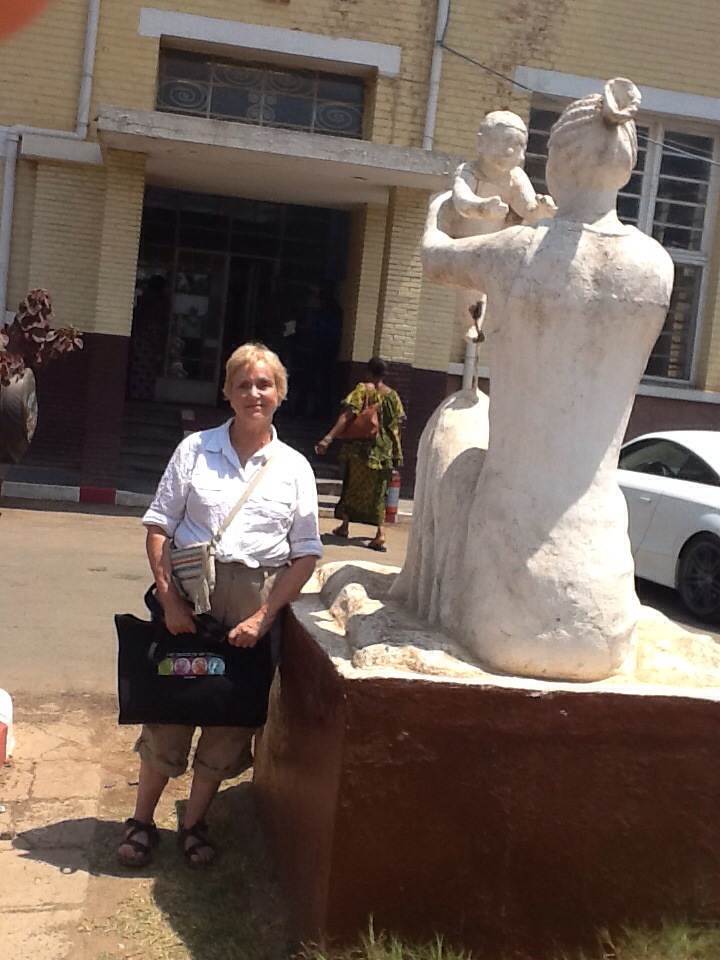
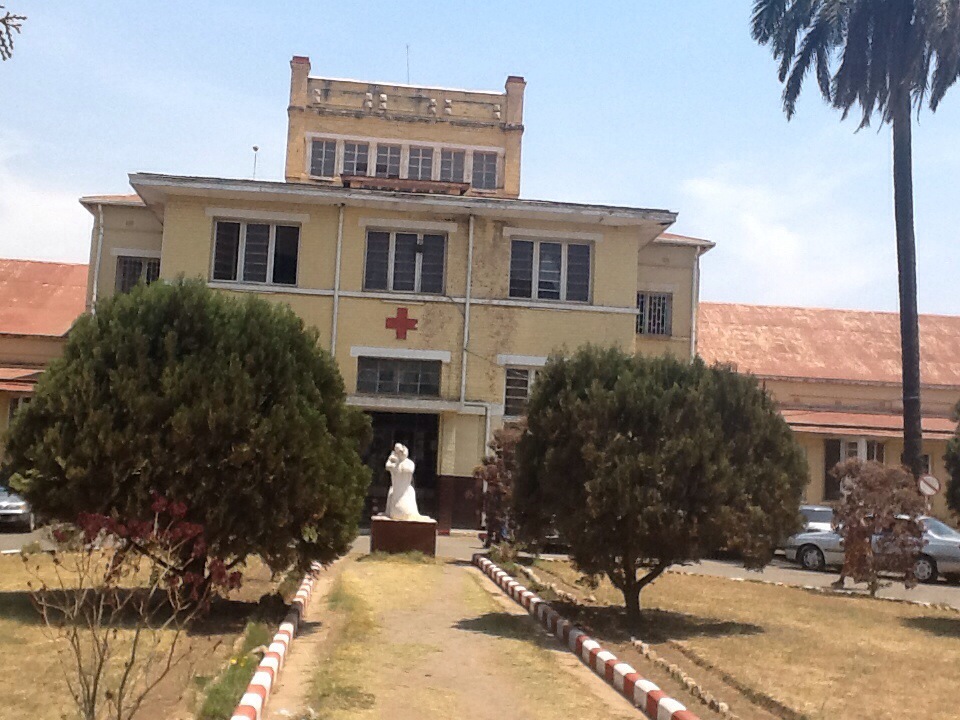
This morning we visited the hospital where our daughter was born almost 41 years ago.

I don’t feel any attachment to the hospital where our son was born two and a half years later. I suppose I could visit Kaiser’s big hospital in Cleveland any time I want. Maybe that’s why it’s not special. On the other hand, I never really expected to get back to our daughter’s birthplace.

But there is more. The “accouchement”, the birth process, here at what used to be called St. Elizabeth in Lubumbashi, DR Congo, was more personal and humane than the factory rush-through of standard American maternity care. It was more like giving birth at home. Your family was expected to do the newborn’s laundry, for instance, and your stay was as long as it needed to be. In my case that was eight days, which took us to the date my mother and father came from the US to visit and help out.

It was a pleasant eight days in a spacious, high-ceilinged room with lots of windows and my tiny daughter beside me in a crib. She was only 4 pounds 10 ounces but a midwife pronounced her healthy and said no incubator for her. Indeed, she thrived and quickly gained weight.

The hospital was run by Belgian nuns and a few Belgian doctors, which is why it was known as “the hospital of the whites.” Most of the patients were Congolese. Most white women in Lubumbashi went to the better equipped clinic run by the copper mining conglomerate Gecamines. I thought St. Elizabeth’s was good enough for me and it was.

We couldn’t find the hospital on the map we picked up of Lubumbashi on Tuesday, our first day here. We found out it was now called University Clinic but still remembered as the hospital of the whites. Today the maternity director said she saw its real name only recently on a document.

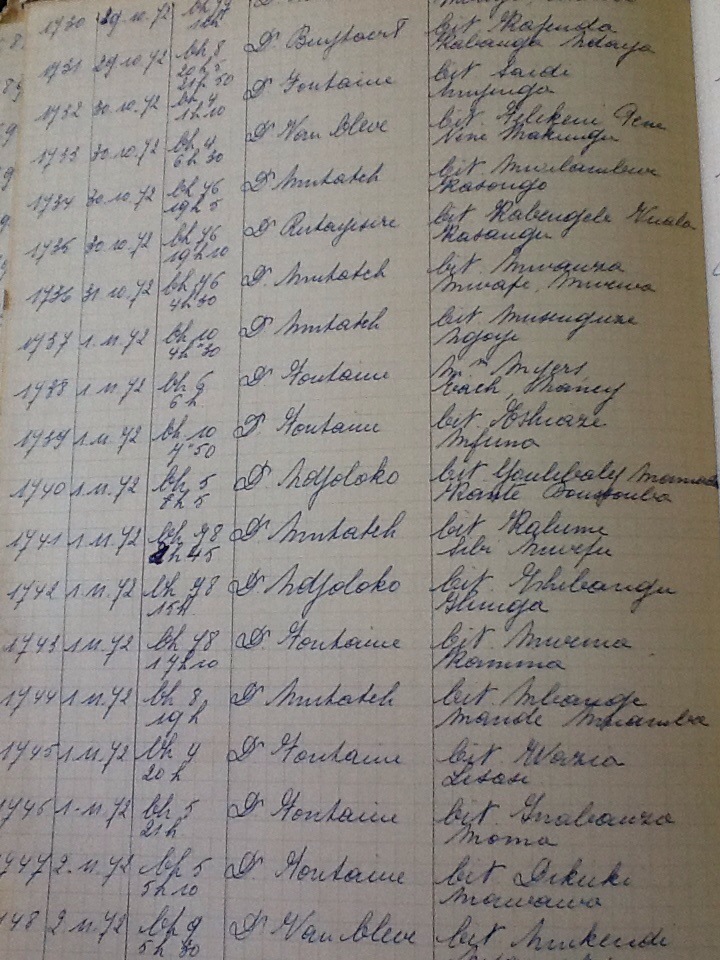
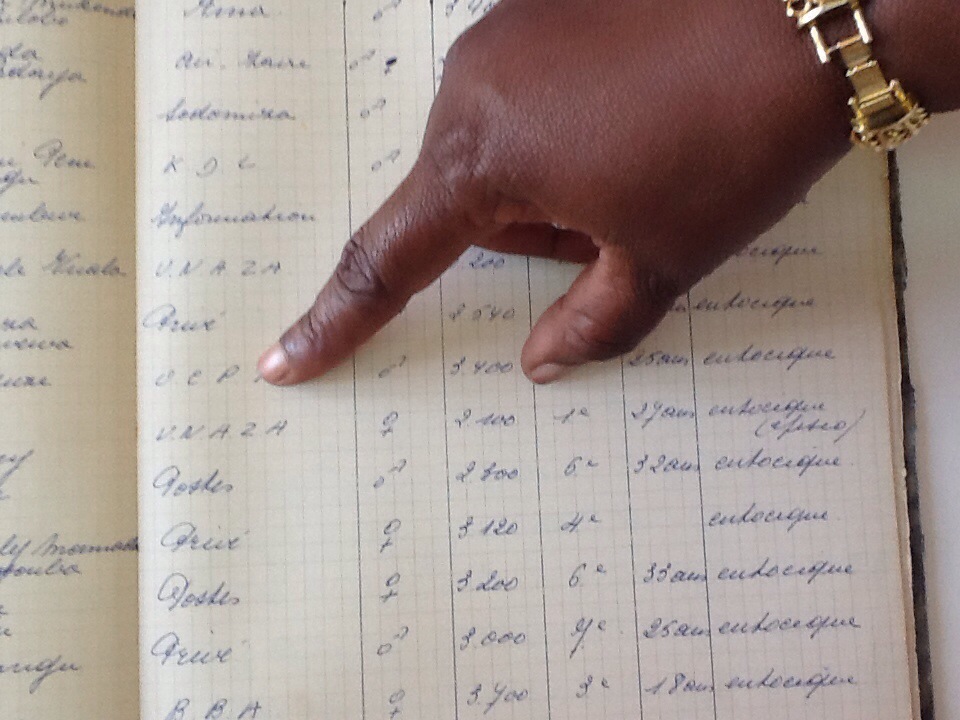
And then she pulled out old record books, some marked “Congo Belge” and others marked with the year. 1974. 1973. And 1971-72. She opened this one and ran her finger down the lists until she came to 1/11/1972 and there we were. Born at 6 a.m. to Mme. Myers Eash Nancy of UNAZA (Université Nationale du Zaire) a female, 2.1 kilos, first baby, mother aged 29 (actually not quite), vaginal birth with episiotomy. The doctor is listed as Dr. Houtaine, but it was actually a midwife who delivered her because the doctor didn’t get there in time.

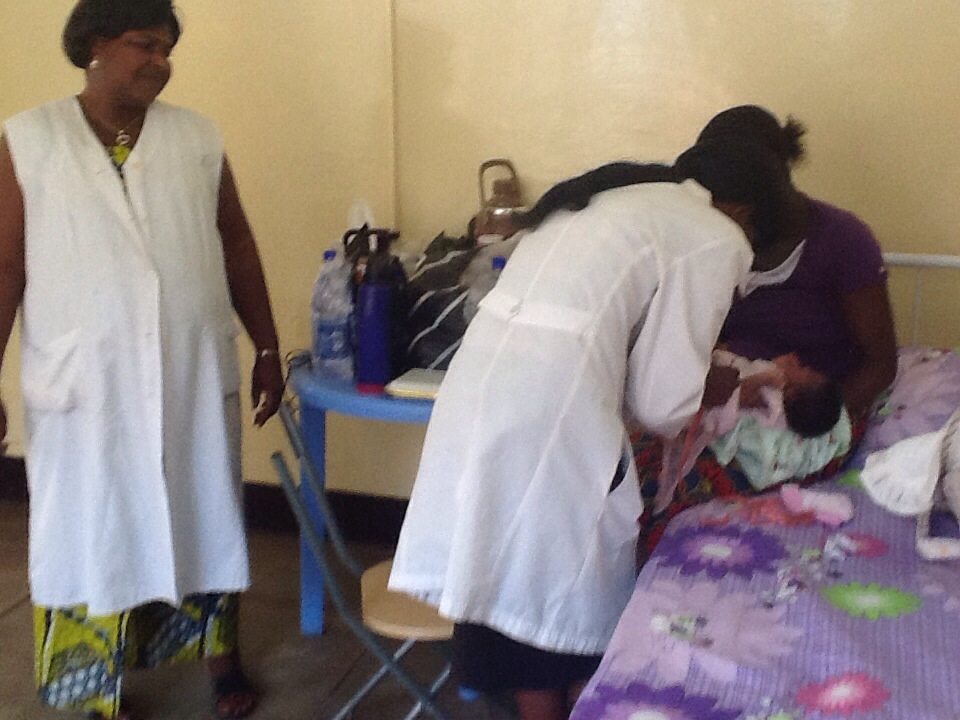
And then the director took us to the room where I had spent those first 8 days with my daughter. Another mama was there with her tiny infant. The light streamed in through the tall windows. I got all teary.

20131010-131259.jpg

20131010-131508.jpg

20131010-131647.jpg

20131010-131756.jpg

20131010-131834.jpg

20131010-131953.jpg

Permission

We are in Lubumbashi, a bustling city at the southern tip of DR Congo. Vic and I lived in Lubumbashi for two years forty years ago. He taught chemistry at the university and our daughter was born here. Yesterday we hired a taxi driver as our chauffeur for the day and went to visit the university and other places.

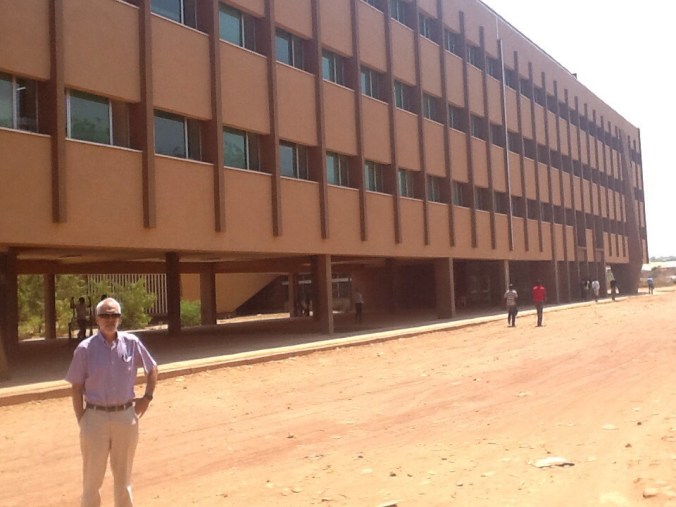
Verno Masheke, a student and son of our friend Pastor Birakara, Vice President of the Congo Mennonite Church, had agreed to meet us at the Faculté Polytechnique and show us around. That was the building where Vic had taught chemistry in a steeply sloped lecture hall and laboratories with no running water most of the time. We had carried a package the size and weight of a small ham for Masheke from his mama in Tshikapa.

Masheke showed up with two other students, one of them a young man named Junior who asked us for the letter his mama had sent with us from Tshikapa. I had forgotten all about it. On our last day there at least a dozen letters were thrust into my hands, most destined for people in the US, some with addresses and others that would require some research or one more courier to reach their destination. But I remembered getting Junior’s letter, and his mother putting some cash into it before she sealed it. So when I apologized for forgetting it, I could understand why Junior’s face fell. I promised to go back to our lodging, get the letter, and give it to Masheke before the day was out. (I found it, stuck in an odd folder, after a frantic search.)

But before Masheke and friends arrived at Polytechnique, a man monitoring the entrance assured us we were expected and took us to the third floor, to the office of a man wearing a neat white African shirt, dean of Polytechique. He seemed puzzled to see us and not too interested in finding out what brought us there, although we told him the story that we would repeat a dozen times throughout the next hours: Vic had been a professor here 40 years earlier, we were coming back for a visit, we wanted to look around.

We decided to go back downstairs and wait for Masheke. After he arrived he began taking us on a walking tour of the campus. Masheke didn’t know the main campus too well because his classes in pharmacology were in the center city, but we made our way around, accompanied by John, our driver, who was not interested in waiting in the car and seemed interested in learning what he could about the university. I took a few pictures with my iPad.

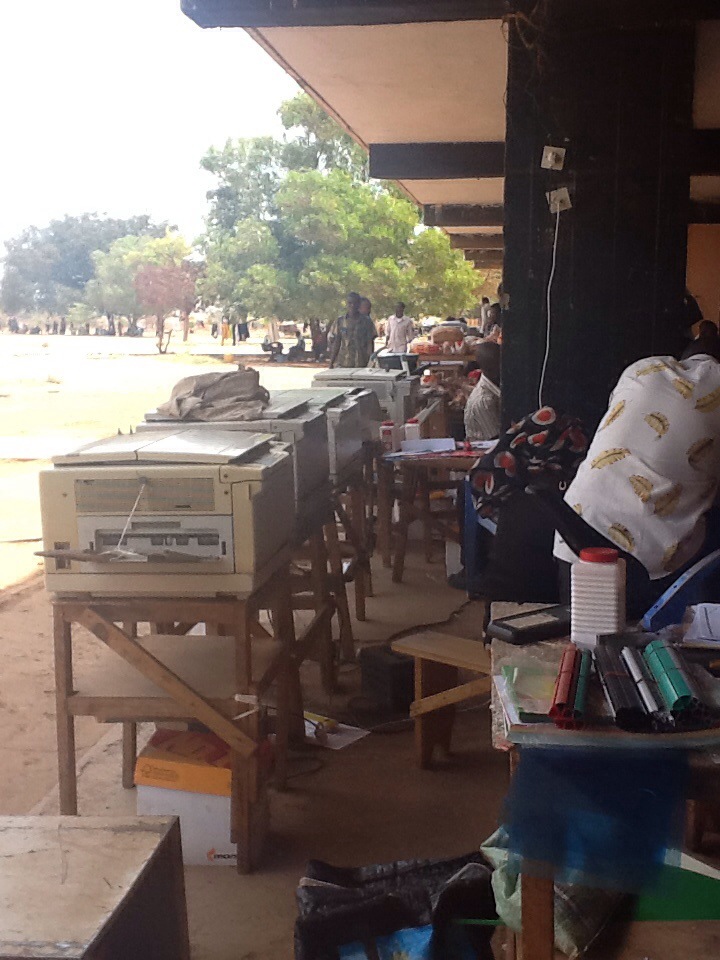
School wasn’t yet in session for the year but there was plenty of activity around student quarters. I decided to take a picture of one of the open-air computer and photocopying centers you find in many places, an enterprising Kinkos-type operation on the veranda of a dorm. Since I wanted to take the picture from relatively close, I asked a well-dressed man working there whether he minded. He said that it wasn’t up to him; I would have to get permission from the authorities to take any pictures at all on campus. He told Masheke which office to take us to.

Vic wondered whether I wanted the picture that badly and I said, yes, I had seen these photocopying operations in Kinshasa and knew I couldn’t take any street pictures there–partly because of translator Azir’s resistance to anything that might get us into trouble–and this was my chance.

The person to whom we were directed listened to our request and then sent us to another office in a different building. This person, after listening to my spiel, told us to follow him and accompanied us to a third office in another building some distance away. It was at the other end of a corridor through one-story rows of student rooms, redolent of woodsmoke and fresh sewage. I resisted the urge to take pictures.

It was explained that the student “city” for the 5,000 on-campus students (the university has 25,000 students in all) had two dorms for women and nine for men. These one-story rows were clearly guys’ quarters. Our later guide told us this corridor was called Che Guevara Boulevard because all the school “revolutions” or student unrest started here. He assured us they hadn’t had any of that for a while.

We finally reached Bureaucrat Number Three, who assured us that, if it were up to him, we could certainly take pictures, but, alas, it was not up to him. We would have to talk to the Academic General Secretary (dean) in the main administration building, which was a mile down the road from the campus.

I thanked him and we left his office. I was ready to give up at that point. When I told the second bureaucrat, who was still with us, that we would just have to forget about it, he pointed out that I should then go back tell Number Three that he should not expect a call from his superior, because surely Number Three would be waiting for it. Vic was game to continue the quest, now that it had gone on this long, and so we got into the car and headed to the administration building.

As we went up the stairs in the building to the fourth floor (and then back down to the second because Masheke got the wrong office at first) I recognized the first spot in Lubumbashi that brought back memories. It was the glass block–walled stairwell. Many of the glass blocks were broken back in the early 1970s. Back then several had round bullet holes in them from the “troubles” of the 1960s post-independent violence, the abortive secession of Katanga Province, where Lubumbashi (then Elizabethville) is located, and a series of those student “revolutions.”

The bullet holes were still there. Again, I resisted the urge to take pictures.

At last we got to the spacious office of Professor Nkiko Munya, the academic dean, a man in his late fifties or early sixties, who greeted us warmly and told us that he thought Americans were pretty much responsible for all of the violence in Congo. We then had a lively, friendly conversation. We did not disagree that Americans had a hand in everything from Patrice Lumumba’s assassination to the current conflict with Rwanda, though we pointed out others were involved as well. And we pulled out our pacifist Mennonite credentials, told him we were with the son of the Vice President of the Mennonites in Congo. Professor Nkiko had never heard of Mennonites. Later Masheke pointed out a half-built church on the edge of campus, in the section given over to chapels, that was being built by the Mennonite Church.

We touched on old times. Nkiko had graduated from the university a year before we arrived. He was from North Kivu and had attended the Catholic high school in Bukavu where I taught English in the year we lived there. That was a Jesuit school dedicated to producing a new, educated elite, as Nkiko had turned out to be. We reminisced about the nationalization of the three main universities that took place just after our arrival, which had prompted our reassignment from Bukavu’s Institute of Mines to the Lubumbashi campus of the new National University of Zaire, or UNAZA.

In the end, Nkiko agreed to let us take pictures on campus and, to make sure we got a good tour and didn’t get into trouble, he assigned his assistant, a smooth-faced young man named Didier, to accompany us. Didier drove a Mercedes up to the main campus and invited us to park the taxi and join him in the Mercedes so he could give us a better tour.

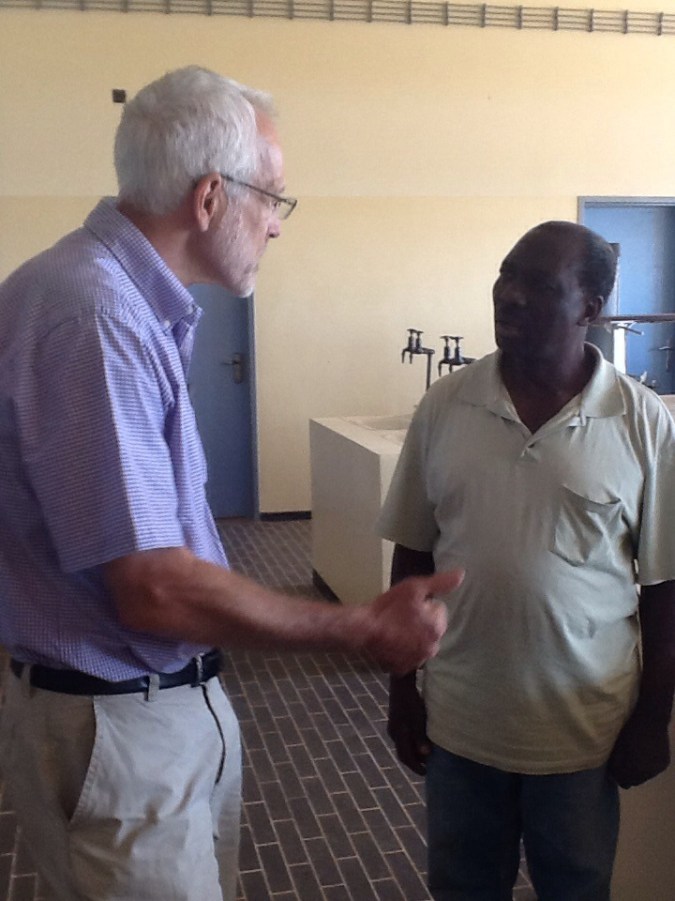
And it was a better tour. We went back to Polytechnique and this time were shown laboratories and classrooms. (We said hello again to the dean, who didn’t seem any more interested than the first time.) The building was bigger and fresher looking than it had been in the 1970s. It had been enlarged and appeared well-maintained. We met a laboratory instructor named Simon who had been around shortly after our time and knew an American professor who had been a good friend of ours and who had stayed longer than we had. Thus we continued to graze connections with the past. Simon told us that the labs still didn’t have running water much of the time.

We saw buildings that were in rough shape and others that had been spiffed up. Unlike the Christian University of Kinshasa, which we had visited early in the trip, the University of Lubumbashi looked like a university.

At the end of the tour I asked to go back to the student Cité and photograph the “Kinkos”. As I was taking the picture a young man, who was not in the picture, said, “I don’t like that.” I smiled and pointed to Didier. “I have permission,” I said. “He is my permission.”
20131010-082008.jpg

20131010-082150.jpg

20131010-082433.jpg

Ndjoko Punda

We have just emerged from the heart of internet darkness. Still, in the bustling city of Lubumbashi, at the southern tip of the Democratic Republic of Congo, electricity and wi-fi are intermittent so I will post this when I can and put pictures at the end because that’s the easiest way to deal with mobile technology.

So much to write and yet I want to go out and do, too, because Vic and I are in L’shi for the first time since we lived here in 1973-74. So until we gather energy to walk up to the new shopping center that has sprung up near the new golf course on the edge of a newly created lake, I’ll scribble a bit. Much has changed in this relatively prosperous town in the copper mining region. It is bigger now. We don’t recognize much. Tomorrow we’ll go look for the street we used to live on and visit the university where Vic taught and maybe try to find the hospital where our daughter was born.

We spent last week in the province of Kasai Occidentale, mostly in the dusty diamond town of Tshikapa, which is HQ of the Mennonite Church of Congo. We attended another ordination that included a woman, talked to many, many people, met friends and made new ones, and Vic and I took a river trip to Ndjoko Punda, the ultimate stop on this pilgrimage.

On the eve of this whole trip, back around September 18, I had a dream about looking across a wide river through windows without glass. In the river were large crocodiles, dangerous but not immediately threatening. A parade of animals walked by on the opposite bank–zebras, giraffes and what I at first identified as a wildebeest. But it turned out to be a combination of centaur and unicorn–a wildebeest with a human torso and head which looked like that of a sorcerer, and out of this head grew a single, tree-like antler.

My sense was that the spirits were waiting for us on the other side of the river. Not clearly good or evil but powerful.

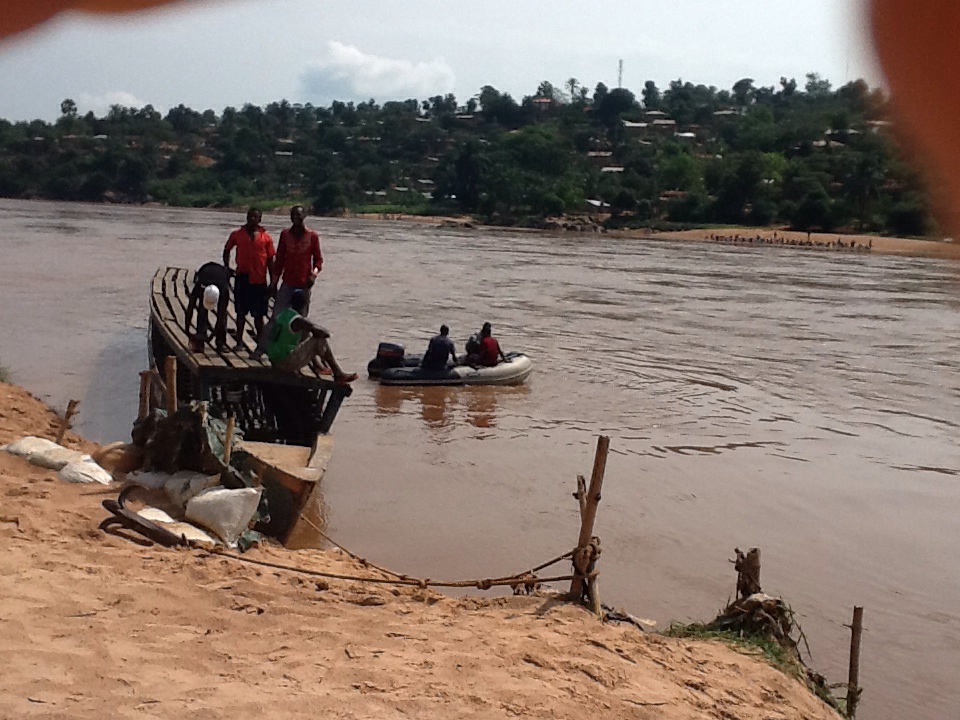
When we were waiting on the edge of the river last Thursday for Kazadi, the volatile dinghy pilot, to get the tiny rubber boat and outboard motor ready to go down the Kasai River, I recognized the place of my dream and I thought about crocodiles. We didn’t see any but something was there, churning up difficulties at every stage of the trip.

This trip will be a chapter in a book some day. There is the short version: we did get to Ndjoko Punda. We did hear and record the Grand Tam Tam choir. And we did get back safely. And there is the long version, the book chapter. I am trying to see if I can get an intermediate blog version out of it. It might go something like this:

We did go to Ndjoko Punda but not when we planned to go and not with the person we had been negotiating with extensively and not entirely on our own, thank goodness, because Vic and I would never have managed sorting out all the complications ourselves. French didn’t cut it; Tshiluba was essential. And it was clear that we were very, very white with all the cultural baggage that brings with it. We were so white that we scared babies. Literally.

We did hear and record the Grand Tam Tam choir–and seven other choirs that we did not ask to hear and really did not have time to listen to because our time was compressed by the difficulties of getting there. It was glorious and hectic.

We did get back safely, our pockets empty of cash. Along the way we learned quite a bit about artisanal diamond mining along the river; how to repair rubber dinghies; and negotiating the rapids in the Kasai River as well as the ravines that used to be roads in Ndjoko Punda (on the back of motorbikes). We did spend the last two hours of the trip churning up the river at top speed in the dark, no moon. Fortunately, Kazadi, who had little sense of time and got into one fistfight along the way, did know his river. And the stars were lovely!

Actually, the whole trip–including an overnight stay with our fellow Mennonites at this 100-year-old former mission–was lovely, hard, exciting, and worth every dollar we spent and gave, even those we hadn’t budgeted.

I have had my wished-for adventure. I am rather proud of myself for insisting on it though it seemed impossible at many points. The spirits where there, waiting and powerful. Presiding over all, though, was Holy Spirit. We were blessed and I do not use that term lightly. I think we were a blessing, as well.

And now we are lolling in luxury in a lovely guesthouse and acting like regular tourists. As the plane from Kinshasa filled up last night with wealthy-looking expats and Africans who were also going to Lubumbashi, we felt like country bumpkins. The dust of Tshikapa was under our toes, I was wearing glad Congo cloth. I hadn’t looked in a mirror for 10 days. We had come from a different world.

I love that world we came from. People from there are calling us–just now one more scratchy call from Ndjoko Punda and this morning at sleepy 7 am a call from Tshikapa–to make sure we have arrived safely but I feel that somehow, with all our advantages (including enough cash but also the care we are given) we will always arrive safely. How can we reciprocate such care?

P.S. As I go to awkwardly load photos onto this post, for some reason this boat picture, of someone else’s dinghy, is the last picture available. Nothing after that except a few I took this morning. A whole lot of black pictures. I’m sure they’ll show up sometime, just not when I need them. That’s the way this whole NP business has been. Spirits? Just sayin’.

20131008-135946.jpg

Adoption central

20130928-220046.jpg

The guesthouse where we have been staying for the past week in Kinshasa is popular with Americans who are adopting Congolese orphans. It is spacious, clean, and reasonably priced, which is important for people who may be stuck in the city for some time until the adoptions are approved by relevant agencies and the American embassy issues visas.

It is located just across a rutted street from the embassy, in fact, which is surrounded by ugly cement walls topped with barbed wire. I can’t show you any pictures of that because pictures taken on the street might capture some security guy and that is forbidden. I took some street pictures last year but Azir, the interpreter and guide who goes everywhere with us, strictly forbids it because he doesn’t want us to get in trouble.

Azir really worries about us, clucking about like a mother hen whenever we set foot outside the door, except when he’s not around (he does go home at night, to our relief). We also have a car and driver at our disposal, which is extremely convenient. The car, which belongs to a diamond dealer downcountry who is a friend of our good friend Pastor Francois here, stays in the Ste. Anne guesthouse courtyard overnight and the driver, 18-year-old Joseph, and Azir show up at an appointed time every morning to take us on our “programme” for the day. Yesterday, before the agreed-upon programme was to get underway I decided to carry out a quick errand on my own. I commandeered the car and driver to take me to the travel agency down the boulevard to change the date on Charlie the journalist’s ticket to Tshikapa. I can communicate there perfectly well, no problem, I don’t need Azir. A few minutes down the boulevard I get a call from Azir. “Where are you?” he demands. I say I am on my way to Jeffrey to change the ticket, an errand I had told him about. “I’ll follow you!” he exclaims. I picture Azir running down the street in his black suit, in hot pursuit of the unaccompanied American. I assure him that is not necessary. I complete the errand in record time and return to Azir’s protective fold.

Many Congolese treat us like soft, helpless babies with too much money on our hands. Some, therefore, try to take advantage of us while others–most of my friends here–are overprotective. There is a certain truth to this image. I see our collective helplessness in some of the newly arrived adopters, like a pair of men from Alabama, a prospective father and grandfather, who seem to be entirely on their own. They asked one of our party if they could accompany us to church tomorrow because they heard she would be preaching. They hoped for a service with a little English. But I picture the church we are going to–still under construction in a labyrinthine quarter, getting there in an SUV already chock full of our party of 6 plus driver and interpreter, and then dinner afterwards with a bunch of our friends, and I suggest that she tell the Alabamans that it won’t be possible. I was like the Alabamans on my first recent trip here last May but fortunately I was thoroughly shepherded and “programmed.” Now I am doing much of the programming and some of the shepherding and my French is increasingly serviceable.

Charlie Malembe, the journalist who is working with me, specializes in tracing the backgrounds of adopted Congolese children and potential adoptees. She works for a service and gets assignments on her own as well. I met Charlie last year, before she had done much of this, and she was eager to get some writing assignments. Charlie, like me, is a Mennonite and is interested in church stuff, politics, conflicts, policies, and all. When I took on this assignment of writing about women’s ordinations for church papers I decided to do it with Charlie. I have not been sorry. Charlie is an energetic and intrepid interviewer and she knows everybody. Push a button and see Charlie go. At a noisy gathering where I can hear or understand hardly anything she sticks our recorder in people’s faces and then writes it all down word for word so I can find the gems. I will do the writing later but I couldn’t do it without Charlie. I brought her a computer as a present and she is making good use of it.

Charlie is continuing her adoption investigations while she’s working with me for two weeks. Most cases are pretty straightforward she says, but she thinks she’s seen evidence of a ring of baby sellers. I hope she doesn’t get herself into trouble. Services like hers are needed. Congo’s beautiful babies–those are the real innocents. We bumbling Americans can use all the help we can get to make our way in this fascinating, demanding culture. And to avoid doing harm with all our good intentions.

20130928-221707.jpg

Fortunately/unfortunately: travel tales

20130925-113033.jpg
It pours rain on the day of our flight to Congo. The trouble begins at home. The storm knocks out our modem/router in mid-morning so we can’t even check whether our 4:33 flight from South Bend to Chicago will be on time, delayed, or cancelled.

Fortunately Vic is able to dash out, get a new router, and install it by noon. We check flights. All on time. Nevertheless, we have our housesitter take us to the airport plenty early. Two and a half hours early.

At the airport we learn that all flights have been delayed by the continuing downpour and some cancelled. Our flight is in the delayed category, too late to get us to Chicago for our 6 pm flight to Brussels. We have two choices: a shuttle bus or an early flight that is so late that it might get us there about the same time as the bus. Might. We choose the bus. But it leaves in 30 minutes and our two fellow travelers aren’t there yet. I ask the harried young agent to tell them we’re taking the bus. I have no confidence that he will do that, so after we lug our bags to the bus stop, I stroll back to wait for Sandy and Paula. Fortunately, they show up just in time to get their vouchers and join us on the bus.

The bus driver tells us the ride will take longer than we thought and get us there barely an hour before our international flight. Is this enough time to check in, check bags, check passports? We hope.

In Chicago the agent checking us in is puzzled by our visas. Are we sure they take effect when we arrive and not when they were issued? We are, but he isn’t. He disappears for 15 precious minutes. When he reappears he says, “I have to find someone who can tell me exactly what this visa says.” It is written in French. Vic and I offer to do that and fortunately, he trusts our translation.

By then it is 35 minutes to flight time. Fortunately, the agent accompanies us through security. Unfortunately, not all the way–just to the tables. A dozen people are ahead of us and the line is very, very slow. I am frisked. TSA makes me take off my cloth money belt because all that cash around my belly might explode.

Fortunately (do you see a pattern here?) we make it to the gate as boarding is beginning. We meet a third member of our party, who has made it from Kansas. Sandy and Paula report later that they also met the fourth member, a Congolese-American man named Christian. (Unfortunately, that was not Christian. He thought they were asking about his faith, not his name.)

Unfortunately, we sit an hour and a half on the tarmac because the weather requires a change in flight path. Our connection in Brussels will be tight.

Fortunately, I sleep a little. In the morning I go around the plane, asking every African man if he is Christian Mukuna. Unfortunately, none is.

We have an hour to find and board the plane to Kinshasa. Unfortunately, I forgot to warn Sandy, Paula, and Amanda that the sign to transfers to African flights is very confusing. Fortunately, Amanda makes the right turn. Unfortunately, Sandy and Paula, who are ahead of us, do not. They make the same mistake I did last time and have to go through security. Fortunately, they make it with 15 minutes to spare.

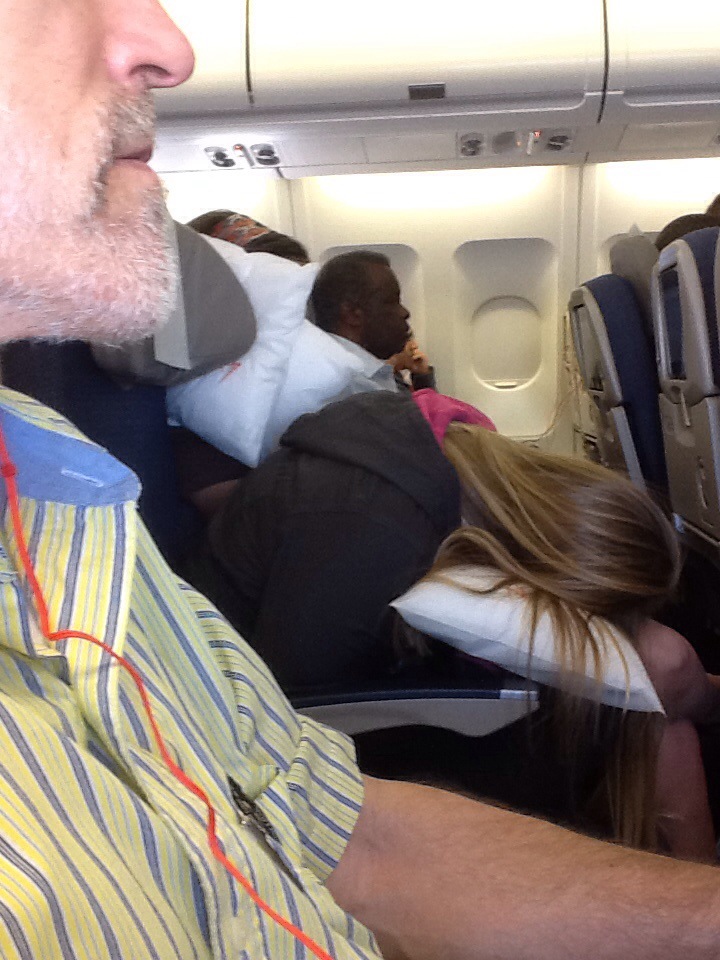
Ok last flight. We can relax, and we do. I wish I could double over and sleep the whole way, like the young woman across the aisle, but I settle for a French movie about infanticide in Benin. The heroine is white, but the story is not entirely one-sided. We watch the Sahara unroll down below and then suddenly end in clouds and green. I ask an attendant to check the passenger list for Christian’s name. He is not on the plane.

We land in Douala, and many people get off, including the sleeping girl, but nobody gets on. An hour and a half to Kinshasa. We land after 7 in the evening, 25 hours after we left our house in Michigan in a rainstorm. It is dark.

A man from Jeffrey Travels, a local agency, meets us outside of customs, holding a chalkboard with our names on the sign. Christian’s name is not on it. Jeffrey guy assures us that he will retrieve our baggage for us. We are doubtful about this arrangement but he insists so we hand over our tags and go to Jeffrey’s lounge to wait. Men carry in our bags, piece by piece. Soon they are all there except one. It happens to be a bag we carried for someone else, Pastor Joly, who had visited the US a month earlier and acquired a great deal of used clothing to carry back home. Reluctantly I agreed to take it. I couldn’t think of a good excuse although I have had problems before with lugging other people’s baggage back and forth. Tracking down a missing bag that belonged to someone else was a new complication, however, that I hadn’t thought of.

I spend the next 30 minutes racing around the airport with Jeffrey guy, first to the baggage claim office and then to find the official who should have been in the baggage claim office, and back to the office. In the racing I fall once on the slippery floor and bang my knee but nobody notices and I am ok. I register the claim, get a phone number to call the next day after 11, and then we board the Jeffrey van to drive into the city.

Fortunately, the drive takes less than an hour. Miraculously, the airport road is almost fully reconstructed and is no longer the 2,3, or 4-hour nightmare that it was last year. Our rooms at Ste. Anne guesthouse are ready, the showers work, and the beds are comfortable. We are in bed by 10:30, sleep well and wake exhausted.

Among the stream of visitors who greet us the next morning is Pastor Joly. He calls the airline and learns the bag has arrived, which seems impossible, since international flights aren’t that frequent. But sure enough, when we go to the airline downtown office that afternoon, it is there. Someone else had picked it up by mistake and returned it. It is hard to understand how that happened because the blue duffel with white flowers is rather distinctive. Nevertheless, the contents seem intact.

Our close calls and frustrations with this trip have all ended well, but still no Christian. We attend the ordination on Sunday., which I wrote about in my last post. The next morning, Christian appears at our breakfast table. His travel tale includes not one but two missed flights, switched airlines, and not one but two missing bags, which, at that moment, are still missing. He makes a call. His bags have miraculously arrived. We all go to pick up Christian’s bags and to buy our tickets for the next leg of our trip, which is a week away. That takes most of a day but ends in success all around. We can forget about traveling for a while.

Yesterday we went fabric shopping and three of us ordered dresses to be made. Maybe I’ll write about that later. Lots of fun. We were due for some.

An ordination in Kinshasa

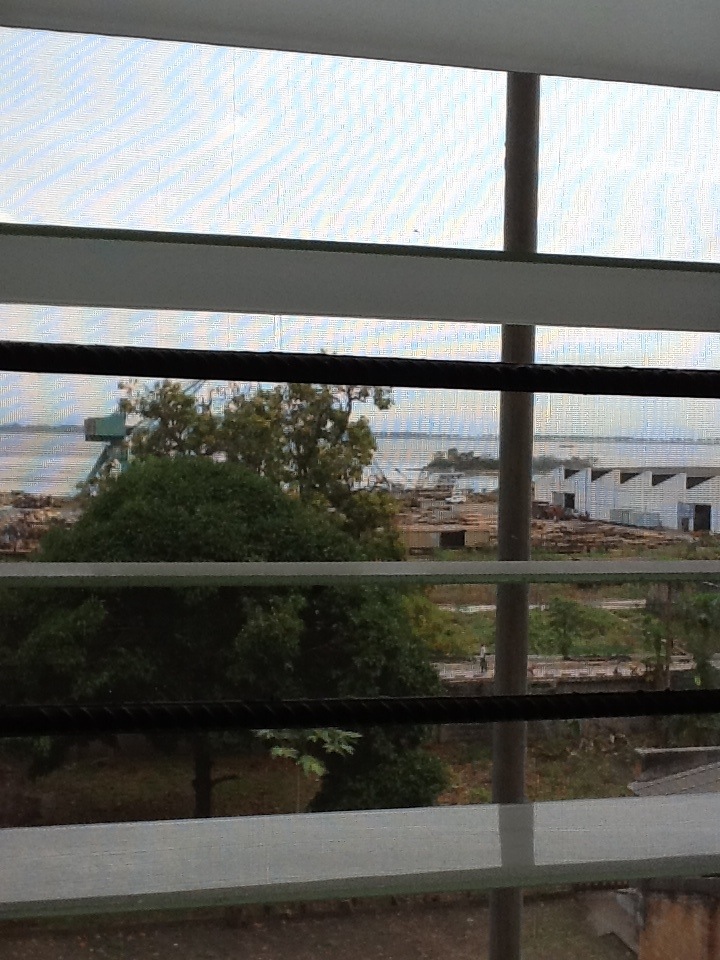
I set my meditation timer and then spot a mosquito dancing against the screen that frames my view of the Congo River in our room at Procure Ste. Anne. I spend the first meditation minute chasing down and killing the mosquito.

Later, after breakfast, I go up toward my room on the third floor. But my husband has stayed down at the desk to sign us up for dinner and he has the key. As I wait in the open stairway, I hear a fugue of chants rising from a distant room. A choir of nuns? We are after all staying in a monastery guesthouse. But a woman’s voice becomes louder and I see the singer coming out of a room. She is the cleaner. A minute later a man comes up the stairs carrying a mop and bucket. He begins singing softly and his chant twines with hers, rising unearthly in the high corridors.

The sacred and the mundane are never far apart here.

I’m not sure what I’ll remember of the ordination service yesterday, when it’s all said and done. How hot I was five hours. Spotting so many faces in the crowd of 500? 1000? people whom I knew or thought I knew. The fact that I hadn’t remembered to try to estimate the size of the crowd, what kind of journalist am I. The glorious harmonies of two men’s choirs and “Mamas United.” The bangy, screeching, amplified instrumentals of another. Amplification and French mixed with Lingala and my hearing impairment making it difficult for me to understand anything, even with a translator behind me (what kind of journalist am I, thinking I can report on this, knowing this about my limitations.)

Taking my own discomforts and preferences out of the picture, I remember the attention of the crowd, the church leaders, the speakers, the prayers being directed at two women being ordained. Plus two men. The four sat dressed in black, head to toe to fingertip, facing the crowd from a corner and backed by their spouses, who later stood behind them like shadows on the platform as they were instructed, prayed over, and, finally, ordained. The women were the stars of this occasion, a century-old church naming women as pastors for the first time. “Révérende” with an e.

During the moment itself, they were surrounded by other ordained people who were present, many men. But the American women who are traveling with me are also ordained, and they were invited onto the platform. Sandy went up and joined the prayers over the kneeling candidates. She was asked to offer a spoken prayer for one of the candidates. Singing went on. After a while the crowd on the platform parted and the ordinands emerged, wearing clerical robes over their black suits. The newly ordained pastors remained somber throughout, sweating and, I thought, stifling some yawns. It was a very long service.

I tried to take some pictures but my friend Charlie rescued me early on. Charlie is the journalist I arranged to work with while I am here. It was a wise move. Charlie is a real journalist. She took my camera and traipsed around during the service in her pink dress and 4-inch heels, capturing the moment. That’s Charlie in the picture, standing next to Amanda in the second picture. Amanda could have gone up on the platform but decided not to. Although the two were just waiting for their cameras to be handed back by the bolder photographers they’d given them to, who had crowded in behind the pastors, I thought it captured something.

I can’t share the pictures Charlie took because they must be downloaded to a computer I don’t have with me. I’m trying to travel as light as possible and that means iPad. I’ll try to use it more so I can post, but the quality isn’t always the best.

Toward the end, Charlie and I went outside in the hot sun and talked to people. What were their impressions? What did this mean? “Joy” was the word everyone used, women and men, young and old. “Great joy.” “Immense joy.” “Profound joy.”

One 55-year-old pastor said he had been working for the ordination of women since he entered the ministry at age 25. Why had it taken so long? “This is a very conservative church,” he said.

Women were more blunt. A female member of parliament said, “Men want to hold onto power in politics and in the church.”

What we missed was the part of the service where the ordinands were given gifts by their families and supporters: Refrigerators, microwaves, TVs, and perhaps ironically symbolic gifts of brooms and duspans.

Politics, emotion, discomfort, endurance. Spirit was there, too. My iPad took the strangest picture I have ever seen. It would have been my only good shot of the day, of the candidates kneeling. But it is a picture of blinding light. Probably just multiple flashes going off at once. But I wonder.

  • 20130923-094459.jpg

    20130923-103852.jpg

    20130923-104019.jpg

    Reflections on the eve of travel

    My husband and I leave tomorrow for nearly 4 weeks in DR Congo. We will celebrate the ordination of the first women in the Mennonite Church of Congo, listen to choirs, build church partnerships, revisit old haunts. I will write, Vic will do audio and video. I have written a number of posts about this (see the Congo menu) but this one sums it up.

    I started thinking last night before I went to sleep about how much preparation I have done for this trip. I cut off those thoughts immediately because, although they were good thoughts, I knew they could keep me awake for hours. I will give them free rein now since I am all packed (though Vic isn’t) and all I have left to do is clean the house and finish up the instructions for Patti, our house/cat sitter.

    I thought how the first recent trip I made to Congo, last May, had been full of revelations. The possibility of genuine friendship with Congolese. The mad joy of worship that went straight to my heart and gut. African resilience and warmth. The money bugaboos. Mistakes that could be made and redeemed. The possibility of church partnership–this, above all. It was a revelation to me that the church offered the greatest possibility for genuine international connection of the sort that I had not yet known, in all my extensive international experience. Church partnership offered the possibility of ties based on mutuality and warm personal relations as well as working through differences and misunderstandings.

    The second trip, in July, to celebrate the centennial of the Mennonite Church of Congo, confirmed and deepened the revelations of the first trip. But it was also full of lessons about my own limitations. My physical fragility: I injured my knee first thing and limped through the whole three weeks. My ability to make mistakes I was cautioning others against (a wrong turn in the Brussels airport). My psychic fragility: I came to hate the swarming crowds that greeted our delegation of 30 North Americans.

    Above all, that trip was a lesson in how unprepared I was to carry out a dream that had emerged between the two trips, to write a book about the church. Shyness and fatigue overcame me when it came to taking notes, talking to new people, or even making connections with people who had written or been featured in the book I’d edited–a collection of centennial stories called The Jesus Tribe.

    And yet I needed to go back. I knew this but I didn’t know how or why. I only knew that there were things I needed to do before I could know if, why, and how I would continue this Congo connection. I began doing those things immediately after I returned. I have written about that here. The preparations included signing up for spiritual direction, losing weight, getting in shape, finishing and publishing a book, working on the church partnership, praying, meditating, becoming a member of the church we’d been attending for two years, working on my relationship with my husband, working on my confidence and self-esteem, writing and more writing, and deepening and broadening my ties with Congolese Mennonites. And then things fell into place and now here we are, about to actually do it.

    By the way, I watch bemused as Vic suffers the crisis of confidence that I felt during my second trip–“I thought I could do this but it is harder than I thought.” He’s technologically gifted but dealing with A-V involves a whole new set of technology, which is still spread out over our dining room table.

    IMG_1286

    I have inevitably high expectations of this trip and of myself. In the past I would have tried to knock down these expectations because expectations have seldom served me well. They have led to disappointment. And there has always been an element of magical thinking in my expectations–the possibilities, the signs, mean that it was meant to be this way. I took some magical thinking with me on my second trip.

    Now I can say that I have almost none of that. I have done my homework and prepared as best I know how. While I have little control over the outcome of what happens from now on, I do know that I have cleared the channels for Spirit to work through me. This is not a magical expectation but an openness to magic because that is how God works.

    As miraculous as anything is the sustained certainty that I have about being on this path. I have no doubt that, for whatever reason, I should be doing exactly this. But “should” is the wrong word. There is no “should” in what I am doing. Nor is it like the voice of God in the night calling me with a definite mission, a task. I have not been moved by someone’s challenge, an altar call. It is, rather, a somewhat plodding necessity, one thing leading to another, a combination of joy, duty, problem-solving, obligation, opportunity, revelation, adventure, relationship.

    Love is the single word for it. It is a bit like parenthood. You start it and then there’s no turning back. Turning back is not a possibility, nor would you want to, even if it were possible, because it changes who you are and shapes what you do in the world and you become attached to all involved, including the person you have become.

    Money laundering

    money

    My mood does not match the occasion, another 9/11 with war talk going on. I am lighthearted.

    On any occasion or in any place, it is the state of one’s own soul and body that continues to matter most and I am feeling good today so I will not pretend to be wise about matters like chemical weapons and bombing and terrorism and bad, worse, and worst options. Any comments would come from my head and not from my currently light heart so I leave that to others who can draw on anger, grief, and suffering to season their words. Listen to them, please.

    The hymn lilting in my head is “My life goes on in endless song, above earth’s lamentations.” I am getting ready for a big trip and all of the most difficult preparations are done. The trip itself will involve plenty of challenges so I am coasting through the next eight days with the last easy tasks. Cleaning the house, emptying the fridge, making a list of instructions for the house/cat sitter, packing.

    And ironing money.

    All transactions in DR Congo have to be done in cash. US dollars are good anywhere but they have to be perfect. No rips, smudges, or marks. Preferably new. I don’t know why. C’est comme ça.

    Amanda, one of my fellow travelers who lives in a small town in Kansas, went to her bank early to ask for new money. She was told that the new bills wouldn’t come in till later this fall, so she would have to take the best of used bills. Amanda now has her banker collecting a stash of newish bills for her. And just to be sure they will pass in Congo, she’s ironing them so they look like new.

    I thought that was a brilliant idea. Amanda, like me, is retired and retired people have time to do strange things like iron money.

    Last May I had an imperfect fifty rejected when I tried to use it to pay my departure tax at the airport. Since I was all but out of cash by then, I was in a dither. Fortunately I was able to borrow a few passable bills from my fellow travelers.

    On Monday Vic and I went to the bank to pick up an ungodly amount of cash. Our banker, too, said the new bills wouldn’t come in till later, “around Christmas,” so we would have to make do with good used bills.

    The teller was very patient. Counting out the bills, approving them, replacing marred ones in a stack, took a good 45 minutes. We were so exhausted by the process and the stress of carrying all that cash that we had to treat ourselves to a nice lunch afterward.

    And so today I am going to pull it out, check it all again, and iron it. I suppose one benefit of this kind of money laundering is that it will also kill germs.

    Thank you to all who contributed to our cash stash for contributions to worthy causes when we are in Congo!


    Cash for Congo

    I am totting up how much cash we will have to carry on our trip to Congo next month. It’s a lot since credit cards aren’t of much use there. Only four out of 24 days of our stay will be credit card–friendly. We even have to take cash for our internal flights.

    Everything we plan to buy, pay, or donate requires crisp, new US$. Tattered bills will not be accepted in Congo–although local francs can be passed around till they disintegrate.

    We don’t intend to buy much. We know about how much we will have to pay for food, lodging, and travel. It’s the “donate” part that tends to get very elastic when you are there. On my first trip last year I ran out of cash because I had underestimated my own generosity.

    I’ve tried to think ahead about some donations we will want to make. One thing on my list was a computer for Charlie, the young journalist who will work with me while I am there and afterward. I mentioned that in a conversation at a recent family gathering and, lo and behold, I was offered not one computer but two, nearly new. I will take them both; the second will surely find a home as well. Thank you, brothers! Mennonite World Conference is contributing to Charlie’s travel expenses. I’d like to pay for her time, too.

    Vic and I are making a mythic side trip down a river on a rubber boat to hear a choir. We will want to make a donation to the choir. How much is appropriate to offer 50 gifted singers who live in the middle of nowhere and have nothing? Plus our hosts in that remote place.

    We are attending two group ordinations, which include not only three women (the impetus for our trip) but also twelve men. Cash gifts are always appropriate and easy to carry.

    Every church service we attend will have offering times. The appropriate response to any music is to dance forward and drop money in a basket for the musicians.

    Thanks to the Congo Cloth Connection fundraising I am carrying scholarship money for four women studying theology. Other scholarship money, for 26 high school and university students who attend a Kinshasa church partnering with our home church, is already on its way via wire transfer. Thank goodness we don’t have to carry that.

    Any money we give will be small drops in a great bucket of need. That’s what you see when you are there. But the thing I’ve valued is developing relationships and keeping the money and donations in the context of these relationships. I don’t go as a rich American scattering cash but as a friend, a member of an extended global church family, responding in specific ways to specific needs of people I know. I choose to work with certain people who share my vision of creating relationships across culture, language, and economic barriers. I choose to keep as much of the money donations as possible in the context of a church rather than individual requests.

    Deciding all this, planning in advance, will make it a bit easier for me to say no to the multitude of requests that people will present us when we are there. But that is always hard. I plan to carry about $4000 for planned and unplanned donations

    If you would like to contribute to the practical mystic’s Congo projects, here’s a donate button. You can tell me in a comment, via Facebook, or email how you think it should be used. I’ll report afterward.
    Donate Button with Credit Cards

    Tour director

    People ask, Are you getting ready for your trip? My next trip to Congo is less than a month away and yes, there is some kind of prep nearly every day. Today it is getting the overdue haircut I’ve delayed so that it will last until I get back and stopping at the health food store to stock up on probiotics to ward off digestive problems.

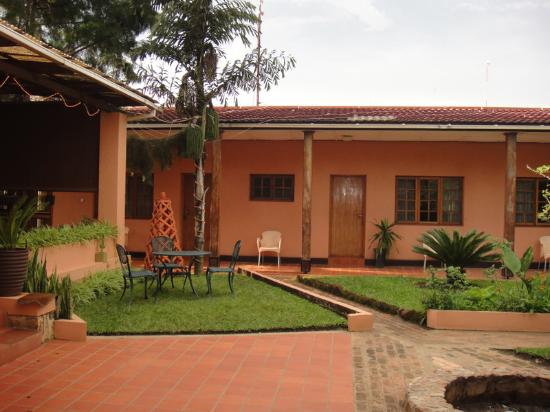
    Emails, too. I receive confirmation that St. Anne’s in Kinshasa has my revised reservation for 4 rooms. (See this blog for a picture.) Nothing yet from Jeffrey Travels (except that they received my message and would get back to me the next day, which was yesterday) or Bougain Villa in Lubumbashi, where I asked yesterday for reservations. They responded promptly to my request for information, which is one reason I decided to go with them but now I’m wondering. So much depends on promptness and accuracy of communication. Successful communication in a place like Congo always seems miraculous.

    Hoping to stay here in Lubumbashi

    Hoping to stay here in Lubumbashi

    This is not prejudice but reality. The St. Anne guesthouse manager assures us they have consistent Wi-Fi because they have a generator. That’s what it takes even in the capital city, where electricity and water are intermittent, postal service iffy. Cell phones are lifelines but I’ve discovered that my hearing and French are not up to understanding everything through crackly international cell connections.

    My mind is in Congo much of the time. I am thinking everything out, imagining every event and excursion and night of rest because someone has to on a trip like this. That responsibility has fallen to me though nobody asked me to do it. Taking charge of this trip, this pilgrimage, and my fellow pilgrims, is more like an ethical response.

    Of the 5 Americans who are going to Congo to attend the same two events — ordination of the first women in the Congo Mennonite Church in two cities — I am the only one who has been to the country recently and who is fluent in French. Except for my husband, whose French is rusty and whose Congo experience dates to the 1970s, my fellow travelers have never been to Africa and speak little to no French. So what was I to do? I couldn’t exactly let them fend for themselves, could I?

    I suppose I could have, but that would practically guarantee some really bad experiences. Not that I can prevent all bad things from happening, but I want people to experience as much of the good as possible. I have been intrigued, enlightened, charmed, and forever changed by my two recent trips to this amazing country. So I have decided to embrace the role of tour director and see what I can learn from it, see whether I can help others find themselves, love, Jesus, friends, and more good things in Congo, as I have done. So here goes.

    There’s always something. Two days ago it was a rumor that plane connections to and from Tshikapa were only Wednesday and Friday. There goes the Monday flight that was supposed to bring my fellow travelers back to the capital for their Tuesday flight home. But it turns out that the report was incomplete. The domestic airline had actually added flights. You can now get to this diamond-mining town in the middle of nowhere, which is home base for the Congo Mennonite Church, on Monday, Wednesday, and Friday instead of just on Monday. Phew.

    But wait. Wasn’t I going on this trip to write? I’ll try to wedge that in somewhere.

    tshikapa walk

    Fellow travelers walking in downtown Tshikapa last July