Book v blogging

In case you miss this blog when I don’t write, which I doubt, I thought I should explain why my entries have been few and far between recently. It is because I am working on a book and it sucks up all my writing energy. In fact, it sucks up most of my energy, period, in something like two to five hours a day, and leaves me with long, low-energy stretches of time in which I am good for nothing except reading, watching TV and movies, and making endless, hamster-like rounds on the walking track at the Y.

The book is going well but I don’t want to talk about it yet. Which gives me little to do but list the books I have read recently to fill the dull-headed hours left after squeezing out a thousand words or two. Here is the list of recent reads on my Kindle, beginning with the latest. After a morning of writing I have enough energy only for one-line reviews.

All Our Names, Dinaw Mengestu. In the middle of this now. Intriguing but I wish I liked the characters more.

The Empathy Exams, Leslie Jamison. This is making the rounds and I read it with high hopes. Unfortunately I could not summon much empathy with the author.

From Times Square to Timbuktu: The Post-Christian West Meets the Non-Western Church, Wesley Granberg-Michaelson. This blew me away because it is an academic-ish exposition of the main themes of the memoir I am working on.

Flash Boys: A Wall Street Revolt, Michael Lewis. I have a horrified fascination with Wall Street machinations and if anyone can make sense of them, Lewis can.

Living with a Wild God, Barbara Ehrenreich. Amazing. I loved seeing this other side of social-activist-writer Ehrenreich.

The Husband’s Secret, Liana Moriarty. Pretty good chick lit.

Foreign Gods, Inc., Okey Ndibe. Started this novel about a Nigerian immigrant but lost patience with it.

Dust, Yvonne Adhiambo Owuor. Ditto. What’s happening? I usually love books by African novelists but these two left me cold.

Leaving Church, Barbara Brown Taylor. I love honest spiritual memoirs, whether by atheists (Ehrenreich) or ex-Anglican priests (Taylor).

Ghana Must Go, Taiye Selasi. I loved this African émigré novel, a portrayal of what can happen when brilliant people get lost in another culture.

The Luminaries, Eleanor Catton. An absorbing, prizewinning, long novel set in 19th century New Zealand that entertained me but didn’t quite live up to the hype.

Stringer: A Reporter’s Journey in the Congo, Anjan Sundaram. This guy went to Congo on his own, on an urge, without a job, and lived with/off of Congolese acquaintances. Nitty-gritty real.

I won’t begin to list the movies I’ve watched except to say that the BBC series Doc Martin has 33 episodes and is super-great escapism. Although I am getting royally fed up with the main character, the others (receptionist Pauline, the pharmacist who has a crush on the doc, the Larges, father and son) are a riot.

When the Bible is wrong

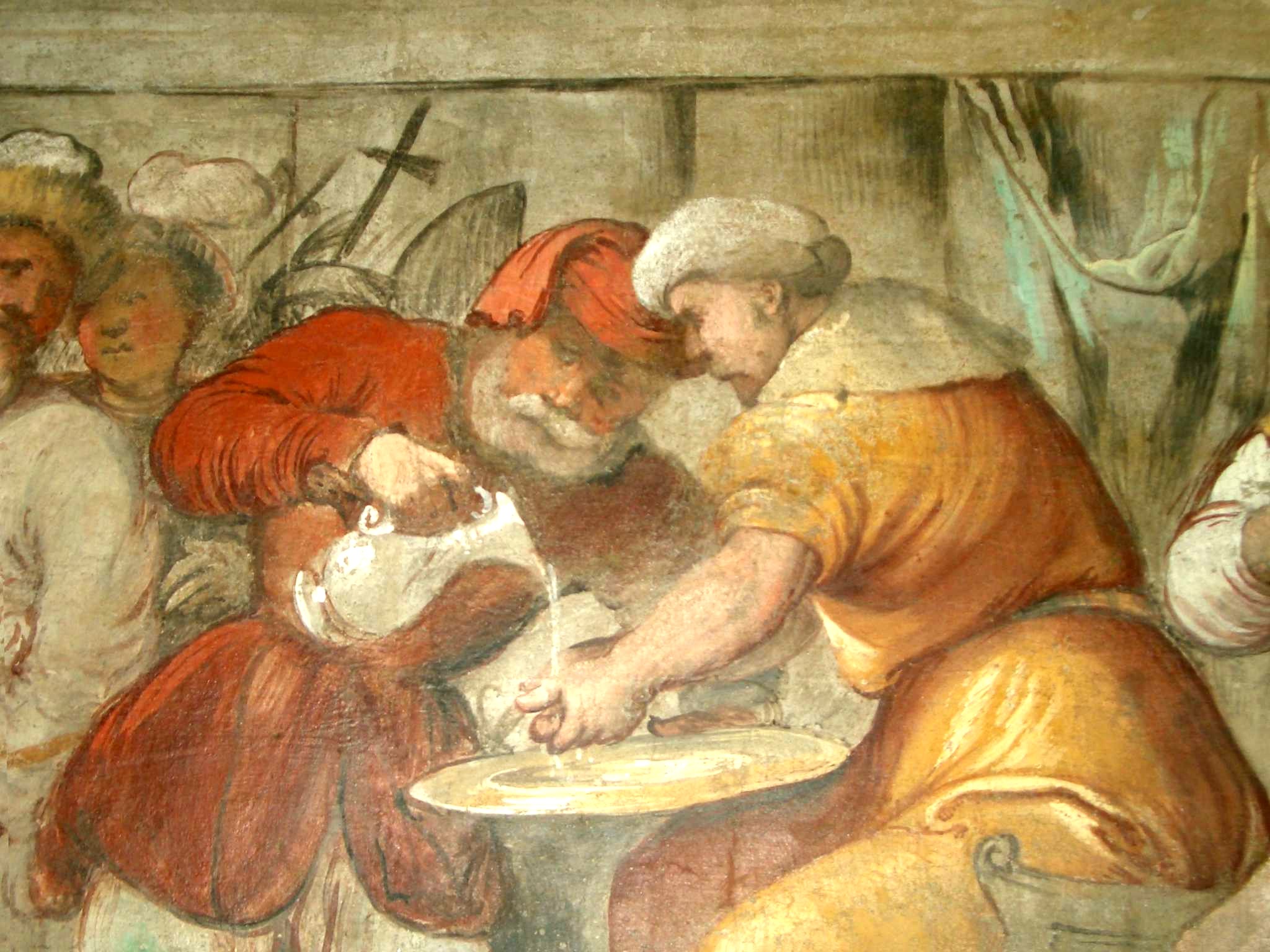
Romanino, Pontius Pilate (Wikimedia Commons)

Romanino, Pontius Pilate (Wikimedia Commons)

In light of the latest anti-Semitic atrocity, at the Kansas City Jewish Community Center, it is necessary for Christians to go beyond papal and ecumenical apologies for anti-Semitism. We must boldly proclaim that our beloved Holy Scriptures are downright wrong on some points.

Plenty of Christians, especially those who have been to seminary and studied the Bible as the writings of very real people living in very real times, know this. But rarely do you hear preachers acknowledging from the pulpit the demonstrable errancy of scripture, let alone instructing congregations in how those mistakes were made, what harm they have done, and what we should do to correct them.

It is Holy Week. Instead of devotional readings I happen to be racing through Zealot, Reza Aslan’s biography of Jesus. I was looking for entertainment reading last Sunday afternoon and came across this while browsing popular selections in my local digital library. I don’t know why I thought it would be entertaining but it actually is a good read.

The story I’m thinking of is Jesus’s alleged trial before the Roman governor, Pontius Pilate, in which Pilate finds Jesus relatively harmless and offers to set him free, following an alleged custom of releasing one prisoner for the holidays, but the Jewish crowd demands the release of another insurrectionist instead and screams for Jesus to be crucified. This is the basic story presented in the oldest gospel, Mark, but subsequent gospels embellish the story until, in John, Jesus himself is blaming the Jews and absolving Pilate.

Aslan points out, as others have done, that this scene conveniently slides the blame for Jesus’s crucifixion from the Romans to the Jews. Besides the gospel record there is no historical evidence for any of it except the fact of the execution itself.

What historical evidence there is would suggest that the story was fabricated. Historical evidence identifies Pontius Pilate as a particularly cruel tyrant who didn’t blink at executing Jewish troublemakers, which Jesus certainly was. Historical evidence identifies crucifixion as the favorite Roman method of execution for revolutionaries and bandits and guerrilla fighters, of which there were plenty at the time. Most important, historical evidence suggests that the audience for the gospel writers and the spreading Christian movement at the time these stories were written was Rome, the gentile world. So in fleshing out the whole Jesus story, 30 to 100 years after his death, the writers did not hesitate to spin the story in a way that would take the edge off of Roman responsibility. The Jews were, at that time, a lost cause, recently decisively crushed by Rome after a futile uprising and, besides, most of them didn’t accept Jesus as the Messiah, whatever one might mean by that.

“Thus, a story concocted by Mark strictly for evangelistic purposes to shift the blame for Jesus’s death away from Rome is stretched with the passage of time to the point of absurdity, becoming in the process the basis for two thousand years of Christian anti-Semitism,” Aslan writes.

Anti-Semitism is not Christian. As a Christian I don’t want to share any blame for evildoers like Frazier Glenn Cross/Miller or any of his ilk. I would like to wash my hands of him. But the anti-Semitism of today has its roots in the very beginnings of Christianity. Pretending this is not so is like turning away from clerical child abuse. Continuing to tell such harmful Bible stories to ourselves and our children is to perpetuate the conditions for abuse. Let’s set the record straight.


A book for struggling writers

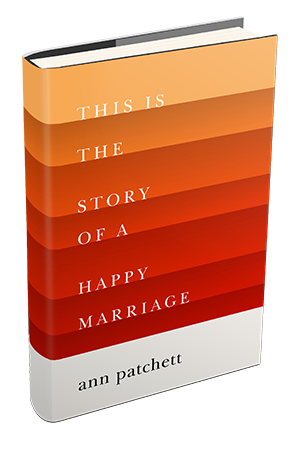
This-Is-the-Story-of-a-Happy-Marriage-3dWriter friends, here is a book you must read although you wouldn’t know by the title: Ann Patchett’s This is the Story of a Happy Marriage. I read anything Patchett writes (Bel Canto, State of Wonder) but I was especially attracted by the title. I, too, have a happy marriage and I’m tired of reading about dysfunctional ones.

It turns out to be a collection of her essays, including the eponymous one. But most of what I have read so far has had to do with writing. That’s why I can’t wait to tell you about this book even though I am only 19 percent into it, according to my Kindle. I haven’t even come to the essay that made me buy it

Reading the introduction and the first essays, especially “The Getaway Car: A Practical Memoir about Writing and Life,” has been extremely timely for me as I struggle my way into writing what I think may be a book. I am highlighting whole paragraphs, like this one:

Forgiveness. The ability to forgive oneself. Stop here for a few breaths and think about this because it is the key to making art, and very possibly the key to finding any semblance of happiness in life. Every time I have set out to translate the book (or story, or hopelessly long essay) that exists in such brilliant detail on the big screen of my limbic system onto a piece of paper (which, let’s face it, was once a towering tree crowned with leaves and a home to birds), I grieve for my own lack of talent and intelligence. Every. Single. Time. Were I smarter, more gifted, I could pin down a closer facsimile of the wonders I see. I believe, more than anything, that this grief of constantly having to face down our own inadequacies is what keeps people from being writers. Forgiveness, therefore, is key. I can’t write the book I want to write, but I can and will write the book I am capable of writing. Again and again throughout the course of my life I will forgive myself.

On the one hand I wish I had come across a book like this when I was younger. Maybe I would have started earlier and become a real writer. I wish I had happened upon the right mentors at the right time, like Patchett did. I wish I had known, and that everybody around me had known, when I was a kid, that I wanted to be a writer. As she says, this was perhaps her greatest gift. But being a writer was not in the realm of possibility for me, a little Mennonite girl growing up on a farm in the 1950s. My goodness.

So here I am, at 69, struggling to write anyhow. The thing is, the struggle I go through is the same as what Patchett describes. The self-doubt, the feeling of inadequacy, the distance between the conception and the writing, the effort always to do something beyond your capability, the profound dissatisfaction with the final product (you’ve killed it, she says, with your own hand) are not peculiar to me. I should know this by now, I’ve read enough writers about writing. But her essay catches me in the act of going through this inevitable charade as I start to work on what I hope will be my second book. I can’t. I hate it. And yet I must. I love it.

I am not capable of writing at Patchett’s level, for sure, or at the level of most of the writers whose books I feast on every evening. I profoundly admire and envy them. But I write what I can and what I must.

Do conservatives and liberals need each other?

My eclectic reading this week has me thinking about profound human differences–political, religious, and personal. In particular, what you might call the liberal/conservative divide that cuts through all of these realms.

I am convinced that political differences, for instance, largely mirror differences in personality. This is both comforting and scary. It is comforting to know that, underneath it all, our political opponents and even those we might consider our enemies are acting from human nature, which we might be able to understand, as fellow humans. But it is scary that, although we might understand each other, we can’t change each other. That is, if these differences are innately human we won’t be able to bring each other around to our point of view. And compromise won’t work.

Indeed, the political divide between liberal and conservative is widening and deepening. Differences are becoming entrenched. This article in today’s New York Times describes how that plays out in the twin cities of Duluth, MN and Superior, WI–two cities with similar populations and economies but now set on very different paths because of profound differences at the level of state government. Some immediate results are evident but others will only be seen in the long term. An interesting and poignant experiment.

I don’t know how I missed reading or even hearing about the 1999 novel, The Fifth Sacred Thing, until now. Set in 2048, it plays out an extreme version of the results of two such paths in two cities, in a California that has been devastated by both natural and human-made disasters. San Francisco has gone all earth-based spirituality, free love, and consensus. Hardly anybody owns anything but in the verdant city there is enough for all, and healers, artists, and musicians are particularly treasured. It is a self-contained, self-sustaining society but it is also isolated. And it is under attack from the police state that Los Angeles has become. Starhawk’s novel is a great read.

If I had to say where I stand of course I would put myself on the liberal side. I share the vision of a society where all are fed and no one is turned away from the table. Where all have meaningful work according to their skills and talents. Where healing of all kinds is available to all. I believe that the earth is sacred. That is, it should be honored as a primal source of our being, as parenthood is sacred, as love is sacred, though I do not believe in group sex and promiscuity. And oh, please, I am not attracted to the consensus process (I hate meetings), though I suppose something like that is necessary in an egalitarian society.

On the other hand, I do not believe that corporations and fundamentalist religion are irredeemable as systems, that is, that they are evil per se and lead inevitably to the horrors described in the novel.

That is, I don’t believe, with the author, that one approach leads to ultimate good and the other to ultimate evil. Because I believe these two paths represent basic, inborn (as well as cultivated) human differences. And since, well, all of us are created in the image of God. . . .

Perhaps the key is in how we exercise our innate natures. When we are healthy and secure we have strengths, in our different personalities, that are essential to living together in this world. When we are under stress or in conflict, these differences become extreme and contribute to the conflict and division between us.

My friend John Fairfield is working on a book that outlines a Christian theology putting our very differences at the center of the call of the Christian church’s work in the world as well as within the Christian community. This seems relevant to what I’m thinking about.

John describes the “healthy and secure” person of what I would call the conservative type as having a strong identity and being concerned with being faithful to tradition and discerning what is fair, what is good and bad behavior. This is good. Under stress of conflict, however, such a person is “tempted to reject those who are offensive, to preserve the purity of their community of identity. Under even more stress some become increasingly rigid, using their belief in the correctness of their beliefs to justify their control of the situation, by force if necessary. Some people will dominate, oppress, even kill, in the name of their beliefs.”

The healthy and secure liberal-type person, on the other hand, is hospitable, quick to learn and understand another point of view and synthesize that into something new, and reaches out to build bridges between opposing sides. Bravo! But in conflict, such a person may become wishy-washy, catering to opponents, hiding, fleeing, or exercising some form of deception. Passive-aggressive behavior is typical of this personality type. Touché.

John’s point is that we need each other, but we must relate to each other at the “healthy and secure” end of the spectrum and keep working to restore relationships to that level. Is this possible? Well, it is the work of a lifetime. Maybe several. Otherwise, we don’t have to look too far to see a vision of our dystopic, dysfunctional, divided future.
Favorite flix of 2013

Every year my husband and I try to send out a Christmas (or thereabouts) letter to our friends. I usually write it and I am usually, like this year, late. But I feel some obligation to do it because people care. I don’t know how much they care to know what we’ve been doing, but they do care about our movie and book lists. These have been, as far as I can tell, the most–probably only–popular features in our annual letter.

This year I am doing the best-of lists in this blog. I listed books on December 16. Here are our 5-star-rated movies of 2013 (not all of them produced then), in no particular order: Continue reading

Page-turners

I was going through my Manage Your Kindle (aka manage your reading habit) list just to remind myself of what I’d been reading this year. Quite a lot, but not everything meets my book-hog criteria of good writing and great storytelling: that page-turning quality that sweeps you in. Books I didn’t want to end. Many also packed interesting information into great stories and plots. Here is a list of novels I read in 2013 (not all of them published this year) that did that for me: Continue reading

Love and disappointment

“They drank a bottle of wine and opened another. They were so in love with the world and so disappointed in every aspect of it, that drinking another bottle while they sat at the kitchen table was the most obvious way they could honor it all.” –Dave Eggers, A Hologram for the King

This blog is my equivalent of opening another bottle. It is what I do to honor it all, the beauty and the disappointment of the world of nature, of humans, and my own internal world. Nothing I do or say or observe is unblemished. There is no simple love, there are no simple answers.

We watched a beautiful documentary last night about a terrible thing. Continue reading

Money laundering

money

My mood does not match the occasion, another 9/11 with war talk going on. I am lighthearted.

On any occasion or in any place, it is the state of one’s own soul and body that continues to matter most and I am feeling good today so I will not pretend to be wise about matters like chemical weapons and bombing and terrorism and bad, worse, and worst options. Any comments would come from my head and not from my currently light heart so I leave that to others who can draw on anger, grief, and suffering to season their words. Listen to them, please.

The hymn lilting in my head is “My life goes on in endless song, above earth’s lamentations.” I am getting ready for a big trip and all of the most difficult preparations are done. The trip itself will involve plenty of challenges so I am coasting through the next eight days with the last easy tasks. Cleaning the house, emptying the fridge, making a list of instructions for the house/cat sitter, packing.

And ironing money.

All transactions in DR Congo have to be done in cash. US dollars are good anywhere but they have to be perfect. No rips, smudges, or marks. Preferably new. I don’t know why. C’est comme ça.

Amanda, one of my fellow travelers who lives in a small town in Kansas, went to her bank early to ask for new money. She was told that the new bills wouldn’t come in till later this fall, so she would have to take the best of used bills. Amanda now has her banker collecting a stash of newish bills for her. And just to be sure they will pass in Congo, she’s ironing them so they look like new.

I thought that was a brilliant idea. Amanda, like me, is retired and retired people have time to do strange things like iron money.

Last May I had an imperfect fifty rejected when I tried to use it to pay my departure tax at the airport. Since I was all but out of cash by then, I was in a dither. Fortunately I was able to borrow a few passable bills from my fellow travelers.

On Monday Vic and I went to the bank to pick up an ungodly amount of cash. Our banker, too, said the new bills wouldn’t come in till later, “around Christmas,” so we would have to make do with good used bills.

The teller was very patient. Counting out the bills, approving them, replacing marred ones in a stack, took a good 45 minutes. We were so exhausted by the process and the stress of carrying all that cash that we had to treat ourselves to a nice lunch afterward.

And so today I am going to pull it out, check it all again, and iron it. I suppose one benefit of this kind of money laundering is that it will also kill germs.

Thank you to all who contributed to our cash stash for contributions to worthy causes when we are in Congo!


The pipeline and the prairie

worker

I followed the big digger being hauled down the country road that is the most direct route from the YMCA to our CSA (community-supported agriculture) farm. The combination of yoga and veggie pickup has made Tuesday morning the highlight of the week, but this was the last time I would be picking up vegetables. The truck was going 25 mph but I was in no hurry.

It was a symbolic end to the vegetable season. I was one of only 10 members in Farmer Theri’s CSA this year. Her season has been cut short and she couldn’t plant her back plots at all because they were marked to be dug up to lay the Enbridge replacement pipeline. The diggers have just now churned up her barnyard.

Last haul

Last haul

The digger was headed for another segment of the pipeline not far away. A dotted line of dirt piles marks the pipeline’s path across Michigan. Somehow I expected the tunneling to start in the west and proceed east, like the oil. Instead, the digging might start anywhere along the line and proceed in either direction. Here it moves mostly east to west but in a broken line. The dots will eventually be connected.

Meanwhile I work on my part of the story. I’m not doing anything heroic like getting arrested for sitting in a company driveway, like my friend Sandra Steingraber did to protest fracking in upstate New York. I am just trying to see that the small grant Enbridge is giving our township for “environmental restoration” gets used appropriately. This is in addition to direct compensation to landowners. It’s pure guilt money and not much: $15,000 for the long scar Enbridge is drawing across the belly of our rural township.

DSC02295

I wrote how the township committee responded enthusiastically to my proposal to do something for my favorite piece of wetland, the rare wet blooming prairie a mile from my house. I tossed that ball into the court of Chickaming Open Lands, the conservation group that manages the prairie. Yesterday the development director called back.

“We talked about it,” she said, “and what we’d like to propose is a boardwalk out into the prairie so people can see it better.”

That was exactly what the township committee had proposed, but I hadn’t mentioned that detail to the Chickaming people. I was elated. Maybe it would be easier than I thought to get a politically conservative township and a liberal conservation group on the same page.

I called the township supervisor and reported the conversation. He seemed pleased but he said, “I was just down at the firehouse. You know, everybody has a project they’d like to get funded.”

Of course. Conversations will go on although our ad hoc committee was supposed to make this decision.

Still, he promised to link up with the conservation group. We’ll see. I’m not taking bets on where this project will stand by the time I get back from Congo in mid-October. But I’m voting for the prairie.

prairie