Ndjoko Punda

We have just emerged from the heart of internet darkness. Still, in the bustling city of Lubumbashi, at the southern tip of the Democratic Republic of Congo, electricity and wi-fi are intermittent so I will post this when I can and put pictures at the end because that’s the easiest way to deal with mobile technology.

So much to write and yet I want to go out and do, too, because Vic and I are in L’shi for the first time since we lived here in 1973-74. So until we gather energy to walk up to the new shopping center that has sprung up near the new golf course on the edge of a newly created lake, I’ll scribble a bit. Much has changed in this relatively prosperous town in the copper mining region. It is bigger now. We don’t recognize much. Tomorrow we’ll go look for the street we used to live on and visit the university where Vic taught and maybe try to find the hospital where our daughter was born.

We spent last week in the province of Kasai Occidentale, mostly in the dusty diamond town of Tshikapa, which is HQ of the Mennonite Church of Congo. We attended another ordination that included a woman, talked to many, many people, met friends and made new ones, and Vic and I took a river trip to Ndjoko Punda, the ultimate stop on this pilgrimage.

On the eve of this whole trip, back around September 18, I had a dream about looking across a wide river through windows without glass. In the river were large crocodiles, dangerous but not immediately threatening. A parade of animals walked by on the opposite bank–zebras, giraffes and what I at first identified as a wildebeest. But it turned out to be a combination of centaur and unicorn–a wildebeest with a human torso and head which looked like that of a sorcerer, and out of this head grew a single, tree-like antler.

My sense was that the spirits were waiting for us on the other side of the river. Not clearly good or evil but powerful.

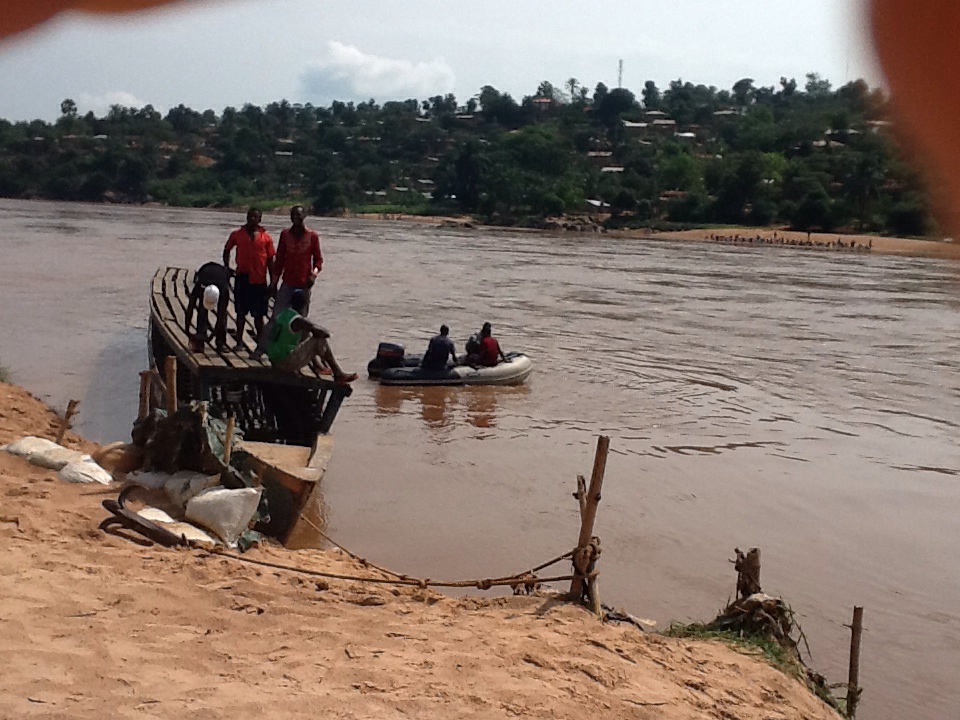
When we were waiting on the edge of the river last Thursday for Kazadi, the volatile dinghy pilot, to get the tiny rubber boat and outboard motor ready to go down the Kasai River, I recognized the place of my dream and I thought about crocodiles. We didn’t see any but something was there, churning up difficulties at every stage of the trip.

This trip will be a chapter in a book some day. There is the short version: we did get to Ndjoko Punda. We did hear and record the Grand Tam Tam choir. And we did get back safely. And there is the long version, the book chapter. I am trying to see if I can get an intermediate blog version out of it. It might go something like this:

We did go to Ndjoko Punda but not when we planned to go and not with the person we had been negotiating with extensively and not entirely on our own, thank goodness, because Vic and I would never have managed sorting out all the complications ourselves. French didn’t cut it; Tshiluba was essential. And it was clear that we were very, very white with all the cultural baggage that brings with it. We were so white that we scared babies. Literally.

We did hear and record the Grand Tam Tam choir–and seven other choirs that we did not ask to hear and really did not have time to listen to because our time was compressed by the difficulties of getting there. It was glorious and hectic.

We did get back safely, our pockets empty of cash. Along the way we learned quite a bit about artisanal diamond mining along the river; how to repair rubber dinghies; and negotiating the rapids in the Kasai River as well as the ravines that used to be roads in Ndjoko Punda (on the back of motorbikes). We did spend the last two hours of the trip churning up the river at top speed in the dark, no moon. Fortunately, Kazadi, who had little sense of time and got into one fistfight along the way, did know his river. And the stars were lovely!

Actually, the whole trip–including an overnight stay with our fellow Mennonites at this 100-year-old former mission–was lovely, hard, exciting, and worth every dollar we spent and gave, even those we hadn’t budgeted.

I have had my wished-for adventure. I am rather proud of myself for insisting on it though it seemed impossible at many points. The spirits where there, waiting and powerful. Presiding over all, though, was Holy Spirit. We were blessed and I do not use that term lightly. I think we were a blessing, as well.

And now we are lolling in luxury in a lovely guesthouse and acting like regular tourists. As the plane from Kinshasa filled up last night with wealthy-looking expats and Africans who were also going to Lubumbashi, we felt like country bumpkins. The dust of Tshikapa was under our toes, I was wearing glad Congo cloth. I hadn’t looked in a mirror for 10 days. We had come from a different world.

I love that world we came from. People from there are calling us–just now one more scratchy call from Ndjoko Punda and this morning at sleepy 7 am a call from Tshikapa–to make sure we have arrived safely but I feel that somehow, with all our advantages (including enough cash but also the care we are given) we will always arrive safely. How can we reciprocate such care?

P.S. As I go to awkwardly load photos onto this post, for some reason this boat picture, of someone else’s dinghy, is the last picture available. Nothing after that except a few I took this morning. A whole lot of black pictures. I’m sure they’ll show up sometime, just not when I need them. That’s the way this whole NP business has been. Spirits? Just sayin’.
20131008-135946.jpg

A mystic in trouble

Why do I even do this? I ask myself several times a day when I am tending Congo matters. How did I get myself into this difficult situation, who am I to be doing this? But the question is always rhetorical, not because I know the answer to it but because I know I will keep doing whatever it is I am doing, even though it is difficult. The situation I’ve gotten myself into is exactly where I want/need to be, even though it isn’t always pleasant.

But I try to address the question head-on every now and then because motives and reasons can sneak around and bite you in the back if you don’t keep an eye on them. They do keep changing, even if your actions remain outwardly the same. If you aren’t aware of the changes you can start lying to yourself, unwittingly, and that is never good. The better side of this is that as time goes on motives may become clearer, and it is always rewarding, always a good thing, to understand yourself better, to understand what is happening to you that causes you to behave in the way you do.

The situation I am referring to is that I continue to take a very active interest in a particular Christian community in perhaps the poorest country in the world, a country ridden by impossible conflicts, though those conflicts are largely outside the territory of this community. So, it’s not because I think I can do anything about the chaos and suffering in eastern Congo. It’s not, in fact, because I think I can do anything about any kind of suffering in Congo, including the suffering of poverty. Relieving suffering is not my motivating force, not what calls me, although it may be a blessed side effect of some things I do.

I do hope not to create more suffering for others though that, too, can be a side effect. So maybe I will create suffering, unpleasant as that may be for me to witness, because suffering is necessary for growth. I’m finding this in my own case and who am I to say growth should be easy for other people? I am suffering a little right now, asking myself, why do I even do this? Because it isn’t easy; it is, in fact, sometimes agonizing.

Early on what got me into the Congo thing, which has intensified over the last year and a half, was a combination of nostalgia (for a previous experience in the distant past), love of beauty (Congo Cloth), and serendipity: the unfolding of a series of circumstances that came together in quick succession, making certain actions and developments seem right.

Then, quickly, it came to be about relationships. When you start relating to a new group of friends, become involved in a new network, certain things become possible and certain things are asked of you and you respond. Relationships require communication and lead, inevitably, to responsibility but they are also sustaining. So I can say that I need this new group of friends; that they are becoming like another very extended family for me, creating warmth and home and familiarity in ways I could not have imagined two years ago.

But none of this gets at the big, mysterious Why. Why Congo, why me, why now?

I could put it down to feeling called. It is that for sure, but the answer does not satisfy me so why should it satisfy you? I have done a lot in my life without the (maybe sometimes dangerous) certainty that goes with feeling called, and so I don’t think a sense of call is necessary to compel me to do odd things like work for nuclear disarmament or wrack my brains over environmental policy. But I have done these things out of a similar combination of circumstance, attraction, relationship, responsibility, and mystery. And with the similar frustrations and agony that come with doing anything difficult (even apparently impossible).

The common thread here seems to be, “difficult things.” Why do I repeatedly go for the difficult, the impossible? It seems to be in my DNA, but it is also a result of how I live, that is, by such airy methods as prayer and paying attention to dreams, and in an everlasting quest for wisdom (knowing I will never have enough of it to make sense of myself, let alone the world). These difficult situations are the practical results, for me, of living as a mystic.

Living as a mystic gets me into difficulties. I get focused on something and can’t turn away. Prayer and dreams trick me into taking bold steps that make no logical sense. But living as a mystic also gets me through difficulties. It does not, believe me, keep me from making mistakes. The mistakes, however, usually get transformed into wisdom and learning, and correcting them requires more bold moves in a good direction. Away from fear, toward love. That movement, propelled by spiritual power, is what it is all about.

Mystics, unite! The world needs us, getting down and dirty, getting into trouble.

The way of Invisible Woman

I started reading Claire Messud’s The Woman Upstairs last night. It is haunting me, affecting my dreams, because the voice in the early chapters is one I hear in my head all the time.

An image from my dreams of last night: Three pieces of fried chicken–two legs and a breast. My younger brother and husband are there. My brother takes the two legs, my husband, the breast. I worry about whether it is enough for them.

When I wake up I realize I didn’t even think of taking one of the pieces for myself.

The voice of the novel is like the part of myself I think of as Invisible Woman, the one who works behind the scenes, serving others and perhaps never getting around to her own art. It is the voice of both the main character in the novel, an elementary school teacher who is really an artist, and her late mother.

We are haunted by what we have not done with our lives because there is always another mess to clean up, another demand waiting to be met, someone else’s work to help with, and we are good girls. We let these things take priority. It is not in our nature to put our own work first, it simply isn’t. And sometimes this makes us really angry, not at the world but at ourselves.

However, recognizing this aspect of myself doesn’t send me into a tailspin any more. Invisible Woman has her own ways of doing things and sometimes it works out well, in a way that serves my purposes as well as other people’s. Here is a story about that.

Recently I agreed to host a dinner party for two Congolese businessmen who were visiting church agencies in the area to learn about church finances. I agreed because I believe in showing hospitality—an Invisible Woman trait. I agreed because it seemed like a simple thing, hosting a potluck for an unknown number of guests. However, potlucks require a critical mass of guests and dishes and it became apparent, in the planning, that this one wouldn’t reach that number, so I just went ahead and cooked an entire meal. This is usually no big deal for me but I was tired that day and would have preferred sitting in and watching a movie rather than pulling out my outgoing, French-speaking hostess self.

These events usually turn out to be worth the effort and this one did, too. It took a while for the Congolese men to warm up but the other Americans carried the conversation until they did and then, toward the end of the meal, I mentioned our desire—my desire, which I have persuaded my husband to share—to visit Congolese Mennonite churches sometime in the next year and listen to as many choirs as possible, to do what I’m calling choir tourism. And to write about this and maybe put together some videos.

The Congolese businessmen lit up and became downright chatty. And this is when Rod, the agency director who was squiring the Congolese about, pointed out that the first women were going to be ordained in a major branch of the Congolese Mennonite Church in September and October of this year and would I like to go and write about that?

Well I most certainly would. The ordinations, I know, will be occasion for grand celebrations, with lots of choirs joining in. It is the kind of event I was looking for.

I didn’t tell Rod that I would rather not write on assignment for church publications, that I had been set on writing entirely for my own purposes (I’m not saying “book” yet even to myself). I didn’t tell him that this next trip to Congo was to be a kind of self-test of my seriousness as a writer, a test of whether I had enough confidence in my own work to spend tons of money, uproot us for a month, and plan an arduous and complicated journey just so I could write.

I didn’t say any of this because the opportunity seemed just too serendipitous. Of course I can do some articles. The assignment will, in fact, force me to be serious about interviewing and making notes. I won’t get away with the kind of vague intention I harbored last July when I concluded that I simply wasn’t up to writing about Congo. I didn’t have the chutzpah to do interviews, the energy to write down all my observations, yada yada. No excuses this time.

Still, I managed to write quite a bit on that trip, and I had written even more on my first trip, when I had my laptop rather than the iPad with the onscreen keyboard (which I never got used to and, believe me, writing technology makes a huge difference). As for the energy I need to work hard, I’ve lost 20 pounds since last July. I am renewed, revived.

I can’t believe I shouldn’t take this opportunity to do something for someone else and use it as a way to support my own art. The money, the discipline, the deadlines will all help. I may use some of the money to hire my friend Charlie Malembe, an ambitious young Mennonite journalist in Kinshasa, to help with the interviews. She doesn’t yet know how to write for a US audience but she’s a great interviewer. My stringer. I will happily share a byline with her.

This is the way of Invisible Woman. I don’t have to do everything by myself, for myself. I am a team player. I seize opportunities that provide the momentum I can’t quite generate myself.

And, of course, the tiny bit of effort I expended to feed those two strangers (chicken grilled, not fried) will no doubt be repaid tenfold on this next trip. The Congolese are magnificent hosts.


This organic life

house

I need to put the hummingbird feeder out. The birds are due any day now or perhaps they’re already here and snubbing us because I haven’t put the feeder out.

This thought arises suddenly and makes me think of the miscellany of my to-do list. It is rich and shapeless, everything wanting to be done at once.

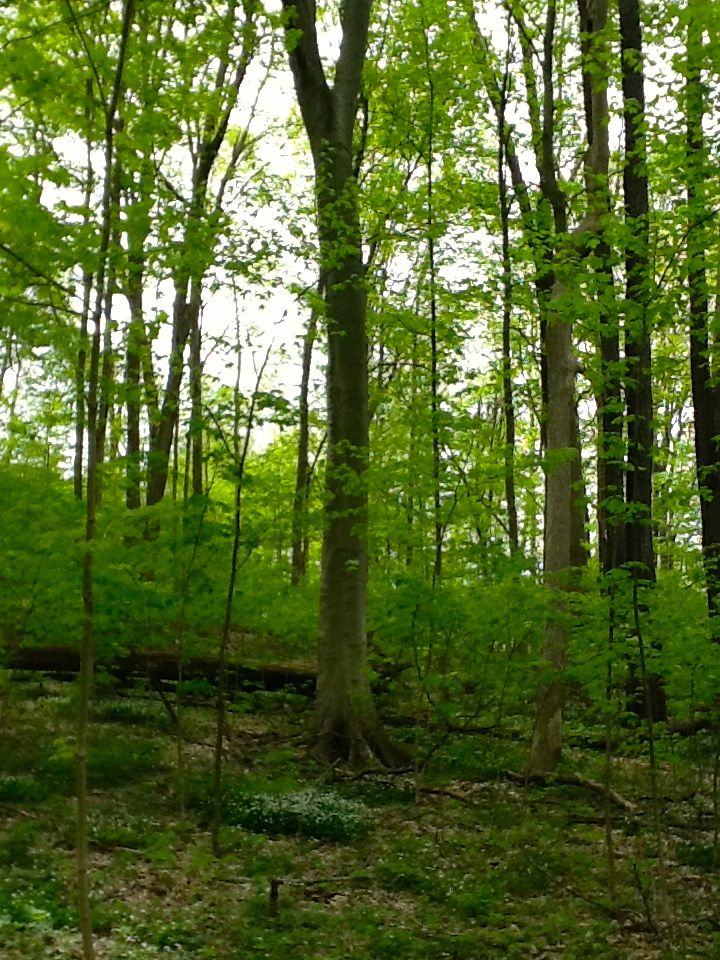
Sitting on the porch, watching the colorful birds of spring (indigo buntings, siren-yellow finches, rose-breasted grosbeaks) and wood ducks looking for a nesting place in our woods—this is high on my spring to-do list. Alas there is no water on our property so it is not prime wood duck real estate but they come looking every year because we have great tree holes. We also have a hawk nest this year so beware, little birdies.

Wood nettle shoots are at their prime. I must go out and snip another bagful. I took a mess of nettles to a church potluck yesterday (steamed briefly, tossed with olive oil, garnished with violets). Every year I introduce more people to this spring delicacy. It takes some faith to bite down on plants that will sting like crazy if you grab them raw but immersion in a hot bath makes them sweet and safe. I don’t like the more common ditch nettles, however. See my post last year on this.

Having dreams is on my weekly agenda. The only preparation I can make for the communal dreaming class I am conducting for nine weeks at church is to have dreams myself, and I don’t have a lot of control over that. As it turns out, I often don’t even bring up my own dreams because other people’s dreams fill the hour. The dreams are rich and amazing and reveal their meanings as we talk about them. I discover again that I am quite good at helping people interpret their dreams. Some shared images appear in our dreams. Speculating about what this means.

I am praying daily for friends of a friend who are being held captive in a foreign land. This requires making time and place for the prayer to be received (that is, knowing what I should pray) and offered. It is not a prayer to be breathed at my desk although I do that, too. I usually go out with the trees, to get their help.

Helper trees

Helper trees

I am thinking through and consulting others about aspects of a partnership between my congregation and a congregation in Kinshasa that I know well from two visits there last year. Especially, how do you address or get around the vast economic differences without opening great cans of worms? I write up a proposal and send it off to a few people for vetting. This is difficult and necessary headwork in a project that is, for the most part, a work of joy and spiritual enrichment.

I am deciding what to do about biking. What would it feel like to give it up? Why did I have a sudden surge of jealousy when Vic asked how I would feel if he decided to buy a new bike (and I didn’t)? On the other hand, why am I enthusiastic about the idea of funding scholarships for Congolese students instead of buying a new bike? Sorting out my own feelings. Sorting out the state of my body as well as my spirit.

I just arranged for an energy healing session to address my recurrent UTIs, which have now become resistant to most antibiotics. This is related to the biking question because I can’t afford to keep having UTIs and biking seems to instigate them sometimes.

And it relates, in turn, to dreams, because I had a dream in which energy healing was being done on an Atlantic beach. I was to take my turn at healing and being healed before even putting a foot in the water. The ocean represents Soul waters for me. Also, the Atlantic links us to Africa, so perhaps it is a reference to my next trip to Congo.

That trip is taking shape and moving up on the to-do list. I may post about that soon.

Maybe my to-do list is not shapeless so much as organic, one thing merging into another and branching into yet others.

Life is like spilled beads

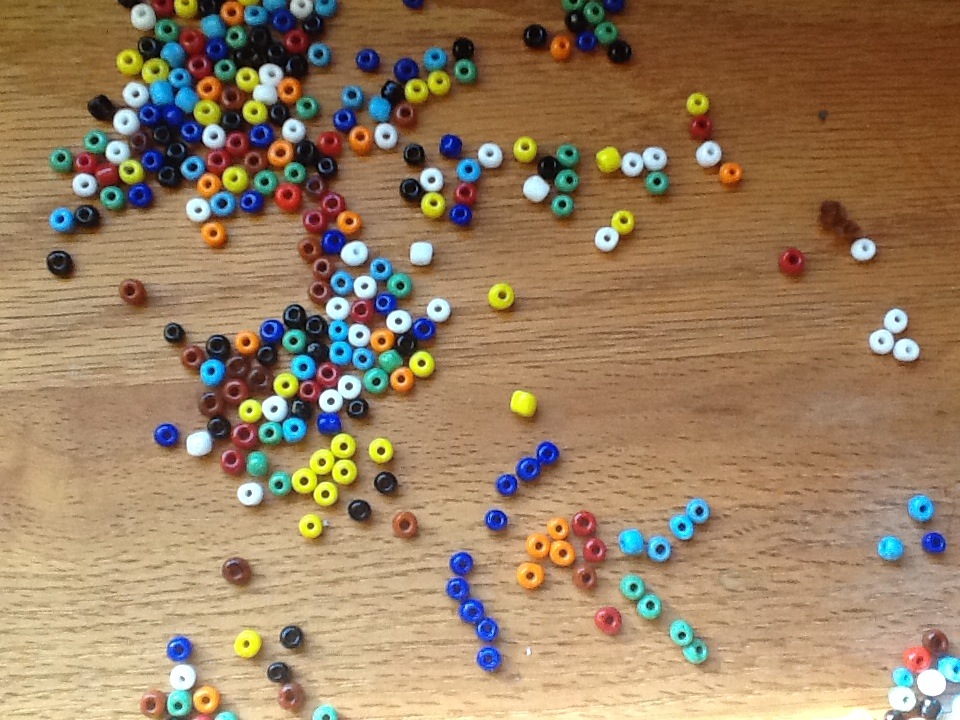
beadsI dream of sorting tiny beads. It’s not just me. I have kids “helping.” Of course every time the beads come into some sort of pattern they get messed up. And then we start over.

I don’t know what this is about except life. Cooking, cleaning, writing, losing weight, working on myself. Nothing is ever accomplished, done, satisfactory. Expecting it to be so is futile, given the material and who’s working with it. I’m not God the master artist. I’m just a bunch of easily distracted kids and this is really, really demanding work, making sense of life, making progress in life.

I dream this after starting Kate Atkinson’s Life after Life, a novel about the lives of Ursula, who, every time she dies (the first time right after birth), goes back and relives the same life up to the point of that death, which she or circumstances now prevent, until the next death happens–maybe only months or hours later this time. For example, it takes her three or four tries to survive the great influenza epidemic of 1918. After infancy she has vague but urgent premonitions before the last thing that killed her happens and she takes a small evasive action. When I left off last night she was 7 and was beginning to experience déjà vu in other things as well.

This is an intriguing premise for a novel but mind-boggling to think about. (I recommend anything Kate Atkinson has written.) Another mind-boggler I’ve read recently is A Tale for the Time Being by Ruth Ozeki. That one plays with time and the idea of parallel universes, parallel lives, subtly, not in a sci-fi way.

The thing I live for is to see patterns and connections. Thus the beads in my dream. Now I see them, now I don’t, and there is very little to hold them in place once I do see them.

Take weight loss, for example. I was following a formula that was working. The last few weeks I’ve been following it strictly and it hasn’t worked. The scales register a gain. If it is the scales, why does it act up in that particular way? If it is my body, same question.

And on a larger issue, every time I think I am in general becoming more disciplined and purposeful, I have a day like yesterday when I watch hours and hours of TV and read novels and get no exercise and exceed my food points.

I guess that is no great mystery. I was a tiny bit discouraged by the weight gain. What the heck nothing works anyhow I may as well be a lazy slob.

But church was good yesterday and the dream class I’m leading there went really well again. At first the dreams are like spilled beads and then we begin to see the patterns.

Today I’m ready to get back to the bead sorting. Having fun doing it.bead girl


My Next Big Thing

The truth is, I’ve hit a snag. Flow stopped, motivation gone, I am at a loss for what to do next. I’m retired, I can do what I want, but that is easier said than done. What do I want?

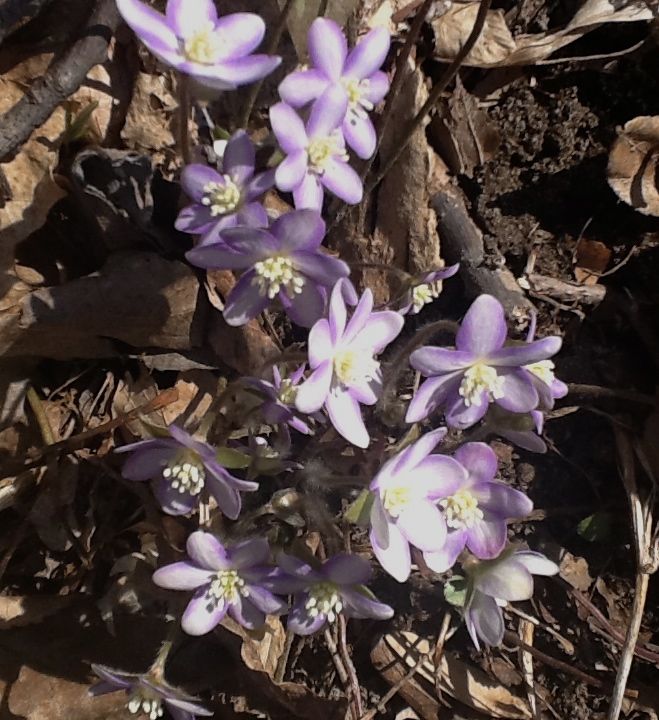
On this warmer but still gray afternoon in early April, with only a hint of green and hepatica (yay, hepatica!)  in the forest leaf cover, I feel like I have started a thought and lost it, mid-sentence. What were all these plans I had as recently as January 1? I had what I thought was a year’s worth of desires lined up. All I had to do was follow through.

hepatica

Yay, hepatica!

Maybe it wasn’t a year’s worth; maybe only three months’ worth.

No, that’s not quite right. Some of those plans are accomplished, ta-da, done! Or almost. I work really fast when I put my mind to it. Others are not yet fully executed. I have done the easy parts and many of the hard parts but now there are some really hard parts left and I am running out of steam.

In the accomplished column is the publication of a book that I thought I would never finish writing and revising, let alone publish. Ta-da, done! I did this much faster than I thought possible and had fun mastering self-publishing, which has come a long way in the last few years.

In the nearly accomplished category: weight loss. I thought I couldn’t do it and then I did it. Ta-da, goal in sight!

Yet to do: get back to biking. But I have made progress by finding the guy who will help me get on the right bike. I will visit that shop outside Detroit again in the next month. Meanwhile, I will start to toughen my butt on my old bike as soon as the conditions are right. (I require temps in the 50s or above but not too hot, no rain, not too much wind. Today is a tiny bit rainy and besides I already got my exercise at the Y.)

However, what is really bothering me on this too-open afternoon, making me feel like a cowardly, unmotivated lazybones, is that I haven’t yet started my Next Big Writing Project.

But come to think of it, that’s not true. I have started the project but it is not yet at the writing stage.

  • I think I know what it is. I want to write about Mennonites in Congo and the power of music and faith in some of the toughest circumstances on the globe.
  • Since making two trips to Congo last year, I have been working on developing a special relationship between my church here and a congregation in Kinshasa.
  • I have revived the Congo Cloth Connection to create relationships and fund projects for women and children in Congo–we’ll do another big cloth market at the Mennonite Church USA convention in Phoenix in July.
  • And I am starting to think about my next trip to Congo.

I am hung up on this last point, however, the next trip. This will be a trip I do entirely on my own except my husband will go with me this time. But no sponsoring project, no special occasion like a centennial celebration, no fellow travelers. I want to go to visit churches and listen to as many choirs as possible. I want to go to write. This would be a research trip for my Next Big Writing Project.

There is a gap between the desire to do a thing–go to Congo on our own and listen to choirs–and making that happen. It is in this gap that the desire begins to doubt itself. Do I want this badly enough to do everything it takes to make it happen? All the money, logistics, contacts needed to travel in that compelling, outrageous country. Just for me. Just to write.

I need to believe in myself both as a doer and as a writer in order to move off square one. I am writing this as a statement of intention. If you wish, hold me accountable. Cheer me on.

A lost dream

This morning I woke with a stressful dream about being in a barren, cement barracks with a group divided into men and women. We all have to take showers, get dressed, and get to a choral rehearsal across an unknown city, by unknown means, by an unknown but precise deadline. I get into the wrong bathroom, the men’s, and then get to the women’s but have to get something in a room and then can’t find the bathroom where I’d left my towel. Many more complications. I may not get the shower. I am wearing a long yellow dress with navy patterned tights and cloddy shoes. Will it do? I wake searching and searching.

This has echoes of the terrific novel I’m reading, The Orphan Master’s Son, which is getting more and more disturbing as it progresses. But the most distressing thing is that this frenetic dream wiped out a dream image from the middle of the night that I felt was important and that I surely could remember though I didn’t wake enough to write it down.

I lose dreams all the time and I always regret it. What treasure of wisdom or entertainment is now lost to me forever because the bubble burst before I could capture it in my memory?

Yesterday, though, I found a dream that had gone missing and it really was important. It belonged in my book, The Dream Matrix, but it ended up on the cutting floor in my last revision. Without it some later references make no sense.

When I discovered the mistake I immediately revised the book. This is one great advantage of self-publishing. The changes get registered almost immediately. If you already have a copy of the book and would like to have the missing dream, email me at njmyers@mindspring.com. It goes into the first letter in Chapter 3.

This discovery just goes to prove my own maxim that even a great editor (which I am) needs an editor. I dare you to find a typo in this book! And it reads really, really well. But earlier I almost ended up with two chapter fives.

I didn’t discover the missing dream. My wonderful writing mentor, Deena Metzger, who had read earlier versions of the manuscript, pointed it out. She actually remembered the dream, as I did—it was still in my head, which was why I didn’t notice that it had gone missing in the final revision.

Like any great teacher she tacked the note about the missing dream as a P.S. onto an ode of praise for the book. She claims she says these things not because she knows and loves me or because she is connected to the book:

I finished your book yesterday.  I had read it, rapt, whenever I could during the day. It is an extraordinary text.  Beautiful. . . .  And brilliant.  Startling in its insight, perception and intelligence. . . . We, readers, know at the end something of the possible range of what it means to be human, the potential for extraordinary understanding and accomplishment despite, or because of, the struggles and difficulties that we all encounter.

[As] one who was present for some of this and has read much of it before [I am] awed, really, by your ability to render the great mystery of connection with so much light and so lightly.  By your ability to render the great mystery of connection!  I am and am not surprised that Spirit would challenge two women who were raised in and practice a soulful religious path to see what else exists, how else Spirit moves in the world so that Spirit’s ways might become known so that we can begin to live accordingly.

Dream and daily life, religion and Spirit, meanness and generosity, possibility and devastation, dolphins, beached and leaping, Aberdeen and sacred trees, the grove restored, hard and relentless work about nuclear and environmental danger, the world restoried, and friendship, friendship, friendship, and love in so many of its forms, lived truly and passionately from the heart.

These words do not come close but your words do come close.  I will try to find the right words to honor your heartfelt work. . . .

I want everyone to read the book so they will know what writing is and can be, also, what might happen in a circle, what might come to be if one gives oneself, despite or through, skepticism, to everything that is indeed occurring and related in the holy universe that is without limitation.

If you aspire to write soulfully and for the soul of the world, you should work with Deena. If you want to know what that is like, read this book. You can start by telling and writing your dreams to a friend.


The Dream Matrix

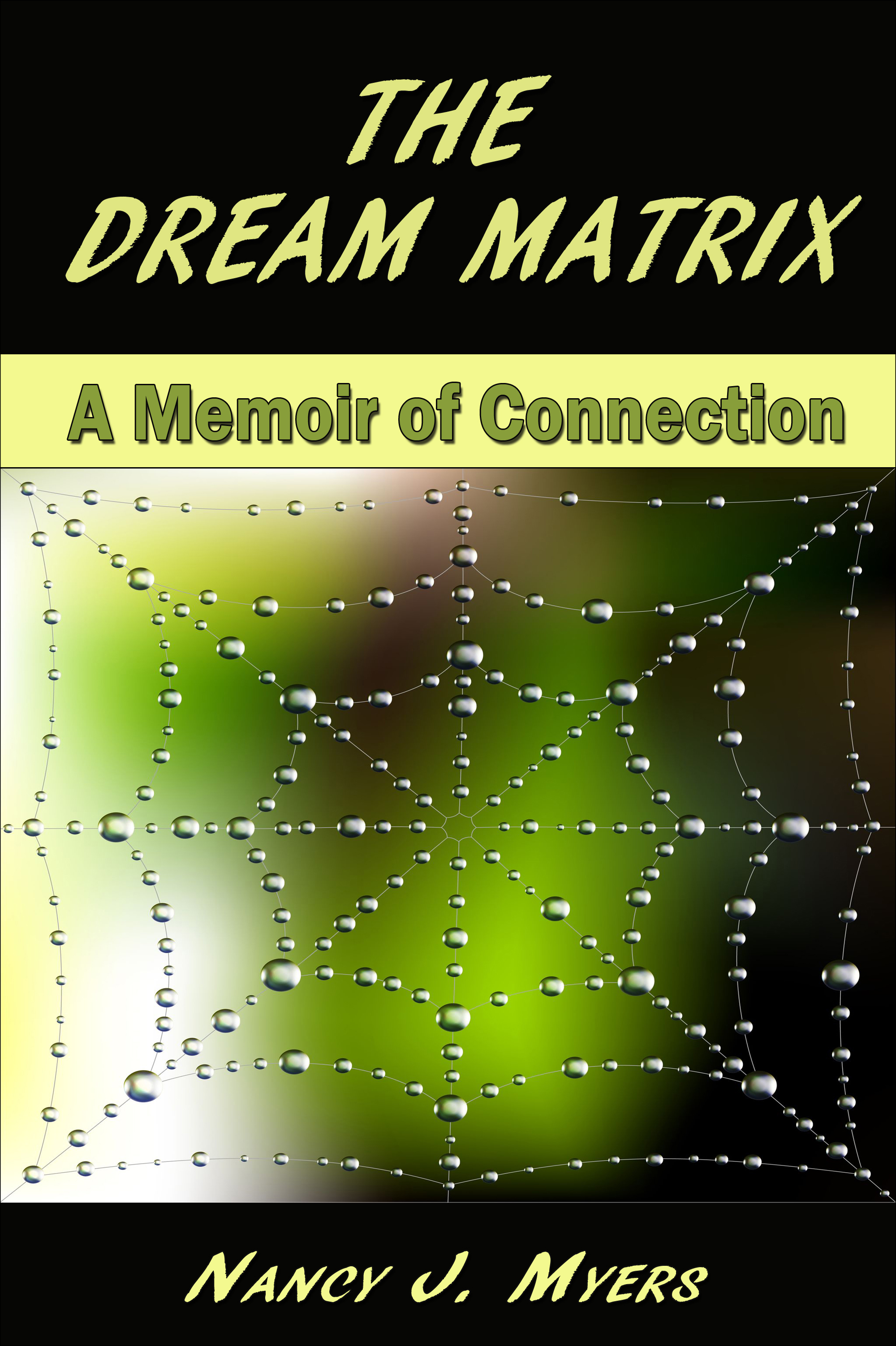
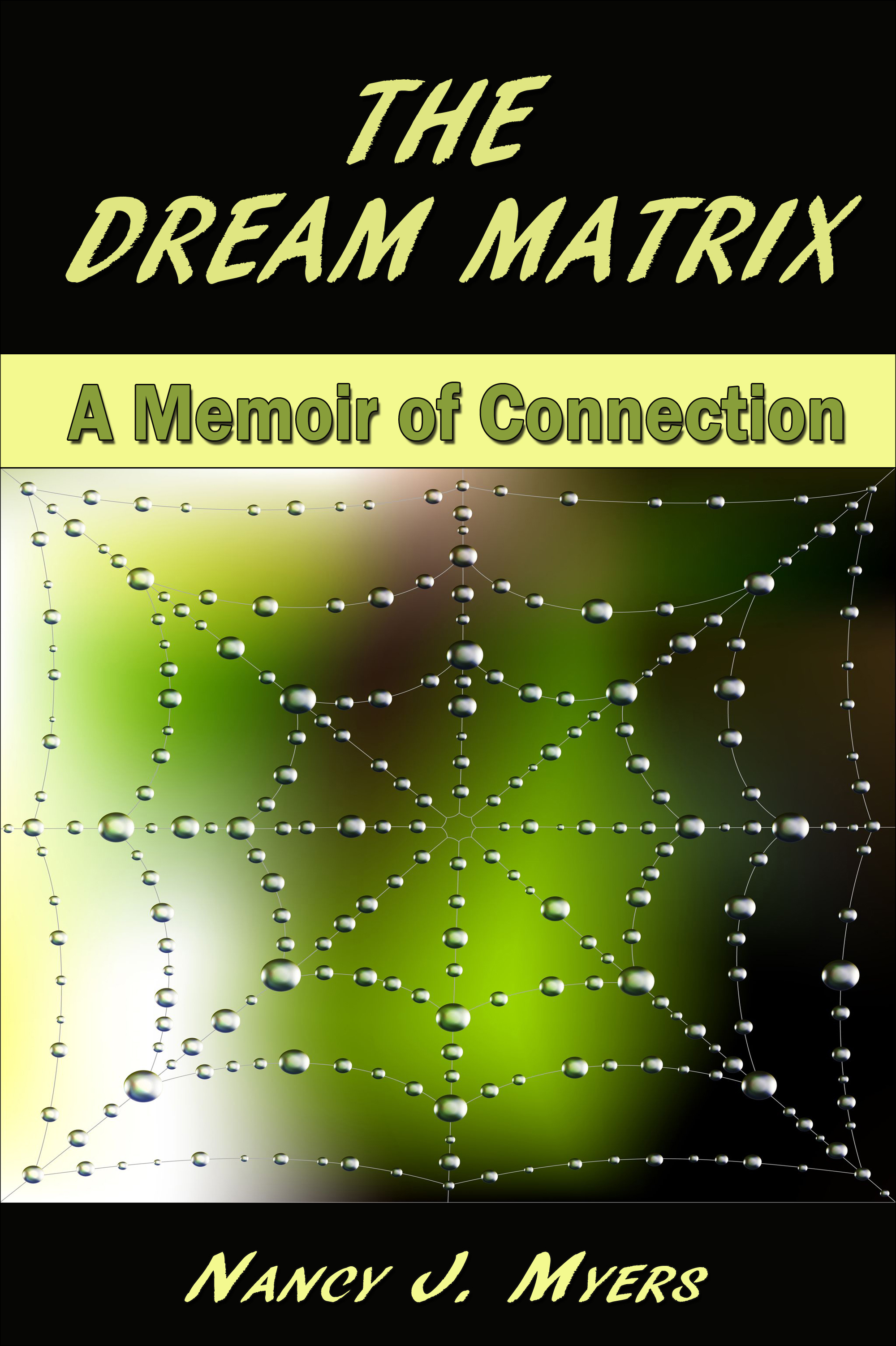
DreamfinalWhen two women begin emailing their dreams to each other they find themselves in the strange, rich world of communal dreaming. The dreaming not only forges their spirituality and deepens their friendship but also becomes a gift to their communities. The dreams enter the arenas of church and environmental policy, as well as the lives of individuals, bringing healing, joy, instruction, and luminous connection with the Divine. This story shows how to share dream time with a community and bring that dreaming reality to the awake world. To those who struggle to do good in a difficult world it brings a comforting message: this soulwork is possible.

If this sounds like a book blurb, it is.  The Dream Matrix: A Memoir of Connection, my cheerfully self-published oeuvre, is now out in all forms, available in print and e-versions at Amazon and other major e-catalogues.

This book tells a cool story. Maybe quirky is the word. It is not deliberately quirky, however, like some movies (Amélie and Moonrise Kingdom come to mind). It is all absolutely true but the truth kept quirking out of control as I tried to capture it. And so I don’t want to hype it but say only absolutely true things about it.

I think, for example, that our dreams crossed borders of time and space. The narrator, my very real alter ego, Stranger (what can I say; quirky), points out when that happens but readers must judge. The way the dreams of my friend, Carolyn Raffensperger, and I crossed into each other’s territory at the time of our correspondence was pretty subtle. Others have far more dramatic experiences to tell.

But paranormal experience is not really the point. As I say in the prologue, “This memoir is a case study in tapping into a less conscious, less defined, less logical, less limited, more creative aspect of our individual selves, which embodies and lives our connection with other people, all life, Creation, and the Divine. . . .It is about getting beneath the surface in order to make surface life—individual, communal, social, including at the ‘policy’ level—more authentic and thus more beautiful. It is about connection. It attempts to describe the matrix for, and ecology of, that interweaving.”

I do believe I am a mystic. I certainly have had some mystical experiences and they enrich my faith. But I’m a practical mystic; that is, I believe such experiences must have something to say to everyday life and the workings of the visible world. This memoir is the backstory for how I came to believe that is possible and necessary. It is also is also a backstory—one of many—for some important ideas that are being made real in the world, such as the precautionary principle and guardianship of future generations.

I hope you will read it and let me know what you think.

Picture your soul

vision board

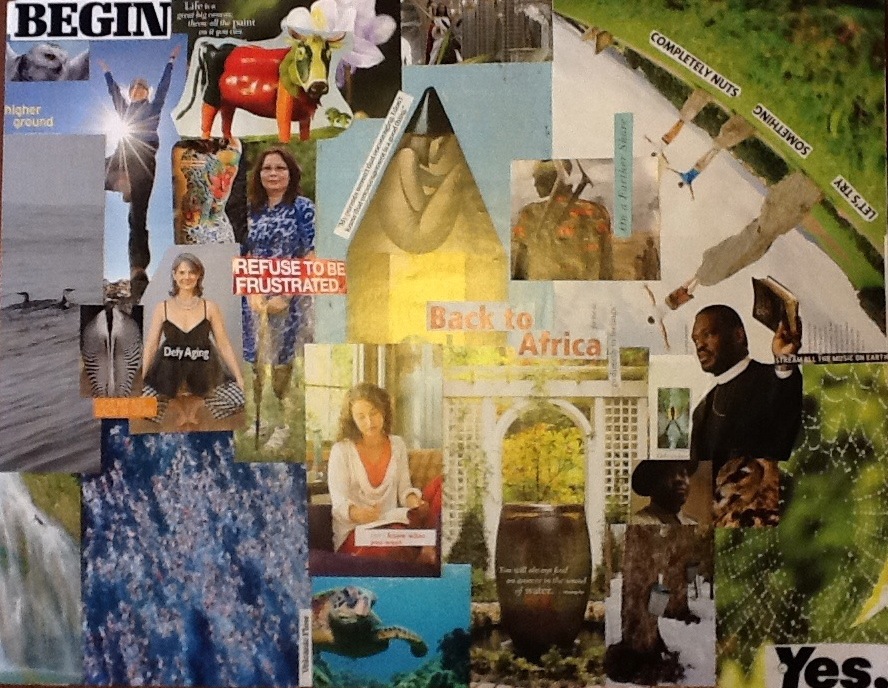
This is a snapshot of my soul right now. Some call this a vision board. I put it together intuitively, thumbing through magazines and clipping pictures and phrases that grabbed me, things I felt where I feel rightness, right around the solar plexus. The gut brain.

I am happy with it. Looking at it makes me happy. I learned things I didn’t know before I did this, like how strong my desire is to go back to Africa, and I relearned things I have known for a long time, like that my soul-medium is water. The sperm-like creatures in the blue picture toward bottom left are swimmers in a triathlon, photographed from a helicopter. My favorite text in the collage is, “You will always find an answer in the sound of water.” It is on the urn fountain at bottom center. Beside it are maple trees hung with buckets. Right now the sap is about to run in the family maple woods 50 miles away. Drip, drip, drip.

In case you are curious about some of the other text too small to read here is some of it:

Life is a great big canvas; throw all the paint on it you can.

Let’s try something completely nuts

Got my ass back in gear (zebra)

My parents weren’t that encouraging. I don’t know that encouragement is a good thing. (girl in the pencil)

Step 1: know what you want (girl with journal)

In the end the love you take is equal to the love you make (tattooed girl).

Although I wasn’t aware of any intentions or meanings when I made my selections, I could tell you now exactly why I chose each picture and phrase, exactly what each one means to me. This is the kind of work I like to do, bringing subconscious knowledge and desires to consciousness. It is dream work, art, writing. Revelation excites me, even–especially–when it concerns something I have known all along. It is one reason I read so many novels. I want to see what writers know about the human experience that I also know or suspect.

I think this is the way with any learning. We learn what we already almost know. For a long time we know in part and then suddenly we know fully. We see through a glass, darkly, and then face to face. We know pieces of the puzzle and then glimpse the whole.

It’s like my granddaughter, two and a half, who has been learning to count. For months she faltered around 5 or 7 or 8 in both of her languages and began mixing up the order. The other day, her mother reports, as she was riding in the car with Mommie, Baba, and Nai-Nai, she opened her mouth and counted from 1 to 10 perfectly in Mandarin and then in English.

Her sudden mastery may go underground again before it is solid in her consciousness. We forget what we know but it is still there and we relearn it. What fun it is to delve into your own psyche and to bring out the beautiful collection of things you know and love and believe and desire. I highly recommend this exercise.


Communal dreaming

Dreamfinal

Coming soon!

I have been working on a memoir very off and on for years. I will soon be ready to put the e-version out in the world though the print version will take more time. I’ll let you know.

It has taken so long because it is a complicated story. It’s called The Dream Matrix: A Memoir of Connection. How do we actually experience mystical connection with other people and with the Divine? This story is about several threads of my own experience with that, especially communal dreaming. This is what I call night dreams that cross boundaries, becoming a conversation with and for a friend or a community, often moving in the realm of divine mystery. The memoir contains many examples of such dreams and the art of interpreting them.

Communal dreaming harks back to stories in the Bible—Joseph, Jacob, Daniel, and many others dreamed for a community and interpreted the divine messages of dreams. And I consider this story part of my personal “Bible story.” It has also spawned sacred stories for other people and several communities, including the church of which I have been a member for more than 30 years and even the environmental policy community.

Every time—every time—I take this story up to try to finish it, it goes into action again, creating new chapters. That is, I start having dreams again and they take on a communal character. On the one hand this confirms the basic truth of the story but on the other, it’s frustrating. The story keeps squirming out of control, declaring that it has no end. Nevertheless, I’ve limited the memoir to two such periods in my life, ten years apart.

This month as I have been working on the book it has happened again.

Church has been a theme of my life in January. My husband and I are saying goodbye to our longtime Chicago church and becoming members of the church we’ve been attending in our new community 100 miles east of Chicago. I am also helping establish ties between this congregation and a congregation in Kinshasa, DR Congo.

That is, I am transferring church membership and pursuing church-to-church relationships. When you put it that way it sounds dry and institutional, and we churchy Christians often speak in such cryptic, neutral language. We even act as if these were decisions of the head, ones that can be worked out in logic and meetings. But the heart speaks in dreams.

One day last week we met with our new pastor to discuss membership. The same evening I attended a meeting about the Congo relationship. That night I had a pair of dreams about two flocks of very large, beautiful birds. One flock looked like sandhill cranes—birds I associate with the Midwest—but they were in Africa. The other flock was a gorgeous variety of flying ostriches—birds associated with Africa—but they were landing at a set of church retreat buildings in the US, bringing astonishing beauty to a rather drab, institutional center.

I welcomed these dreams as transcendent gifts. They confirmed the rightness of my decision to join a new “flock.” They also symbolized the exchange, the relationship of these beautiful flocks from different cultures and continents.  I may tell the dream next Sunday as my faith testimony when I join the church. Who knows? New Bible stories may unfold.