
The other day at the Y, walking my 30 laps around the track, I hit upon something that seemed too clever by half. Sometimes the juxtapositions of sacred and mundane surprise me. Continue reading
The other day at the Y, walking my 30 laps around the track, I hit upon something that seemed too clever by half. Sometimes the juxtapositions of sacred and mundane surprise me. Continue reading
There was a commotion outside our room yesterday morning. I opened the shutters and saw a group gathered around two travel-worn women who had set their suitcases down in the dust. Loud chatter and then a brief prayer. I went out to join the welcome party. The delegation from Bandundu North had arrived! Hugs all around.
It was the last day of the four-day Consultation of the Federation of Mennonite Women of Congo. Or, as they call themselves, more charmingly, the Fédération des Mamans Mennonites.These two Mamas had traveled to Tshikapa from Kikwit by a succession of vehicles, each of which had broken down. They ended up making their way mostly on foot. It had taken them more than a week.
A few hours later these women were in church, dressed in their finery, fresh as daisies. They sang a duet in sweet harmony and testified to the glory of God that they had gotten here at all. Never mind that the business of the meeting was all over, that they had missed the exhortations, inspirations, fellowship, and arguments. They were here, safe and sound!
Their story was not unique. Most of the 34 delegates who had gathered expended considerable effort, and money they couldn’t afford, to get there. The church has 11 ecclesiastical provinces, each allotted 5 delegates. Considering the appalling condition of most roads and the expense of flight (the round trip from Kinshasa costs $690), the fact that 34 out of 55 managed to get there was a real triumph.
One of the other delegations from Bandundu Province had simply walked. It took them a week. They weren’t complaining. They didn’t even mention it until another provincial leader, asked why she had come alone, without her allotted delegation, said there simply wasn’t enough money to bring everybody, that she had come on the back of a motorbike at her own expense. She didn’t get any sympathy, though I have heard a tough American man describe that particular motorbike trip of more than 24 hours, from Ilebo to Tshikapa, as “punishing.”
Congolese women can out-tough American men any day, and they make American women feel like pampered shrinking violets. As my friend and I slept 9 or 10 hours a night to recover from the hot days and long meetings, the Federation officers in the room next door stayed up all night praying or woke up at 4 to talk business. Self-pity is not encouraged. “Don’t think you deserve an easier life,” one woman said in a lecture in which she described the suffering and hardship that these women understood all too well. “Accept your responsibilities. Trust God to help you.”
Suck it up and trust God. It’s something we Americans could practice a bit more. On the other hand, I wondered, as the meetings dissolved frequently into loud argument, whether the toughness takes its toll in other ways. Couldn’t we have a little more kindness and gentleness? How about that namby-pamby concept of self- care?
Maybe a Congolese woman’s idea of self-care is to put on pretty clothes, sing at the top of your voice, and dance. There’s something to be said for that.
“Les blanches! Les blanches!” The call sounded like it came far away. “Les blanches!” Urgent. I turned to see who might be calling the white women while we were sitting in church and I saw the hole in the wall next to my head, no more than 4 inches in diameter, and two pairs of bright eyes and a gap-tooth smile on the other side of it. Delight! I saw them! Continue reading

These shoes are traveling in my suitcase. They’re for a bride in Kinshasa, DR Congo, and her mom, and good luck to them tottering up the aisle! They’re sent by the bride’s older and younger sisters who are in the US.
I am going to Congo again. This is an unfolding story with a plotline that I would never have predicted when I went back to the Democratic Republic of Congo in May 2012 for the first time in 40 years. It is about women and their aspirations. Continue reading
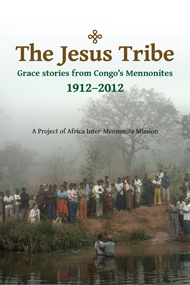 “Do you do freelance editing?” Barbara asked as we sat together at a dinner, belatedly celebrating the publication of a book I’d worked on two years ago. Barbara was managing editor of the small religious press that had published it. I could tell she had another project in mind.
I hesitated. I have, in fact, been trying to give up editing. “Not really,” I said, but not too firmly. It had, after all, been a pleasure to work with Barbara.
She began describing the manuscript but in the noise of dinner conversation I couldn’t get a clear idea what it was about. Only that it was a crosscultural, rather challenging editing project and she was desperate to find someone who could handle it. Continue reading
I am hosting a crowd for a funeral in my large mansion somewhere in the deep South. I am bustling about getting everything ready, including an elaborate meal. I have chosen a white eyelet dress to wear but during the preparations I wear a white blouse and brightly colored skirt. The guests have not yet arrived but it is clear that they will of different cultures and races. It is also clear that my butler, George, does not approve of this cultural diversity. I am afraid that his resentment might sabotage the whole event. I am the boss, after all. I try to be firm with George. And then I change into the white eyelet dress. End of dream.
I’ve been doing a lot of crosscultural hosting recently, and I can understand how Butler George represents a part of me, as does the hostess. Butler George is the one who preserves traditions (e.g. Thanksgiving), who assures that everything runs well and that proper form is followed. Butler George was resenting the Chinese grandfather who was popping pistachios into my granddaughter’s mouth just before we sat down to eat. And Butler George was indignant that, in the middle of family time and Thanksgiving preparations, messages were coming from Congo hinting that more money was needed for certain things. Meanwhile, the Hostess (in her prep-time multicultural outfit) was noticing how husband and son-in-law would sporadically ask what they could do to help get meals on but then revert to their computers with the assigned tasks half finished. Continue reading
In my capacity as bridge-builder and maven of the crosscultural, Congolese names are driving me nuts. Multiply name complications by Congolese and airline bureaucracy and you get a major Catch-22 snafu.
I once asked my friend François to explain the system whereby people name their children but I quickly got lost. Then I learned that the system he was explaining was a tribal one, and other ethnic groups did it differently. Then again, many people were changing their naming patterns to fit a more Western mode.
Suffice it to say that the systems are confusing to a Westerner, and they are in flux. I have found that the only way to know what to call a person you meet is to listen to what other people call him or her. Often we Westerners resort to using a Congolese person’s Christian name because it is easiest for us to remember. People kindly accept that, but when other Congolese talk about that person and call her by another name you don’t know who they’re talking about.
Most of the Congolese I know have three principal names: two Congolese names and a Christian name. Some, such as married women, may have more but we’ll ignore that for the moment. On all Congolese documents, beginning with school homework, the two Congolese names are written in all caps, and the Christian name, if it is written at all, follows in cap/lower case: TSHIDIMU MUKENDI François.
This does not follow the Western first-middle-last name pattern, or even a given-middle-family name pattern. Rather, the pattern is something like important-family-Christian. The important name is Tshidimu. It is a unique “given” name. Mukendi is a name that comes from the family and is passed on by family (tribal) rules. And François is the name either received at infant baptism or, more usual these days, a French name given at birth along with the others. (Christian names were banned during the Mobutu era when we lived in Congo but have come back into use.)
Many people call my friend François. Many call him Tshidimu. Nobody calls him Mukendi, Mr. Mukendi, or Pastor Mukendi although Mukendi, strictly speaking, is his family name. It is not, however, a name that he passes to his children. If he passes on any name at all it is Tshidimu, his important (Congolese given) name. But sometimes it’s the mother’s important name that gets passed on. I got lost in the explanation of the distinction. If any name is omitted it’s the family name, which is about as insignificant as our middle names. He becomes François Tshidimu or Tshidimu François.
The system, whatever it is, seems to work in Congo, but try buying an international airline ticket online for TSHIDIMU MUKENDI François, as I just did.
I tried to fill in the blanks for the passenger’s name in a straightforward way. First name: François. Middle name: Tshidimu. Last name: Mukendi.
This might have worked, except that the airline dropped the middle name when it issued the e-ticket and the “middle” name just happened to be the important one. The ticket was issued to Mr. François Mukendi. (Question to Brussels Airline: why ask for a middle name if you aren’t going to use it? Answer: We don’t require it but you can put it in if you want to.)
When François presented his e-ticket, in person, to the Kinshasa office of Brussels Airline, he was told he would never get through the Kinshasa airport because the name did not match what appears on his passport. The ticket had to show all three names. (His flight is several weeks away. He was wise to check it out well ahead of time.)
He emailed me and asked me to fix the problem. I called Brussels Airline, US office, because I wasn’t about to try to handle this problem in French. I was told that, since it seemed to be a problem in Kinshasa, he had to fix it in Kinshasa. I emailed François and told him this. That was yesterday.
So François went to the airline office again this morning–not a simple trip in Kinshasa, let me tell you. He was told no changes could be made in his ticket without physically presenting the credit card that bought it–mine.
I called the US office again and explained this latest version of the problem. I had to make the name change. I said, the solution seemed to be to treat Tshidimu Mukendi as a hyphenated last name, so that both names showed up on the ticket. I spelled Tshidimu many, many times (although it should have been in their records somewhere). I was told they would look into it and get back to me. “It’s complicated,” the agent chirped, “because the Brussels-Chicago part of the flight is on United.”
Complicated. Tell me about it.
And also. François needed to change the return date of the ticket because he had learned he couldn’t get a Canadian visa to visit his son while he was in North America. The date change had to be handled after the name change, I’d been told, but I laid that information on the agent as well, hoping she could wrap her brain around it.
I called a few hours later because she hadn’t called me back as she promised, by 10. I spoke to another agent and learned that the previous agent had dropped the reservation and made an entirely new one, Business Class, for an additional $1800. AAAACK. Fortunately, it had not yet been charged to my credit card.
Several complications later (the agent kept asking, But what is his LAST name?–although her airline flies lots and lots of Congolese) I learned that the Kinshasa office had already made the necessary changes–he had become “MukendiFrancois Mr. Tshidimu” on the new ticket. Whatever works for Kinshasa, I guess. I just needed to pay for name and date changes: $140.16. By then it seemed like a bargain.
Yesterday I experienced reverse culture shock. We’re back home and we went to church.
We had been to church four consecutive Sundays in Congo. Two of those Sundays were major, five-hour services celebrating the ordinations of women and men. The weather was steamy. Crowds milled and were often noisy. There were multiple sermons and exhortations as well as a great deal of pomp and ceremony.
These services were in many ways ordeals, tests of our endurance, to say nothing of the endurance of the ordination candidates. They were clothed in black, neck to toe, and they were robed in yet another layer of ceremonial clerical cloth during the ceremony. The ordinands had also spent the previous night sleepless, in prayer. They were facing the audience and you could see some suppressed yawns, dark circles under the eyes. Babies slept, woke, nursed, played, slept again. After the ceremonies at least one of the new reverends got sick. She was still recovering three weeks later.

Ordination candidates Ngombe and Swana, backed by their husbands
And yet I would have to say that, while those services were too long, they did not seem like they were five hours long. That is because they included lots of wonderful music. The music invited dancing, clapping, moving around. And it was really good music–practiced, perfect harmonies in pure, high-volume blends, mostly a cappella, sometimes with drumming. It was original music, or original adaptations of familiar hymns and gospel songs, hyped up with sophisticated rhythms that made you want to move. The congregational singing was as energetic and harmonious as the choir music.
The other two services were more or less ordinary church, but with the same, music-boosted energy. One went on for three hours but that was partly the fault of us visitors. One of us preached and the other five were invited to say a word, and it all had to be translated. The other service flew by at a mere hour and a half? Two hours? I didn’t check the time.
Now. I am not looking to duplicate that worship style here at home. My faith heritage comes in an entirely different mode. I love Mennonite four-part a cappella singing where everybody reads the music lines in the hymnbook and gets them right, no improvisation. I love the envelope of peace that wraps me in a quiet service. I do love a good, short, thought-provoking sermon.
Yesterday back at home church the crowd was a bit sparse when it came time for the first hymn. It was a unison hymn, and not very familiar. We sang it too quietly. I heard myself struggling with the notes. I realized I had gotten used to being carried along by group singing energy, even drowned out, willing to cast my voice out with the multitudes at the highest volume possible. Here I was sticking out like a sore thumb in isolation.
We were greeted quietly by the worship leader. No “Alleluja!” “Amen!” call and response. Of course not. We don’t do that. Not that I wish we did. The sermon was good, and thoughtful. The audience listened attentively, responding when asked but not out of turn. We were our reserved, well-behaved selves.
The service was one hour and a quarter, edging toward an hour and twenty minutes, and I was ready for it to be done when it was.
I love this church, and I really love it as a community. I know I could find livelier worship styles in other churches here but I’m not going out looking for them, let alone try to impose them on my church. Still, I really miss that joyful energy of my Mennonite sisters and brothers in Congo.

We are home, my husband and I, after three-and-a-half weeks in the Democratic Republic of Congo. My body took the occasion of homecoming to let down and get sick.
It didn’t happen suddenly. The first day home was pretty good. I got up at the right time, no jetlag, got my first article off, sorted through pictures to go with it and sent them, too. I got my hair done–that was a real emergency case. We shopped for food. I went to a meeting in the evening about the Enbridge grant. (The group decided to fund the creation of a native-plant garden and history sign at the community town hall rather than a boardwalk into the wet prairie, which I had championed, but that was okay. I liked the garden idea, too.)
And then I got a literal gut reaction to being home. This has gone on for two days. I have started the antibiotic that I took to Congo for this very reason but never had to use while I was there. Jetlag is hitting, too. I am wiped out early in the evening and rising too early in the morning. It seems to be getting worse the longer I am home.
I managed to get articles off to two more publications yesterday and did loads of laundry but today I think I will just let myself be sick.
That’s it, really. My immune system is tied to my willpower. I’ve been barreling through an exciting but stressful journey. I couldn’t afford to get sick while I was away but now I can. In fact, I can be helpless and coddled. I can send my husband out for chicken soup and loll on the couch, by the fire, with the cat.
Why do people travel, after all? For new experiences, and we think they should be of the pleasurable kind. But pleasure doesn’t always change you. For me, travel is always at least partly about testing my limits, pushing the growth envelope.
This trip did change me. I feel more competent and confident about many things. I learned a great deal. People are impressed that we did what we did–they don’t add, “at your age” but it is there. Young people are supposed to be the adventurous ones, the foolish-fearless ones. Here we are at age 68, defying convention, paying luxury travel costs for a trip that was full of adventure and human contact but pretty grueling and hardly any scenery to speak of.
I care about results, about progression, about stories–including the story of myself. I want to see change, beginning in myself. I am as self-centered as they come, even while striving to become a better person–more compassionate, grateful, generous; more in harmony with the universe; a purer channel of love. I want to see those changes happening. I take satisfaction in self-improvement.
All of those qualities have to do with the way I relate to other people, of course, as well as the divine and the earth. So in that way I am not only self-centered. I try to use my self-centering tendencies to make myself less self-centered, if that makes any sense. I am just being honest about how much this kind of travel is about me as well as the good I think I can accomplish.
I often wish I could get out of the way and write more clearly and generously about what I see and less about how I feel about it. But right now my body is putting itself first and foremost in my attention, saying, this was a challenging trip. We’ve pushed the envelope. Can we let up now?
This morning, near the end of our three-and-a-half weeks in DR Congo, I completed my first article about the ordinations I’d come to write about–deadline day after we return– and then I declared an end to effort.
I asked our friend Suzanne to drive us several blocks from her pleasant Kinshasa apartment (where we slept very well last night) to the Jeffrey Travels office, where I could arrange for “protocol” not only for our flight home tomorrow evening but also for the check-in downtown tomorrow morning, which I’d assumed we would handle ourselves.
I don’t feel like handling anything more for a while.
Protocol–procedure–is an important concept here. It has a special meaning when it comes to airports. Hiring protocol service means paying someone to get you to or from the airport and shepherd you more or less all the way to or from the gate. Just how necessary that is was driven home to us yesterday as we prepared to board our flight from Lubumbashi to Kinshasa.
Before arriving in Lubumbashi several days earlier we had signed onto a protocol service because 1) we didn’t know the airport; 2) we were arriving late at night; and 3) we didn’t know how far our guesthouse was from the airport. As it turned out, the airport was a breeze for arriving passengers and our protocol guy (henceforth named Protocol because I didn’t ask his name) met us outside and simply drove us to our guesthouse, 20 minutes away. For this we had paid $100 for the two of us.
We decided to save money on the way back and just get a taxi to the airport ($30 plus a $10 “fee” to the guards at the gate).
We arrived two-and-a-half hours before our 8 a.m. flight. Inside the airport door, three men sat at a table. We asked them what we needed to do because there were no signs. They grinned and said, “Café. Buy us some coffee.” They seemed to be posted at the door exclusively to collect “tips.” We stepped aside and watched someone else pay them a few francs and proceed on his own to the next step, a “check-in” desk on the other side of a partition. We didn’t pay.
We fumbled and inquired our way through the baggage-checking process and then to pay for the “Go-Pass,” an exit fee required at every airport in varying amounts depending on your destination. Someone told us it was $50 each but it turned out to be only $10, plus a $5 provincial tax.
Finally we were motioned toward a ramp, on the other side of yet another partition, that seemed to lead to a boarding area. But we did not yet have boarding passes. These were apparently being issued at several windows alongside the ramp, where people were apparently facing long inquisitions and discussions. A man whom I will call Traffic Control was letting passengers into this area one at a time.
It was still early. Traffic Control told us to wait to one side. An earlier, international flight was apparently being processed. But hardly anyone was going through because it was taking approximately 20 minutes to process each person at the four windows. People were gathering around us on the waiting side of the partition, pushing forward but not going anywhere. But other people were pushing their way through, being admitted by Traffic Control, and sometimes even breezing past the windows.
Some of these people seemed to be on our flight, not the international flight. Some seemed to be accompanied by protocol guys. I made several attempts to ask Traffic Control what was going on, as it got later and later, but he ordered me to “wait until I give the command.”
It was now 7:30, half an hour before our scheduled takeoff, and none of us on the wrong side of the partition yet had boarding passes.
Suddenly I spied Mr. Protocol himself, the guy who had taken us to the guesthouse three nights earlier, leading several people past Traffic Control and up the ramp. A few minutes later, when he hurried back down the ramp, which was now seeming like a stairway to an impossible heaven, I stopped him. “Can I hire you?” I asked.
He looked at us for a second and grinned. “Oh sure. You’re the people I took to Bougain Villa. Come with me.” He led us to the door guarded by Traffic Control, who put his arm out and stopped Mr. Protocol. Protocol expressed shock–he had, after all, gone back and forth with impunity several times minutes earlier.
Traffic Control, however, was not about to lose face by letting some pushy foreigners through whom he had just ordered to wait their turn. He jammed his arm across the doorway. The volume of his argument with Protocol attracted the attention of several security officers further up the Stairway to Heaven. They descended and joined Protocol in trying to dislodge Traffic Control, who refused to budge.
Finally, several men wedged themselves between the fuming Mr. Traffic Control and one side of the door, making a small opening for us to slip through. We were hurried up the ramp to the still sparsely populated Heaven, the boarding lounge.
Protocol had our passports, tickets, and hard-won Go-Passes. To our consternation he headed back down the ramp and into the crowd. But at that point we had no choice but to wait. And trust him.
We discussed whether this was another mistake, how the authorities would manage to process all the waiting passengers, whether Protocol would ever reappear, and how much we should pay him if he did.
Ten minutes later Protocol breezed by with more passengers, nodded to us–“Patience!”–and accompanied them out to a waiting aircraft.
Fifteen minutes later Protocol reappeared, all smiles, with our passports, Go-Passes, tax receipts, and tickets bearing the stickers that served as boarding passes.
I resisted the urge to hug him. I asked how much he would like for his services.
“Nothing,” he said. He didn’t even say the usual, “whatever you would like to give me.” Just, “Nothing at all.”
He asked why we hadn’t called him to take us to the airport. We explained that the arrival had been so easy that we thought we could handle departure by ourselves. He laughed. “The departure is something else.” He wished us bon voyage and disappeard back down the ramp.
Suddenly the lounge began filling up. Some bottleneck in the boarding pass area had broken. All the madding crowd seemed to make it on the plane, which left less than 30 minutes late.
But I didn’t regret asking Protocol to help us. My do-it-yourself days are over when it comes to Congo airports.
 the practical mystic