Feeding birds and a marriage

IMG_1112

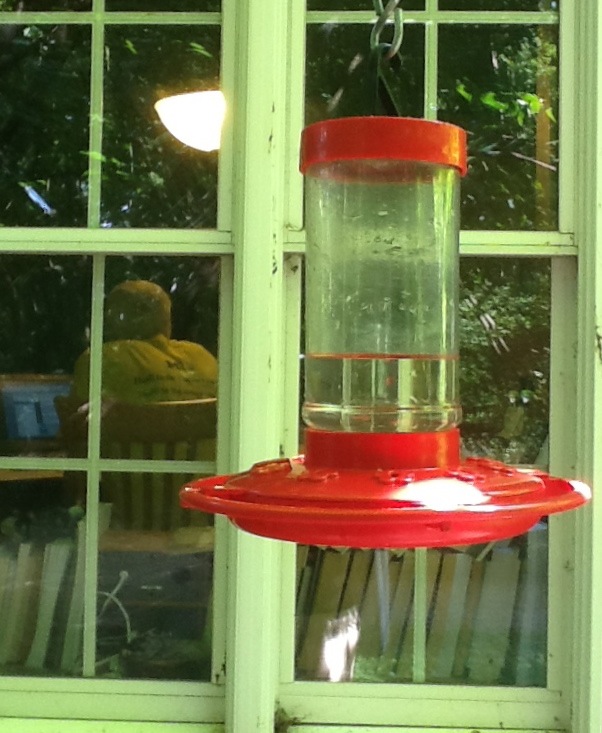
“The hummingbird feeder looks like it’s empty,” he says.

“Yes it does,” I answer from the front porch. A hummingbird is hovering in front of me, inquiring.

I hear activity in the kitchen, then silence. The hummingbird comes around again. Still no nectar?

I go into the house. He is back at his computer on the dining room table, which is his office when he is at home. (When it’s just the two of us we dine everywhere except in the dining room. On the porch or in front of the TV or, in winter, at the little table in front of the woodstove).

In the kitchen, nectar has been mixed in a glass measuring pitcher. The spoon is still in it. On the countertop stands an open bag of sugar. The drawer from which the spoon was taken is also open. The empty feeder is still hanging from the tree outside the dining room.

I look at the unfinished job and think about my choices. I could finish the job or I could remind (nag) him to finish it. This kind of reminder qualifies as nagging because I do it very, very often.

I bring in the empty feeder and put it in the sink. I wonder, is there a third choice–neither nagging nor finishing the job myself?

Yes there is. Waiting.

And so the hummingbirds and I wait. I write the above. I can’t resist recording this slice of married life that reveals the core of one of those little differences that make life with another person . . . interesting.

He has a way of taking projects in stages, projects that I would do in one fell swoop start to finish. He also has a way of always leaving something undone, like the required flaw in the Amish quilt. (Cleaning drain traps after cleaning up the kitchen is one of those things.) He claims, when queried (nagged), that he intended to finish these things later, I just didn’t give him enough time.

In this case I suppose he wants to give the sugar extra time to dissolve whereas I would just stir it vigorously for a little longer. So I give him the benefit of the doubt but I still doubt.

Now he comes outside, ready for the next stage of the job. “What did you do with the hummingbird feeder?” he asks. He hasn’t noticed that I brought it in.

“It’s in the kitchen sink.”

I wait some more. The hummingbird hasn’t queried in the last few minutes so I look around the corner and see that he has indeed refilled and rehung the feeder.

I stroll through the kitchen. The drawer that was open is closed. The bag of sugar is still open on the countertop. He is at his computer. He looks up. “What?”

“Nothing,” I say. “I’m just writing a blog.”

But he has read my mind. He gets up and closes the bag of sugar, puts it away.

Job done in his good time. No nagging.

Grandma noogies

H w flowers

It’s time to get my Grandma noogies out.

Definition: Getting your noogies out is releasing pent-up energy and restlessness. I invented the term when my kids were young. I think the English language needs it.

Like when kids have been in a car too long and need to run around. “Go! Get your noogies out!”

Or when your legs need massaging before bed to get the day’s noogies out.

So when grandparents pull out pictures and talk fondly and a bit too much about the young precious ones, they are getting their grandparent noogies out. That’s what I’m doing in this post because I’ve had a couple of sessions in the last month with our so-far only grandchild, the lovely Hazel, who will be 3 in July.

Folks, everything about Hazel is special. She is also the only descendent of her other grandparents, so she has four besotted grandparents. Hazel is not aware that this may be excessive. She takes our adoration for granted and thrives on it. In fact, she tries to charm other people into joining the club of the enthralled.

She does this in a nice way, with greetings and dimples. Our Hazel is never obnoxious.

If you look Asian, she will greet you in Chinese. She is bilingual and is starting to translate from one language to another when the situation calls for it–telling Mommie in English, for example, what she just told her Nai-Nai (paternal grandmother) in Chinese.

I wish I could learn enough Mandarin to keep up with her but, alas, I am too old to add another language to my repertoire. The language-learning capacities of two-year-olds, on the other hand, are truly amazing.

Her Nai-Nai, a former elementary school teacher, is constantly feeding Hazel new vocabulary and teaching her concepts. I admire this. It is not my style, however. I am the Play Grandma.

“Grandma, let’s play!” she says, and pulls out all her little dollhouse dolls and animals. She assigns me a doll and tells me what to do, or we improvise a little scene together and then we repeat it. Again and again.

Often the dramas have a strong emotional content. Let’s go to the gym. Mommie leaves baby at the nursery. Baby cries. Mommie comes back. Hugs baby. Again and again.

This week she tried to get me to act out a toy conflict. “You hit me. Take my toy.” She was serious about this, showing me exactly how I should hit her.

I couldn’t see this going anywhere good so I tried to make it a share drama. “Will you share your toy with me?”

She was having none of it. “You hit me!” she insisted.

“And then what happens?” I asked.

She scowled, no doubt remembering some recent kerfuffles with playmates. Then she brightened. “We fight!”

I pulled a switch and we went back to playing doggie runs away, look for doggie, bring doggy home. Again and again.

Guzzling miso soup while clutching Dolly

Guzzling miso soup while clutching Dolly

makeup

Experimenting with magic marker makeup


Celebrations, shopping, setbacks

Last week was the 44th anniversary of my marriage to the tall, lean, shy cute guy. He is still tall and lean. He is much less shy than he was when we were 24. And he is even cuter. I really lucked out.

We celebrated in Chicago. I went with him for his weekly 3-day work stint and shopped for new clothes while he worked. The way I look at it, his anniversary present to me was the new clothes. Mine to him was looking good in them.

He’s not here right now so I can’t show you how good we both look.

In the evenings we dined out, totally busting out of our vegan gluten-free regime. I did not count Weight Watchers points last week. Consequently my weight rebounded a bit, a minor setback. The pleasure was worth it. I am happy to get back to simple high-veggie, low fat this week.

I’m not complaining but the shopping was hard work. The first day I went to Oak Brook Mall, my old favorite. It was torn up for relandscaping. It was raining. And it was a case of the usual overabundance of bad selections. I have trouble with overchoice, with finding the gem on the rack of garish. Give me a small shop filled with my kind of clothes.

But I dutifully trudged through every department store and every possibly appropriate shop, selecting a few things here and there. The most thrilling purchase? New bras perfectly, professionally fitted! (Too much information? Stop reading, guys.)

At the very end I found the little shop that had my kind of clothes, J. Jill. I didn’t buy much because I was already shopped out. I found the essential black knit dress I’d been looking for to wear under my Congo Cloth jackets, linen crop pants, and a pink linen shirt. Now I know where to go online to look for simple, well-made clothes. Most important, I’ve tried on their sizes.

The second day was more fun. It was sunny. I spent it in my old stomping ground, Oak Park, where we’d lived for nearly 30 years, visiting old shops and new. I didn’t buy all that much–cute shoes at DSW, bargain tees at my familiar Gap. I found a new swimsuit at the Sports Authority where we’ve always shopped. I made a run to Trader Joe’s for tea and wine and to Olive & Well for black current balsamic vinegar. When it comes to shopping I like some predictability.

By the third day I was getting a UT infection from too much rich food and wine and not enough water. That, too, is predictable. This is probably way too much information but it may be of interest to other UTI-prone old ladies who bike: The UTI, which I’d begun treating, got worse after I got out on the bike a few days later for my first ride of the season.

I fought this problem two years ago when I was training for a century. Do I want to have to deal with it again? I’ve been getting ready for a new bike but now I’m having second thoughts. Giving up biking would be a real setback.

Meanwhile, the real celebration is going on in the woods. Spring is busting out all over. I just want to sit and watch.

front porch

The view from my front porch


Popping a wheelie

Where is my husband when I need him? Usually 100 miles away at work in Chicago. Today he was at least at his desk and picked up on the first ring.

“When are you coming home?” I ask.

“Oh, tonight I think.”

“Good. Tonight. Come home tonight. You’ll never believe what happened.”

“What?”

“I lost a wheel.”

“You left a wheel? Where did you leave …”

“LOST. I lost a wheel on the Element. I was driving back from the mall and I heard this noise in the front wheel so I stopped at the tire place and asked them to check it out but they said they were too busy and it was probably a bearing so I asked whether it was safe to drive and they said sure—”

“Wait. Did you find the wheel? Did you have it with you?”

“Of course. It was still ON the car. It was just making a noise and that’s why I stopped at Zolman’s.”

“I don’t understand. You said you LOST the wheel.”

“Yes. It came off after I left Zolman’s and I was driving home.”

“You got all the way home?”

“No! The wheel came off!”

“But you said you lost it.”

“I MEANT IT CAME OFF! I was south of Niles and the noise was getting real bad and the steering wheel was shaking so I slowed way down and there was a bang and the left front tire went rolling across the street into a yard!”

“But you’re at home. Where is the car?”

“At a garage! I had it towed!”

“Did you find the wheel?”

“YES, YES! THE WHEEL IS AT PETE’S MARATHON WITH THE CAR! A nice cop made the phone call because my cell was dead and then he waited with me and drove me home.”

Aren’t you going to ask if I’m okay? Aren’t you going to say I was very lucky? Aren’t you going to say, that is about the worst kind of mechanical failure you can have when you’re driving and I’m glad you didn’t have an accident?

Instead we talked about the damage to the car, how the support bar or whatever you call it had snapped, probably because the wheel had wobbled loose and put a strain on it and that might not have happened if I hadn’t kept driving when the noise got worse (because the Zollman guy told me it was okay) and so repairs were probably going to be very expensive and maybe this happened because the tires had been rotated recently and we were supposed to take the car back in to check the torque.

This is the same car whose battery died last week when Vic left town, forcing me into a three-day fossil fuel fast. Eleven years old, 166,000 miles. The nice cop says maybe it’s time for a new car.

As for the husband, I think I’ll stick with the old model. At least he’s predictable.

The strange country of hearing loss

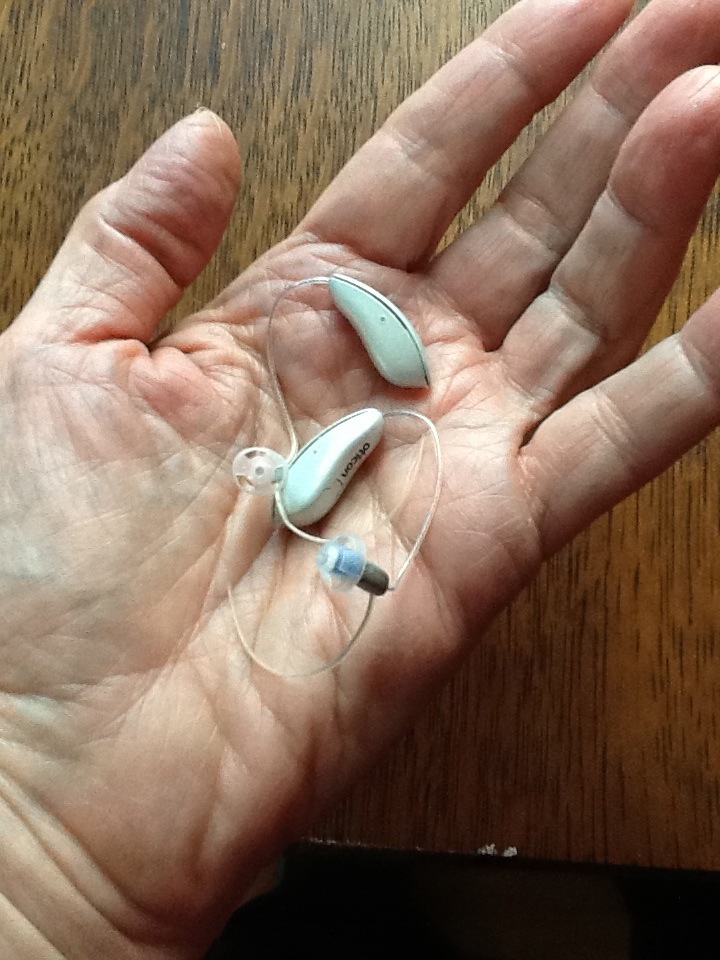
102035458_L copyAnyone who suffers from hearing loss or has friends or family members who do should read Katherine Bouton’s important book, Shouting Won’t Help: Why I—and 50 Million Other Americans—Can’t Hear You. Bouton, a former New York Times writer, suffers from severe hearing loss that came on by sudden stages beginning in her thirties. My hearing loss is mild to moderate and it came on gradually with age. But I recognized myself and my brothers (and our father before us) in her description of the physical, psychological, and social effects of hearing loss, how we try to cope with it, and how people with hearing loss are treated.

You probably don’t know how many of your acquaintances have hearing loss. It is a nearly invisible handicap. Those of us with hearing loss, of course, prefer it that way. I don’t hesitate to put on reading glasses when I need them but I am careful to brush my hair over the tiny wires in my ears. Hearing loss has a bad image.

My little helpers. Now you see them ...

My little helpers. Now you see them …

I try not to ask people to repeat themselves too often because saying “What?” all the time—or “Howzat?” like my father used to say—makes you seem not quite with it, and actually, you aren’t. If you are as old as I am it is also a sign of age. Recent research showing an association between dementia and hearing loss doesn’t help our image at all. My father suffered from dementia along with severe hearing loss in his final years.

... now you don't.

… now you don’t.

And so I fake it, pretending to understand, guessing sometimes (and making myself look even more foolish when I get it wrong), and often withdrawing from conversations that spin away from my comprehension. And this is with mild hearing loss. One of my brothers has been deaf in one ear since early childhood and has significant loss in the other ear. He coped by withdrawing, becoming the quiet one. He managed to deflect attention from his handicap so effectively that I never thought of him as hard of hearing until he began wearing a hearing aid in his “good” ear in middle age.

Other people take the opposite tack, initiating (I won’t say dominating) the conversation so they know what’s being said. Another brother tends to do this.

Even if you tell people you have hearing loss they forget and you don’t like to keep reminding them. Or they speak louder, directly into your ear, and that really doesn’t help as the book title implies. More important, they, and you, may assume that if you have hearing aids you should be able to hear normally—and if you don’t you should get better hearing aids. But, as Bouton explains in helpful detail, there is a  disconnect between the job of the ear, which is to register sound, and the job of the brain, which is to interpret it, so hearing aids will never substitute for normal hearing.

As you lose hearing the brain loses the ability to interpret the sounds that do come through. To see what this is like put a pillow over your head and try to carry on a conversation. Hearing aids help the ear but, because sound coming through them is different from sound picked up by the normal naked ear, the brain has to relearn how to interpret it. This is hard work.

I have had a lot of experience learning foreign languages and traveling or living in countries where I understand the language imperfectly. It requires concentration and it is fatiguing. I can speak and understand French very well in the morning but when I get tired at the end of the day I may sit back and let the talk go on without me. The understanding part of my brain stops working.

With hearing loss, understanding my native language is a lot like that. In fact, the first clue that I was losing my hearing was when I began having difficulty understanding plain, spoken English in movies, in overheard conversations, and in conversations in noisy settings like restaurants. The spoken words degenerated into familiar but meaningless strings of sound like Russian at a late-night house party. If I concentrated I might pick up the thread and suddenly start understanding enough that I could fill in the gaps. But I could easily tune out and understand nothing at all.

The other day I had to give up on a conversation with my granddaughter. Toddlers have their own charming language. When I am with her I can usually understand her and if I can’t it’s because she has shifted into Chinese to talk to her daddy or her dolls. But on a cell phone, from a car, with intermittent transmission? It was English for sure (“Gamma! Gamma!”—that’s me) but I could barely understand even her mother’s translation. I think she was saying she wanted to come back to my house.

So here is my advice: Treat people with hearing loss like perfectly normal foreigners. (Unless you are zenophobic, in which case you might not be nice to us, either). Be considerate. Recognize that we may not understand you perfectly, especially on the phone. Look at us when you speak—hurray for Skype and FaceTime—because we need to read lips and faces for additional clues. Speak at normal speed but clearly. Enunciate! Make an effort to include us if we seem to be dropping out of the conversation. Don’t make fun of us. And don’t shout.

For our part, we must not be shy about calling attention to our handicap. Hence this post.

Sugar time

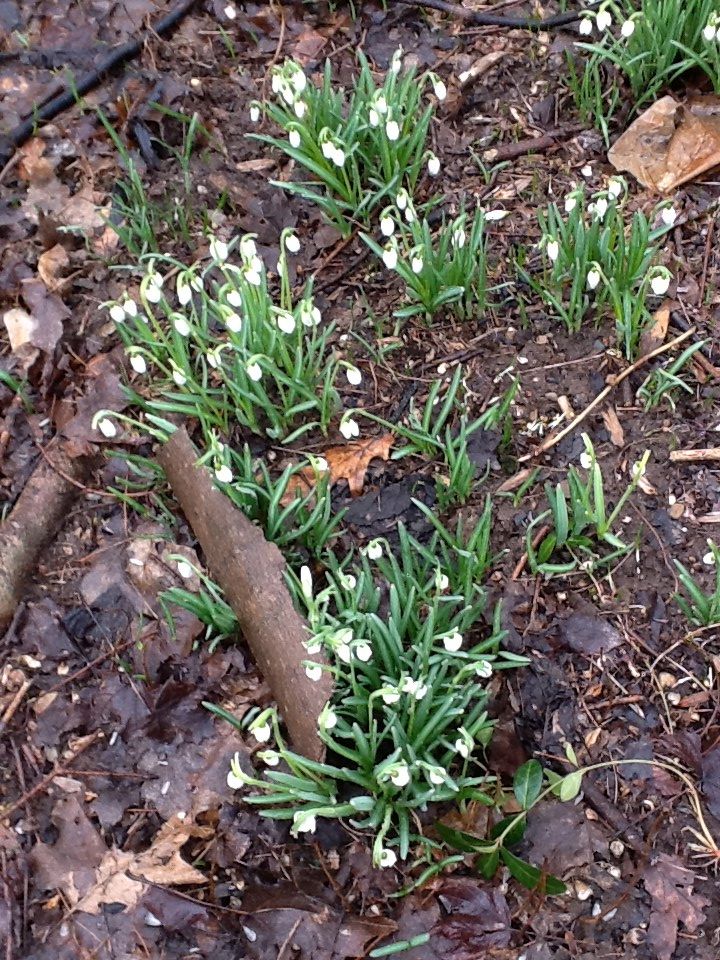
snowdrops

Suddenly the snow is melting. Spring may be almost here. The snowdrops thought it was coming in late January already but they had to endure who knows how many heavy snow blankets after that. Finally, here they are in all their glory, looking down at the mud.

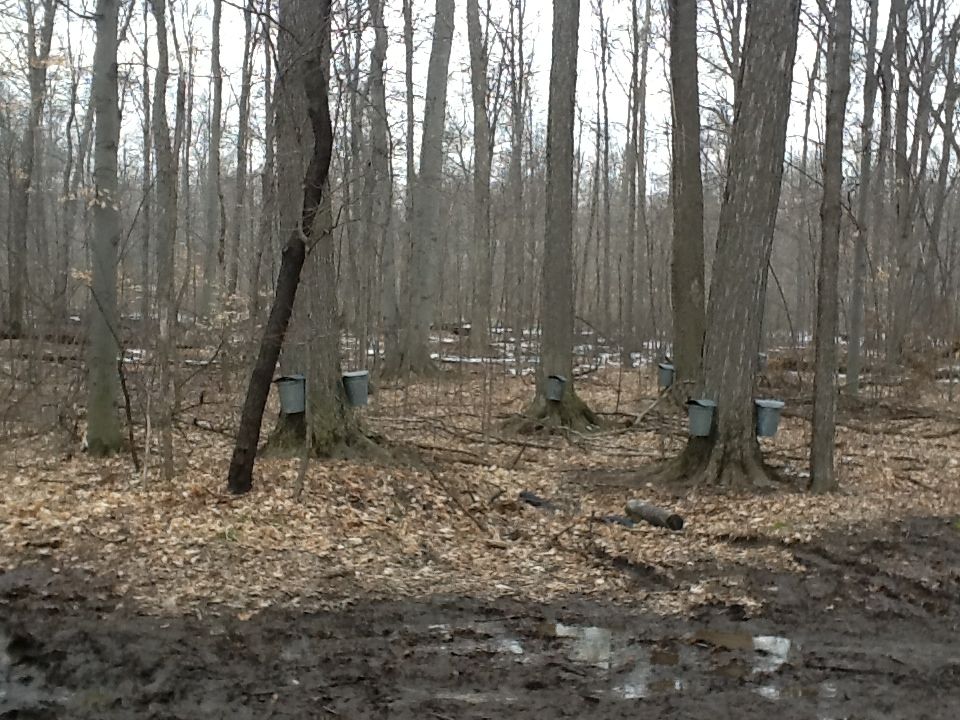
Lots of mud. Mud is a special treat for our two-year-old, Hazel, who came to visit over the weekend with her mommie and daddy to help make maple syrup in my brother’s woods in northern Indiana. There was enough mud to make Hazel very happy, along with piles of slushy snow to tromp through, sap to sip direct from the tree, and syrup to guzzle warm from the cooker.

chips and mud

Unlimited chips! unlimited mud!

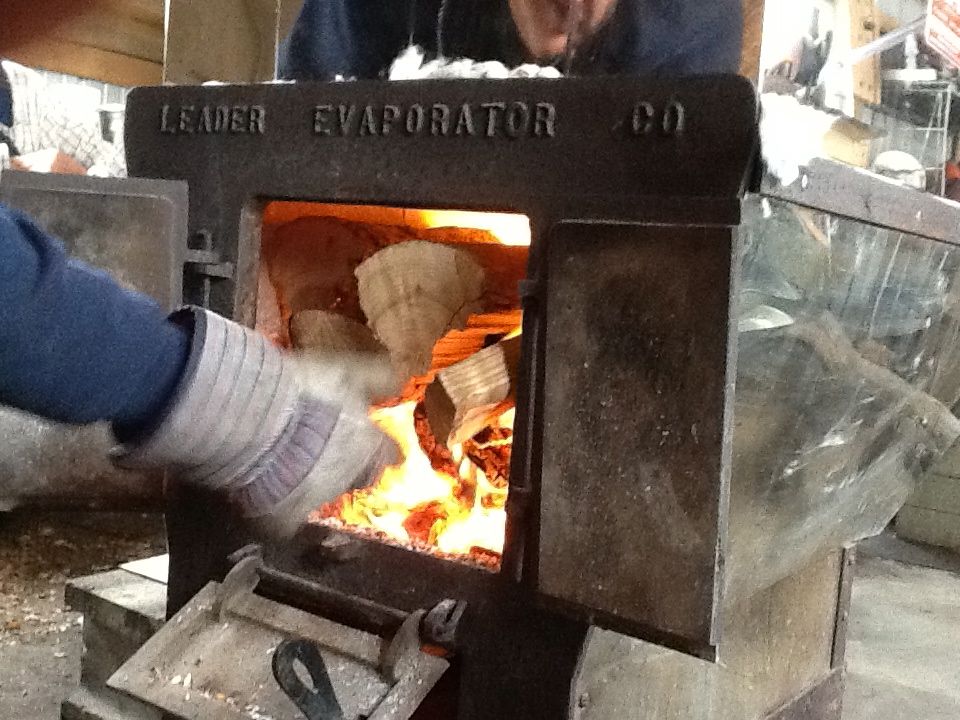
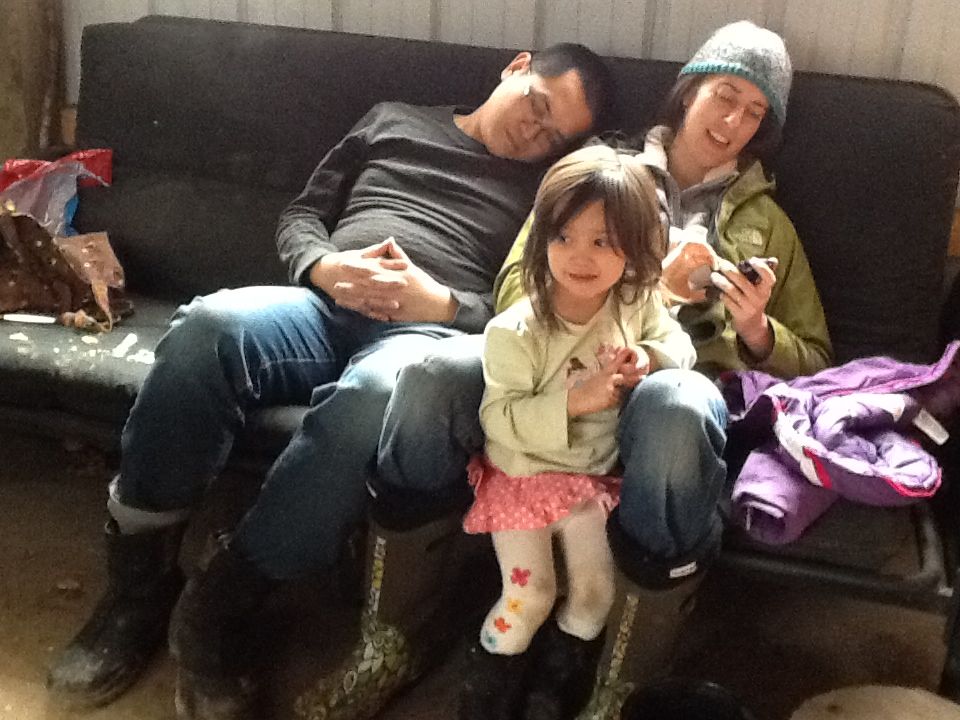
The heat makes everybody sleepy except Hazel. Safer to send her outside

The heat makes everybody sleepy except Hazel. Safer to send her outside

hanging out

Maple sugaring gives us something to look forward to in this northern, muddy end of winter/beginning of spring. The ground has to be a mess for the sap to run well—thaw by day, light freeze at night. It happens right around spring break. Even though I am impatient for warm weather, I wouldn’t trade a day in the sap shack with my family for a week in the Florida sun.

trees

My nephew Adrian is the fourth generation of our family to make syrup from these trees

My nephew Adrian is the fourth generation of our family to make syrup from these trees

When I go to the maple woods I bring food. Traditionally it’s brats, which we cook in sap on a potbelly stove, but this year I took a vegan soup and guacamole to go with more or less healthy chips. My oldest brother pretends to turn up his nose at healthy food but he did not complain at all about this soup. The large soup pot emptied over the afternoon, along with a goodly number of beer bottles.

Here is the recipe, which is my enhanced version of a chickpea-cashew soup recipe I got from a friend.

Practical Mystic’s Vegan Chickpea–Wild Rice Soup

3/4 cup raw cashews, soaked in water overnight and drained

1 cup dry chickpeas, soaked in water overnight and drained

2 tablespoons olive oil

1 large yellow onion, chopped

4 cloves garlic, minced

3 ribs celery, thin sliced

2 large carrots, cut in chunks

1/2 lb. mushrooms, coarsely chopped

1/2 teaspoon dried rosemary

3/4 teaspoon dried thyme

1 teaspoon salt

Fresh black pepper

3/4 cup brown rice

1/4 cup wild rice

6 cups vegetable broth

4-6 cups chopped kale or spinach

In a stockpot over medium-high heat sauté onion, celery, and carrots in olive oil with a pinch of salt for about 5 minutes, until onions are translucent. Add garlic, mushrooms, rosemary, thyme, salt and pepper and sauté until garlic and mushrooms are fragrant.

Add rice, wild rice, chickpeas, and broth. Bring to a boil, then cover and simmer until chickpeas and rice are tender, about an hour.

Meanwhile drain the cashews and place them in a blender with one cup of fresh water. Blend until completely smooth.

Add the cashew cream and greens to the soup after rice is tender and simmer until greens are wilted, 3 to 5 more minutes. You may need to add water to thin the soup if it seems too thick. Taste for salt and seasonings and let sit for 10 minutes or so to allow the flavors to marry.

It thickens as it cools, so if you are lucky enough to have leftovers, just thin with a little water when you reheat.

Flow

photo by David Orias

photo by David Orias

I am beginning this year not with resolutions but a theme.

As a Christmas gift, my daughter-in-law, Linnea, enrolled me in an online class called One Little Word. You choose a word that represents something you want to invite into your life and then receive monthly prompts and tools throughout the year that will enhance the concept’s influence on you.

It’s one of those why-didn’t-I- think-of-that ideas. The leader, a woman named Ali Edwards, must be doing very well with it, and deservedly so.

Choosing a word can be a complicated process. When the family was all together in Linnea and Jesse’s new Vermont home over the holidays, Linnea told us how she came up with her word for the year. She set out certain criteria, looked at lots and lots of words, discarding them all, and then suddenly the right one appeared.

Linnea thrives on research. I do not, so I decided not to look for a word until I was good and ready. But once the mind gets something in its head, so to speak, it’s hard to let go.

A day or so after Christmas, when I was meditating and trying not to think of anything at all, words kept floating to the surface. Purpose. Steady. Desire. Finish. And one by one I dunked them down under. They kept coming and I kept letting them go because they weren’t right and I didn’t want to be thinking.

And then the word flow popped up like a bubble and I felt the warm happy in my diaphragm that I’ve come to associate with rightness. I let the word go and finished my meditation but I knew I wouldn’t have to research further.

Other words I’d thought of were should words. I should have a stronger sense of purpose. I should finish what I have started. I should be steadfast, assert my own desires more strongly. Flow, by contrast, represents both my deepest desires and my strengths—my flexibility, adaptability, and desire for harmony and movement. Flow is not only about me as an individual but also about the rhythms in family, community, and life itself.

As a writer I like that it’s both noun and verb, one syllable, and sounds like what it represents.

The cryptic online definitions of flow are good signposts. Consider the rich images of the verb:

  1. Move freely from place to place
  2. Move in one mass
  3. Circulate in body
  4. Be said fluently
  5. Be available in quantity
  6. Be experienced intensely
  7. Emanate as result
  8. Hang loosely
  9. Move toward land (tides)
  10. Change shape under pressure

All of these represent how I want to be and what I want to experience. Only one definition, in the noun form, struck me as totally unnecessary for my life right now: menstrual blood.

A theme song is already running through my head: My Life Flows on in Endless Song.

An anniversary and an encounter

photo_2

looking at my CT scan last December with husband and Our Son the Radiologist

A year ago today I almost died in yoga class. Maybe that is why my back has been having severe spaz attacks for the past week, preventing me from going anywhere near yoga class. My health crisis last year had nothing to do with yoga but it is one of those association things. Like, I can never eat M&Ms since I got a terrible stomach upset, probably flu, after eating M&Ms as a kid.

Ah poor back, we have safely made it through the year with no more clots in the lungs so you can relax now.

It does feel better today, and I woke with a great dream this morning. I like this one a lot better than the rat dream I got on my birthday (which was, incidentally, about being kinder to my body).

A charismatic young man who is famous for his humanitarian work is featured in a grand convocation. His work, and perhaps mine as well, is to rescue people one by one. The image is of pulling people across a river with a cable strung from bank to bank. Among the crowds of people at this gathering he singles me out and we make an instant, deep connection. I become part of his inner circle. The dream ends when he puts his arm across my shoulder and says, “We will always be friends, we and our whole families.” I know this involves obligation in the African way but I gladly take it on.

For some reason this dream reminded me of an encounter I had last week with a neighbor.

He came up behind me on his bike as I was walking on the road just beyond the steepest slope of hill in front of our house. “Hello!” he said, and I jumped.

“You scared me. You snuck up on me!” I recognized him as the older man who farms a mile away and runs a stand that sells the region’s best sweetcorn.

“Yeah. I thought I was pretty quiet.” He pedaled ahead of me for a few yards and then turned around and headed back down the hill. “I am walking up Curran Hill for exercise,” he explained.

“Okay,” I said. “Good for you.”

He disappeared down the hill. I was puzzled. He was on a bike. He must have meant he was biking up the hill for exercise.

The hill we live on is the steepest one in the region and we often see bikers practicing on it. Slow, steady up and really fast down. When I bike I prefer to head downhill from our driveway, ending my ride with the gentler climb from the other direction and braking on the steep descent to our drive, which is 2/3 of the way down the hill. The steep side of the hill is a challenge for me to take on the rise. I was a bit surprised that Mr. Vite was up to climbing it repeatedly. But if so, indeed, good for him.

I was taking advantage of the sunny, mild late-November weather for a trash walk. (I could still walk and bend over then.) The roadside was nearly clean because I’d walked it just three days earlier. But in the 2.5-mile roundtrip to Red Bud Trail, I filled a small grocery bag with trash: beer cans, fast food wrappers, and a postcard from Myrtle Beach dated August 16. “Brady. Went golfing today. Saw 8 turtles. Miss you. Sheryl and Rick.” I gather trash out of anthropological curiosity as well as to keep up the neighborhood.

My bladder was calling me home by the time I approached the crest of Curran Hill from the gentle side and began the steep descent to our driveway. I was thus in a bit of a hurry. But there was Mr. Vite again and he was, indeed, walking up the hill, pushing his bike. The bike was apparently for a fast trip downhill to get the effect of a continuous hike uphill with the repeated climbs. Not a bad strategy.

He stopped. “Hello again,” he said. And then he added, “You seem like an outstanding person.”

I did not know how to respond to that but he clearly wanted to talk and I did my best, pinching my legs together. We talked for a minute about exercise and collecting trash and how long I have lived in the area. I was wearing a low-brimmed hat and he apparently didn’t recognize me as one of his customers. I told him I often come by his stand. And then he repeated, “Well, you seem like an outstanding person.”

I did not know what he meant by that or what, in our first encounter of only a few seconds, caused him to draw that conclusion about me (he didn’t recognize me and I didn’t even have the trash bag in my hand…). I wanted to ask but I really did have to go by then and so I just laughed and said goodbye and squirmed the last hundred yards to the house.

Now here is the dream connection. The young man in the dream was my inner Outstanding Person. Maybe he was shining through in that brief encounter.

May we, indeed, be friends forever, we and all our families. Happy anniversary.

Congo joy, Congo lament

While we were hosting friends from Congo last week, the situation in Congo itself began deteriorating rapidly.

However, in the brief days Pastor François and his wife, Felly, spent in our home; at the Thanksgiving celebration we hosted with more friends; and in the discussions we held on how our churches might continue to relate to each other we never got around to discussing the troubles that were bringing Congo into the headlines once again after a long absence from the spotlight. The personal and communal superseded the political, even as Congo seemed on the verge of falling apart.

It was partly the timing. The invasion and conquest of Goma happened when I was too busy with the visit to be reading or listening to much news. More important, it was such a contrast to the joy and warmth of the visit itself. It coincided with a jubilant crosscultural worship service in a lovely rural Michigan church. We had other things to do and talk about and little time. This is perhaps a landmark of crosscultural friendship. We have reached a stage where the particulars of our lives, families, and aspirations; reminiscences of our shared experiences; and news of our mutual friends crowd out talk about major political/military developments with international repercussions. We don’t see or treat each other as representatives of our respective countries; we are only ourselves and we focus on each other.

This is not to say that the concerns are too distant or minor to matter to those we know and love. Our friends may return to rioting in Kinshasa, even though the events took place on the other side of that vast country, which usually seems a world apart from the capital. The Kabila government is threatened. Thus, other friends and acquaintances who are members of the Congolese parliament certainly have their hands full. And life in Congo will no doubt get more difficult before it improves (and one wonders if as well as when).

Whatever happens, it will be impossible for my husband and me, and a growing group of our friends, to ignore, because we are unalterably bound by ties of love with that impossible country. When the political is personal and the personal, political, the news can become heartrending.

I don’t know if this makes us wiser or gives us any insight about courses of action our government should take. I don’t know the truth about, say, the machinations of the Rwandan government or whether the Chinese could move in and straighten things out as some are suggesting. It is tempting to sign every e-petition that promises some kind of solution. I do let my government know I care, for what it’s worth.

What I know to do is to pray for Congo when I can pray fervently. I don’t bother much with routine prayers. My experience is that serious prayers actually make a difference. But fervent prayer comes out of love, attention, even heartbreak. My heart is breaking for Congo.

Best of February 2011–September 2012

This is a reference post. Here are links in primary categories to posts I wrote at my old address, where it was impossible to assign categories. For future reference links to this post will appear in each category of the top menu bar.

Congo

Congo Cloth Connection Apr 2011

Congo Cloth Connecting July 2011

Congo stories January 2012

Congo wardrobe February 2012

Countdown to Kinshasa April 2012

Kin Day 1–Les Théologiennes May 2012

Kin Day 2–Shopping May 2012

Kin day 4—a funeral May 2012

Kin day 5—a church service May 2012

Kin day 9–Getting by May 2012

Kin day 10–food May 2012

Kinshasa–the day after May 2012

An environmentalist in Kinshasa May 2012

Finding Jesus in Congo May 2012

Rev. Mimi needs a ticket June 2012

Going back to Congo June 2012

Congo mules June 2012

A metaphorical injury August 2012

What matters and what doesn’t  August 2012

Luxuries and necessities September

You had to be there for the music September 2012

The ordination of Mimi Kanku September 2012

Cutting into the cloth September 2012

Current events

Hiroshima, Nagasaki, Fukushima March 2011

Fukushima forever March 2011

Dreams

When animals show up in dreams, pay attention Feb 2011

Asking for dreams Feb 2011

War dreams May 2011

A game of dreams June 2011

Dream retreat May 2011

Later that day May 2011

Dream adventures January 2012

Family life

A string bean and a glass of water July 2011

Oh Imperfect Love February 2012

Emotional sustainability March 2012

Making maple syrup February 2012

A memory day May 2012

10 things to do before 8 on a Sunday morning June 2012

Seventh Heaven June 2012

Interlude with a two-year-old August 2012

Health/fitness

First bike ride April 2011

Biker chick August 2011

Lessons on wheels September 2011

Century plus September 2011

Health/food

How to make a meal out of nothing Mar 2011

A low-sadness diet Mar 2011

Saved by kale September 2011

Kale massage December 2011

The no-burp diet November 2011

A fossil fuel diet November 2011

Making maple syrup February 2012

Eating nettles April 2012

Juicing up a new practice September 2012

Feeling fat in Japan September 2012

Health/healing

How I almost died in yoga class December 2011

What happened next December 2011

Antiphospholipid syndrome December 2011

My energy healing January 2012

My Feldenkrais healing January 2012

Spirituality

What is practical mysticism February 2011

What I’m chain-reading February 2011

Think small Feb 2011

Dusting and blessing March 2011

Conversion June 2011

Politics in the beloved community July 2011

Falling in love with theology October 2011

Jesus October 2011

Community October 2011

Sister Tree January 2012

What I see with my eyes shut February 2012

Liminal time and Real Church March 2012

Finding Jesus in Congo May 2012

At peace with one’s nature August 2012