My Next Big Thing

The truth is, I’ve hit a snag. Flow stopped, motivation gone, I am at a loss for what to do next. I’m retired, I can do what I want, but that is easier said than done. What do I want?

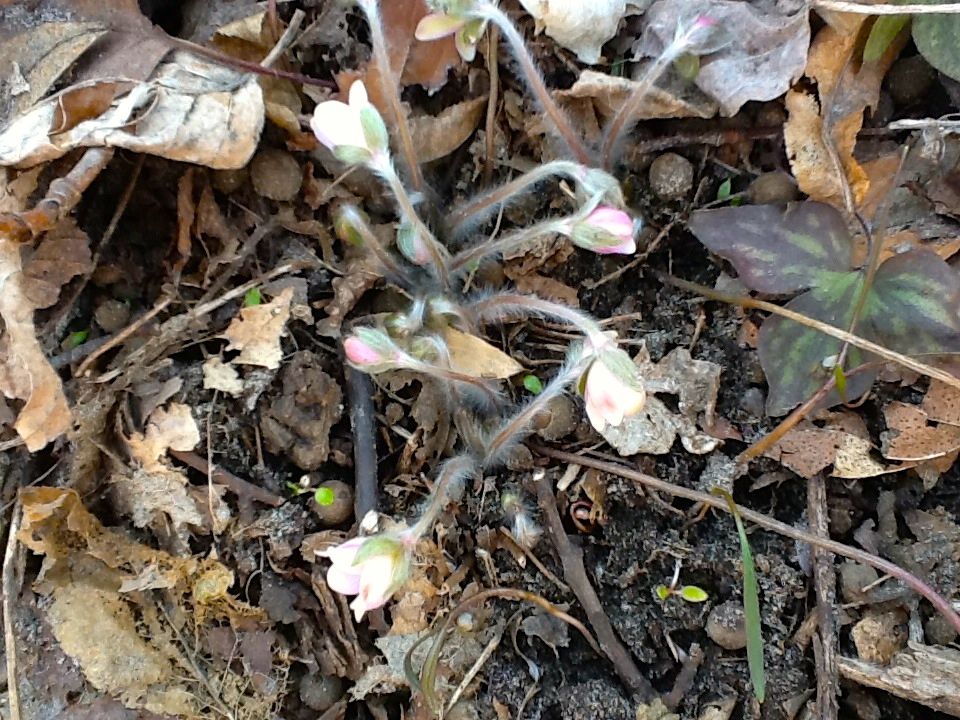
On this warmer but still gray afternoon in early April, with only a hint of green and hepatica (yay, hepatica!)  in the forest leaf cover, I feel like I have started a thought and lost it, mid-sentence. What were all these plans I had as recently as January 1? I had what I thought was a year’s worth of desires lined up. All I had to do was follow through.
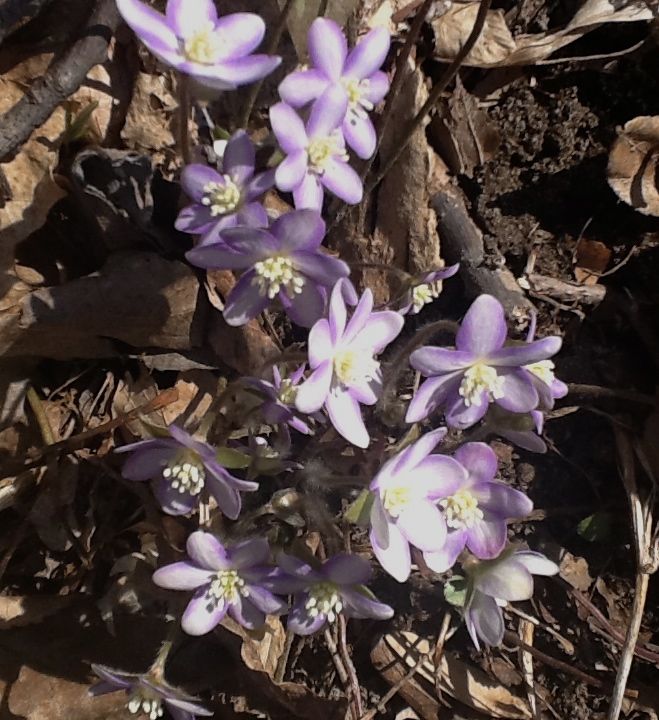
hepatica

Yay, hepatica!

Maybe it wasn’t a year’s worth; maybe only three months’ worth.

No, that’s not quite right. Some of those plans are accomplished, ta-da, done! Or almost. I work really fast when I put my mind to it. Others are not yet fully executed. I have done the easy parts and many of the hard parts but now there are some really hard parts left and I am running out of steam.

In the accomplished column is the publication of a book that I thought I would never finish writing and revising, let alone publish. Ta-da, done! I did this much faster than I thought possible and had fun mastering self-publishing, which has come a long way in the last few years.

In the nearly accomplished category: weight loss. I thought I couldn’t do it and then I did it. Ta-da, goal in sight!

Yet to do: get back to biking. But I have made progress by finding the guy who will help me get on the right bike. I will visit that shop outside Detroit again in the next month. Meanwhile, I will start to toughen my butt on my old bike as soon as the conditions are right. (I require temps in the 50s or above but not too hot, no rain, not too much wind. Today is a tiny bit rainy and besides I already got my exercise at the Y.)

However, what is really bothering me on this too-open afternoon, making me feel like a cowardly, unmotivated lazybones, is that I haven’t yet started my Next Big Writing Project.

But come to think of it, that’s not true. I have started the project but it is not yet at the writing stage.

  • I think I know what it is. I want to write about Mennonites in Congo and the power of music and faith in some of the toughest circumstances on the globe.
  • Since making two trips to Congo last year, I have been working on developing a special relationship between my church here and a congregation in Kinshasa.
  • I have revived the Congo Cloth Connection to create relationships and fund projects for women and children in Congo–we’ll do another big cloth market at the Mennonite Church USA convention in Phoenix in July.
  • And I am starting to think about my next trip to Congo.

I am hung up on this last point, however, the next trip. This will be a trip I do entirely on my own except my husband will go with me this time. But no sponsoring project, no special occasion like a centennial celebration, no fellow travelers. I want to go to visit churches and listen to as many choirs as possible. I want to go to write. This would be a research trip for my Next Big Writing Project.

There is a gap between the desire to do a thing–go to Congo on our own and listen to choirs–and making that happen. It is in this gap that the desire begins to doubt itself. Do I want this badly enough to do everything it takes to make it happen? All the money, logistics, contacts needed to travel in that compelling, outrageous country. Just for me. Just to write.

I need to believe in myself both as a doer and as a writer in order to move off square one. I am writing this as a statement of intention. If you wish, hold me accountable. Cheer me on.
Forced fossil fuel fast

I am in day two of a fossil fuel fast; that is, I am going nowhere by motor vehicle and using as little electricity as possible.

Sometimes I do this on purpose but not this time. The battery on my car is dead and I’ve decided to wait for Vic to come back from Chicago to deal with it. So I am trying to put a positive spin on the situation.

It is appropriate, and maybe a little ironic, that the battery turned up dead two days after we participated in an afternoon of prayer of lament and hope at a site along the Enbridge oil pipeline, which is scheduled to expand this summer so more awful Alberta tarsands oil can gush to fill hungry oil appetites here and around the world. The new line will replace or more likely supplement the old pipeline, which made a big mess of the Kalamazoo River in 2010.

This event was at a retreat center 40 miles away but the pipeline also passes within a mile of our house and through the property of our beloved Community Supported Agriculture farm. Because of the pipeline construction, Bertrand Farm will have to curtail most of its production and all educational activities this summer. Our farmer, Theresa Niemeier, rode to the event with us. Brownie points to us for carpooling in a battered, fuel-efficient Focus.

This was not just a protest against Big Oil. The pipeline expansion is a done deal and besides, in Pogo’s immortal words, “We have met the enemy and he is us.” In the moving rituals of the day at the Hermitage we confessed our own dependence on the oil economy, mourned with the trees that will be felled, and danced our hope and determination to do better.

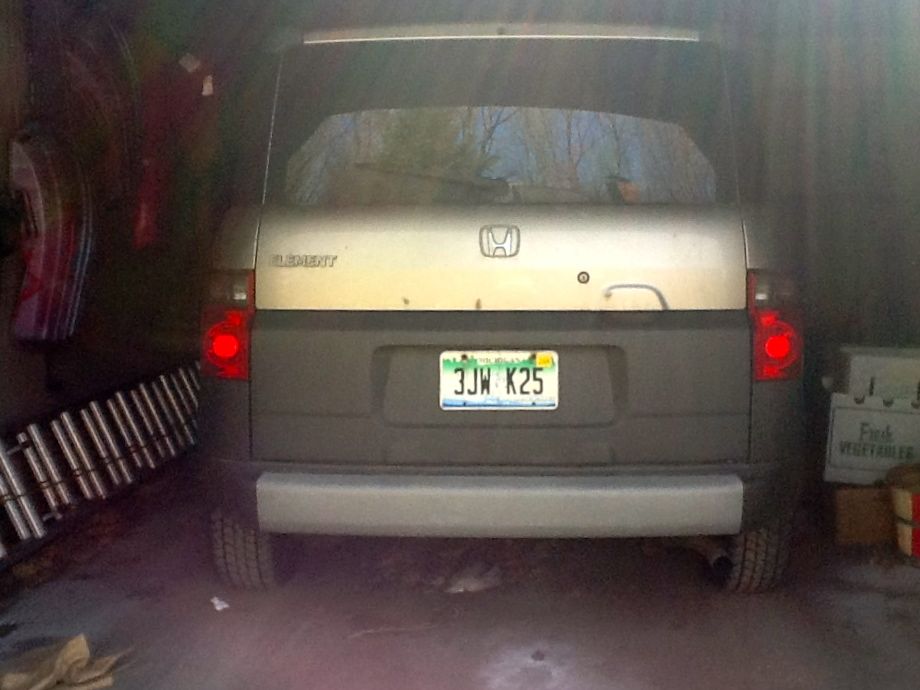
Maybe the aging Honda got the message and decided to help out by doing a sit-in in our garage. You want to drive less, why not start right now? (And by the way, April Fool except this is real.)

element

And so I am walking the road in the chilly winds rather than going to the Y for exercise, eating up the wilting veggies in the fridge, keeping the thermostat low and the fire high, and hanging laundry out to dry.

laundry

Forced to stay home, I’ve also been out in the woods every day checking for blooming hepatica, our first spring wildflowers. Despite the cold they’ve begun to raise their fuzzy stems and fragrant blossoms to the sun.

hepatica

Sugar time

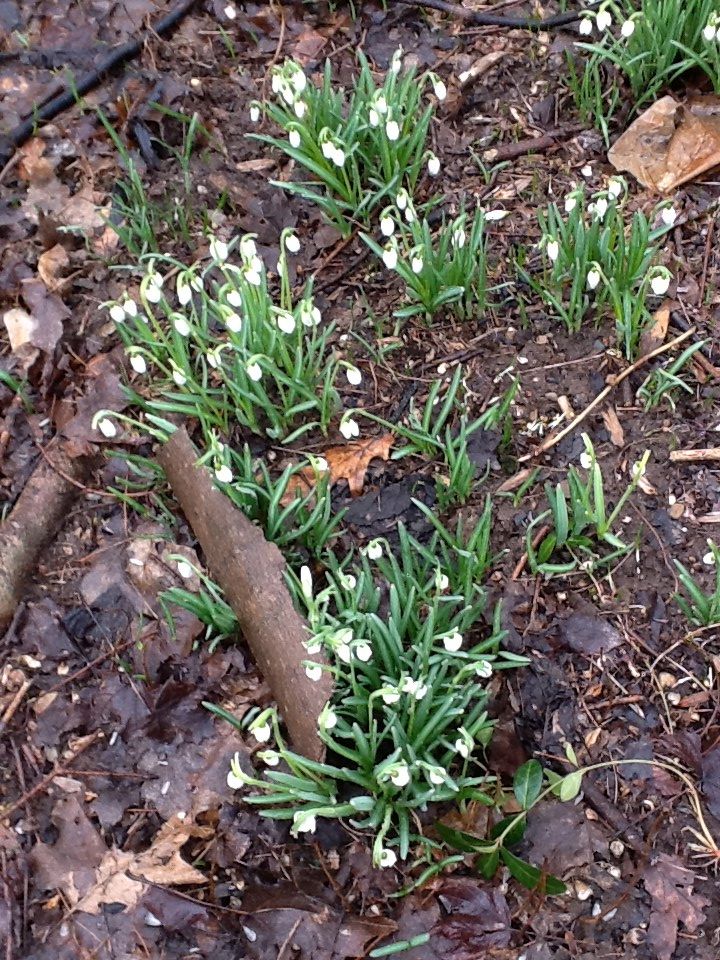
snowdrops

Suddenly the snow is melting. Spring may be almost here. The snowdrops thought it was coming in late January already but they had to endure who knows how many heavy snow blankets after that. Finally, here they are in all their glory, looking down at the mud.

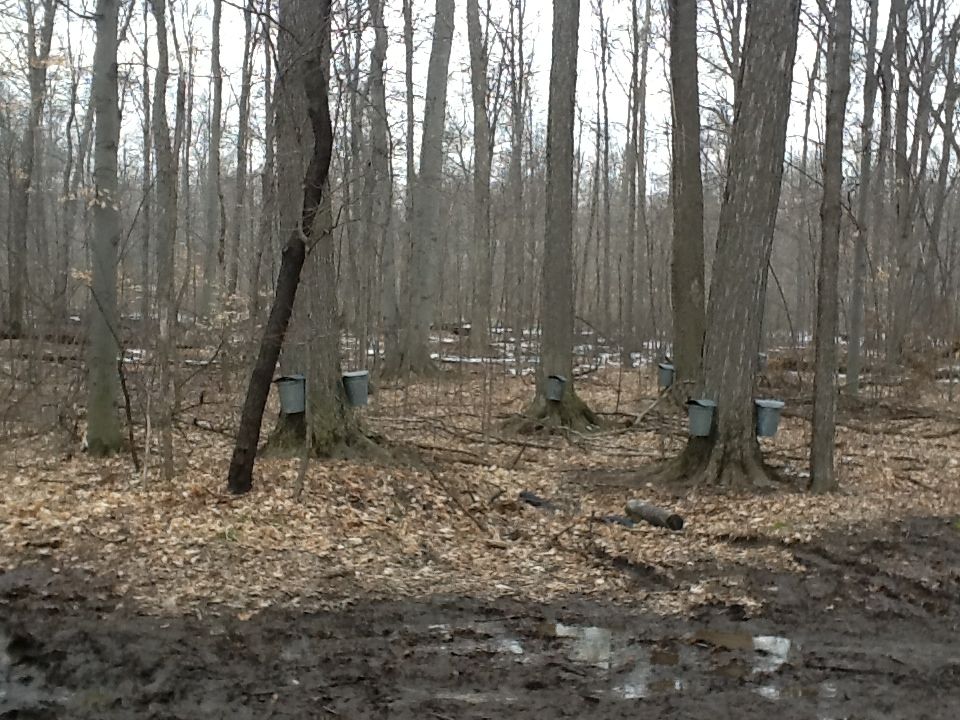
Lots of mud. Mud is a special treat for our two-year-old, Hazel, who came to visit over the weekend with her mommie and daddy to help make maple syrup in my brother’s woods in northern Indiana. There was enough mud to make Hazel very happy, along with piles of slushy snow to tromp through, sap to sip direct from the tree, and syrup to guzzle warm from the cooker.

chips and mud

Unlimited chips! unlimited mud!

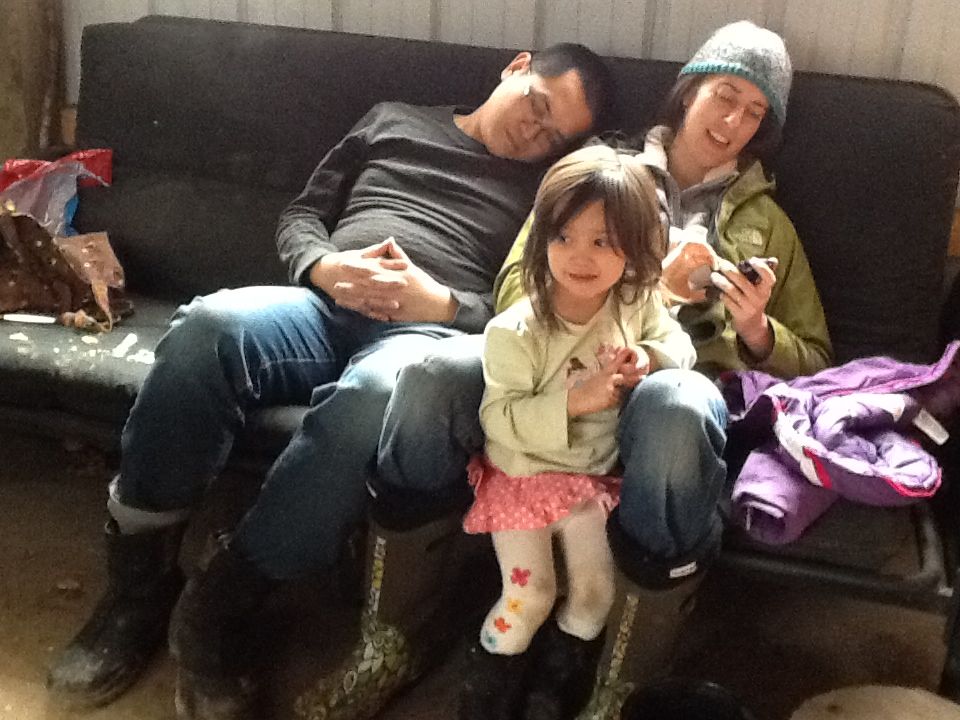
The heat makes everybody sleepy except Hazel. Safer to send her outside

The heat makes everybody sleepy except Hazel. Safer to send her outside

hanging out

Maple sugaring gives us something to look forward to in this northern, muddy end of winter/beginning of spring. The ground has to be a mess for the sap to run well—thaw by day, light freeze at night. It happens right around spring break. Even though I am impatient for warm weather, I wouldn’t trade a day in the sap shack with my family for a week in the Florida sun.

trees

My nephew Adrian is the fourth generation of our family to make syrup from these trees

My nephew Adrian is the fourth generation of our family to make syrup from these trees

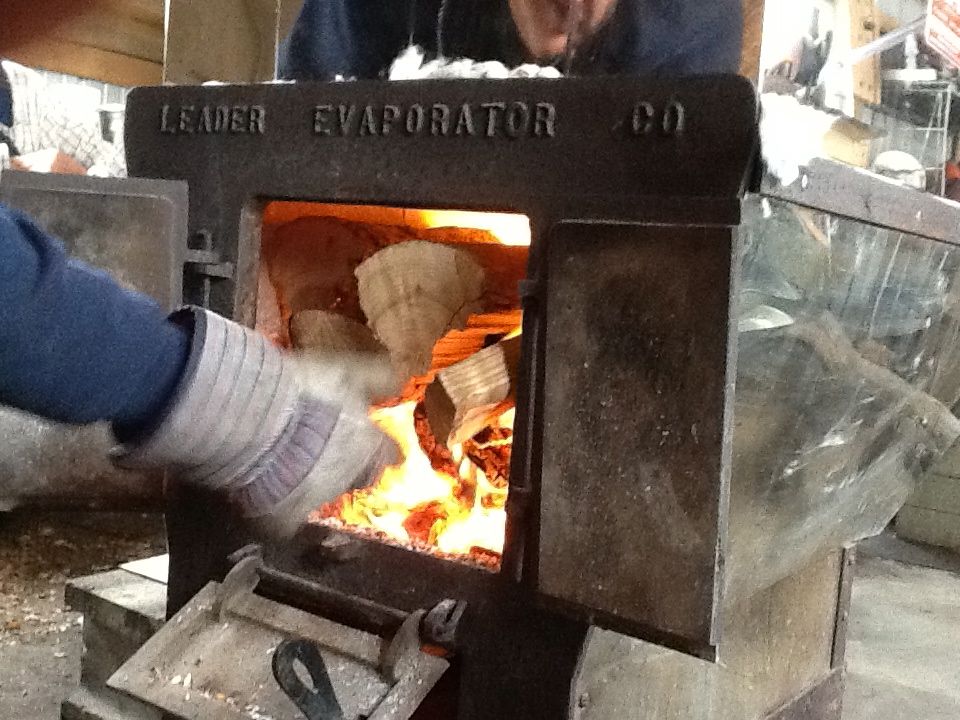
When I go to the maple woods I bring food. Traditionally it’s brats, which we cook in sap on a potbelly stove, but this year I took a vegan soup and guacamole to go with more or less healthy chips. My oldest brother pretends to turn up his nose at healthy food but he did not complain at all about this soup. The large soup pot emptied over the afternoon, along with a goodly number of beer bottles.

Here is the recipe, which is my enhanced version of a chickpea-cashew soup recipe I got from a friend.

Practical Mystic’s Vegan Chickpea–Wild Rice Soup

3/4 cup raw cashews, soaked in water overnight and drained

1 cup dry chickpeas, soaked in water overnight and drained

2 tablespoons olive oil

1 large yellow onion, chopped

4 cloves garlic, minced

3 ribs celery, thin sliced

2 large carrots, cut in chunks

1/2 lb. mushrooms, coarsely chopped

1/2 teaspoon dried rosemary

3/4 teaspoon dried thyme

1 teaspoon salt

Fresh black pepper

3/4 cup brown rice

1/4 cup wild rice

6 cups vegetable broth

4-6 cups chopped kale or spinach

In a stockpot over medium-high heat sauté onion, celery, and carrots in olive oil with a pinch of salt for about 5 minutes, until onions are translucent. Add garlic, mushrooms, rosemary, thyme, salt and pepper and sauté until garlic and mushrooms are fragrant.

Add rice, wild rice, chickpeas, and broth. Bring to a boil, then cover and simmer until chickpeas and rice are tender, about an hour.

Meanwhile drain the cashews and place them in a blender with one cup of fresh water. Blend until completely smooth.

Add the cashew cream and greens to the soup after rice is tender and simmer until greens are wilted, 3 to 5 more minutes. You may need to add water to thin the soup if it seems too thick. Taste for salt and seasonings and let sit for 10 minutes or so to allow the flavors to marry.

It thickens as it cools, so if you are lucky enough to have leftovers, just thin with a little water when you reheat.

Impatience

IMG_0869

I was impatient for spring and then this happens. But isn’t it pretty?

Impatience is creeping into my weight-loss campaign, too. I have four pounds to go. This may not sound like much but it might take two months to get there.

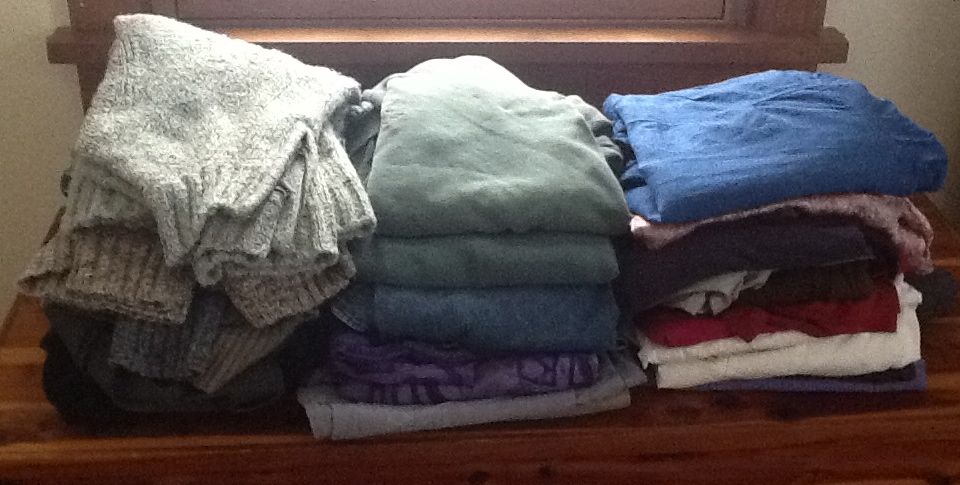
The focus of my impatience is not my diet. I feel like I could keep eating this way indefinitely. Rather, it is about clothes. My wearable wardrobe is shrinking with my body: three pairs of pants, none of them dressy, and a few of my latest sweaters. The rest is baggy. I suppose it wouldn’t hurt to buy some new clothes but that would defeat several of my intentions.

The first was not to buy anything new until I reached my goal weight. I have had the experience of buying things that I thought would fit after I lost another pound or two–and then I didn’t lose the weight. This time, no wishful shopping.

The other intention was not to make this weight loss about appearance. It wasn’t at first. It was about health in the long term and energy in the immediate, as an indicator of health and vitality. And it is working. My energy is up. In a week I walk 10 to 15 miles and do several hours of yoga and other exercises. I sleep well and feel great.

By now, however, I am getting used to this new vitality. Ho-hum. So what else can this new body do? The next thing is fitting it into some new clothes. I am impatient to get to this next thing.

Impatience is unkind. Impatience lives in the future and dismisses the present. Impatience is in a hurry. Impatience is ungrateful. Impatience sometimes says what the heck and sometimes tries to muscle through.

It is not impatience that has got me thus far on this matter or on any other. Rather, I have come to a profound respect for the rhythms and pace of my own body and spirit. I know both the joy of discipline and the limits of willpower. I have come to depend less on treating myself to special rewards and more on recognizing the rewards that are already there. The thing I know to do is to keep focused on the present.

A snowy day is no good for shopping anyhow. But it is good for purging closets. Here are my baggy clothes, ready to bag up for Goodwill. Bye-bye XL! My closet is ready for those new clothes and I am ready for spring. All in good time.

IMG_0872


The Civil War and climate change

MV5BMTQzNzczMDUyNV5BMl5BanBnXkFtZTcwNjM2ODEzOA@@._V1._SY317_CR0,0,214,317_I want to see the movie Lincoln so I read the book first. The movie is based in part on Doris Kearns Goodwin’s 2005 Team of Rivals—a biography not only of Lincoln but also his brilliant, contentious cabinet.

I know most of my favorite scenes won’t make it into the movie because the film is about a very small slice of Lincoln’s story, his efforts to get the 13th Amendment passed, abolishing slavery. I can’t wait to see two of my favorite actors—Daniel Day Lewis and David Strathairn—bring Lincoln and his secretary of state, William H. Seward, to life. But the movie should make you want to read Goodwin’s book. It is a great read and a revelation of the dynamics at play in that fateful time in our nation’s history.

There are many resonances with today. We could really use a Lincoln just now—a wise, canny, principled reconciler; a master at maneuvering the rift between factions and stitching them together; a genius of political timing; a big-hearted changer of minds. I know President Obama loves Goodwin’s book and reading it gave me a better idea of what Obama is trying to do. But, alas, there will never be another Lincoln. For one thing, I don’t think Obama has a great sense of humor. He takes himself very seriously. A good dose of Lyndon Johnson’s arm-twisting, storytelling skills would help.

In fact, Lincoln seems like an amalgam of the best qualities of some 20th Century presidents: FDR’s ability to rise to the occasion, LBJ’s political skills, Jimmy Carter’s generous spirit, Bill Clinton’s charm, Barack Obama’s intellect. Notice I’ve matched the first Republican president up with more recent Democrats. Goodwin agrees that if Lincoln were alive today he would be a Democrat. The parties have totally flipped. But Republicans have every reason to be proud of Lincoln.

One thing that has always bothered me about Lincoln is how such a great humanitarian could have presided over the slaughter of more Americans than have died in all wars before or since, combined. Okay, I’m a pacifist and I don’t believe in war at all, but even by the measure of “just” war, the Civil War was a disaster of disproportionate brutality.

Clearly, Lincoln believed he had no choice. I am not in a position to judge that. It seemed like all parties were marching in their own, long-since-laid tracks to confrontation. But I was struck in this reading by the sense that Lincoln made of it all as the war was drawing to a close.

In his Second Inaugural address, Goodwin points out, “The president suggested that God had given ‘to both North and South, this terrible war’ as a punishment for their shared sin of slavery.”

Saying God punishes people through natural disasters is one thing. But saying that God uses war, which is totally engineered by humans, as an instrument of punishment seems like stretching a point, laying responsibility in the wrong quarter.

Here is how Lincoln makes the case:

“Fondly do we hope—fervently do we pray—that this mighty scourge of war may speedily pass away. Yet, if God wills that it continue [I still cringe at this] until all the wealth piled by the bond-man’s two hundred and fifty years of unrequited toil shall be sunk, and until every drop of blood drawn with the lash, shall be paid by another drawn with the sword, as was said three thousand years ago, so still it must be said ‘the judgments of the Lord are true and righteous altogether.’”

Thus, he does not absolve humanity—himself included—of responsibility for setting the machinery of war in motion. It is, in fact, a reaping of what we have sown, and, at the same time, a terrible divine justice from which no one is exempt. It is us and it is God.

And if this is true, there is a lesson for us in these times as the hurricanes wreak havoc on our coasts, the droughts and floods devastate, the winters warm and the springs freeze. We are reaping what we have sown. We must do what we can to turn it around. But no one is exempt. It is us and it is God.

Centering Prayer meets Tree

tree

I was annoyed. My back was still giving me angry twinges despite everything I had done for it over the past weeks—pampering it, not pampering it, ignoring it, talking to it, medicating, hocus-pocusing, stretching, relaxing, strengthening. And then my sewing machine was acting up, turning a creative project of making doll clothes into a chore.

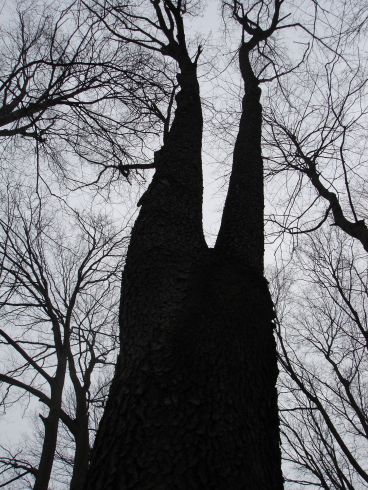
It was midafternoon and I realized that I had not yet done my daily Centering Prayer meditation. Rather than sit at my desk, as I have been doing since I started the practice two months ago, I made myself get up and walk into the woods to my special tree. My mood improves whenever I spend time with the tree, though for some reason I am always reluctant to test this proposition. I had not paid a visit to the tree for several months.

Rather than sit on the cold ground at the base of the tree I perched on the branch scar that juts from the trunk several inches off the ground. Immediately my mind became a blank slate.

I don’t know how to draw the line between excessive self-awareness, which nullifies the point of Centering Prayer, and true appreciation of the experience that this kind of meditation can bring. The prayer is an opening, an invitation, and sometimes things happen because of that opening.

Up to now the happenings have been subtle changes in my daily life and how I respond to events: an emerging sense of both purpose and contentment with the present and what comes, a deeper patience with myself and with other people. I haven’t experienced much, or expected much experience, during the meditation itself. The point is to be open, to train yourself to let go of everything the mind brings up, including expectations. The only palpable result I have noticed during the meditation has been an easy, calm, blank peace.

For a number of years, as I have written before, I have experienced this particular tree as a prayer companion, a meditation preparer, an energy field that somehow connects with me. But I had not been to the tree since starting a Centering Prayer practice. The difference this time was palpable.

What happened that afternoon at the tree was too powerful to ignore. The sense of peace was so strong that it vibrated in my core. The interval between distracting thoughts was so long it was as if the thought-manufacturing part of my mind did not exist. My earlier irritation not only dropped away; it receded so far that it seemed as if I would never feel that way again. After 20 minutes I walked back to the house elated and refreshed.

This experience was not qualitatively different from what has happened to me at the tree before. The difference was quantitative. I was far more sensitive and receptive to it than I had been before practicing Centering Prayer. The daily meditation had trained my sensibilities, opened me to this visceral experience of an unseen and indescribable reality, this tree—these trees—and my connection to them. It was as clear a before-and-after experiment as I could have engineered if I had thought about it (my tree experiences before the Centering Prayer practice and now). I didn’t think about it. I didn’t expect it. And it was therefore all the more remarkable.

And then, just as I was thinking this kind of experience was particular to the tree, something similar happened in church yesterday. I was more present, more aware, more moved by everything that unfurled in the worship service and my encounters with the community. In the beauty of a sanctuary adorned for Advent, my attention was riveted, my sensors tuned high. It was like church in HD.

A central purpose of Centering Prayer, as Cynthia Bourgeault describes it in Centering Prayer and Inner Awakening, is to learn to use “those more subtle perceptivities of spiritual awareness—the “spiritual senses,” as they’re known—to see and taste the presence of the divine as it moves fully in and out of everything.”  I think it’s working.

Wisdom v. struggle

photo by Nina B. Lanctot

For the third time in the last 12 months I have gotten the Wisdom v. Struggle essence in the personal blend my daughter prepares for me intuitively.

How many terms should I unpack and explain before I go on? “Essence” refers to a preparation an herbalist (in this case Merri Walters of Great Lakes Sacred Essences) makes from flowers or under the influence of places or celestial events. Essences have energetic properties linked to healing and influencing human emotions and development.

“Personal blend.” My daughter sometimes makes individualized blends of these essences for people who request them.

“Intuitively.” She makes her choices based on the energetic sensations she receives at the moment, from individual bottles in her collection, not on her knowledge of what the individual might need. Whatever the mysterious process involves, it works. The blends she makes for me are always spot-on, appropriate, revelatory.

I experience these personal blends as catalysts. They make things happen in my life and psyche that need to happen. They are not always soothing but they help produce profound, necessary change. The plants, rocks, and waters they represent have become my allies on my life journey.

So when “Wisdom v. Struggle,” drawn from the waters of Lake Superior, shows up three times in a row out of several hundred possibilities, I pay attention.

I like the first part of Merri’s description of this essence’s properties:

This essence is for those who are truly ready to see, who are no longer afraid of the unknown but are ready to sit peacefully and watch the great mysteries unfold…..no longer distracted by the irritations of this plane…..profound peace, the doorway to initiation and the mysteries of the cosmos.

Yes, yes, that’s me! I’m there, baby.

But she goes on:

This essence can also be extremely helpful to those who are still caught up in struggle, who seek wisdom, seek depth, seek to know the truths of all time but as they find themselves in perfection ~ their hearts desire ~ they become preoccupied by the flies that are there too.

Alas, that is also me. I am often preoccupied by flies.

The gray brown chill of November. The roofer who took our deposit and disappeared. My husband’s absence on my birthday. The prospect of a difficult conversation with a friend. Climate change. Whether the turkey that’s been in the freezer for a year will be all dried out and I should get another one for Thanksgiving. A low-energy day.

(What is it about the state of the world and the small disturbances of everyday life that makes these things weigh heavily, and equally, on a given day?)

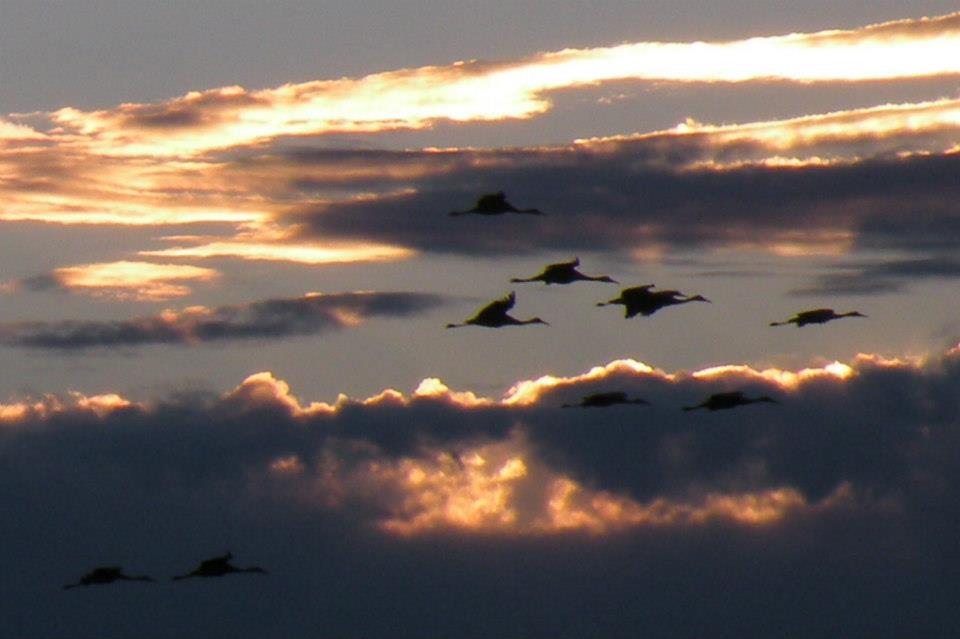
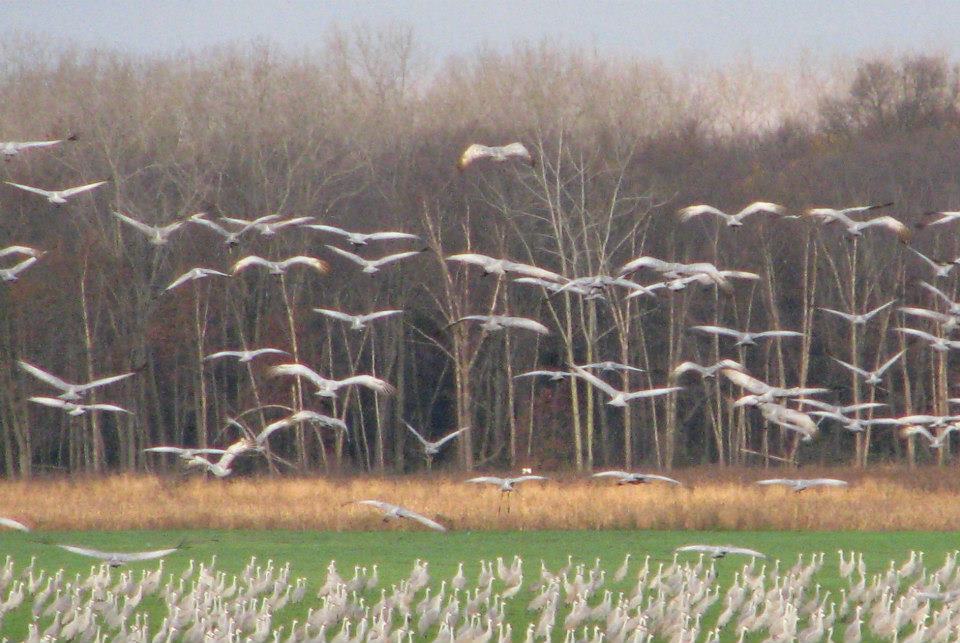
On Saturday I asked for a special early birthday celebration, a visit to Jasper-Pulaski State Park an hour and a half away in Indiana to see the migrating Sandhill Cranes.

The cranes come through this area every year on their arduous trips, feeding and socializing for several months in the area. They gather by the thousands at dusk in large pastures in the park, where you can watch flocks soaring in just before sunset, a great bird O’Hare Field at rush hour. They socialize there for a little while then lift up en masse, sometime after dark, to roost in nearby marshes. They sleep with their feet in cold water. They get together in the pastures again at sunrise.

We watched the cranes flying in until we couldn’t stand up anymore, then ceded our choice viewing spot on the platform to people who were crowding in behind us, gabbling like cranes. Look at that. There come some more. And more! See that big bunch! See how they put their feet down. Ah, ahh, zoom zoom! They make it look so easy.

I thought of Wisdom v. Struggle. I thought of how I wanted to live like a crane, soaring with the thermals, landing on my feet, hanging out with the community. Following the journey where it takes me.

Sunrise. Photo by Nina B. Lanctot


Moving through bogs

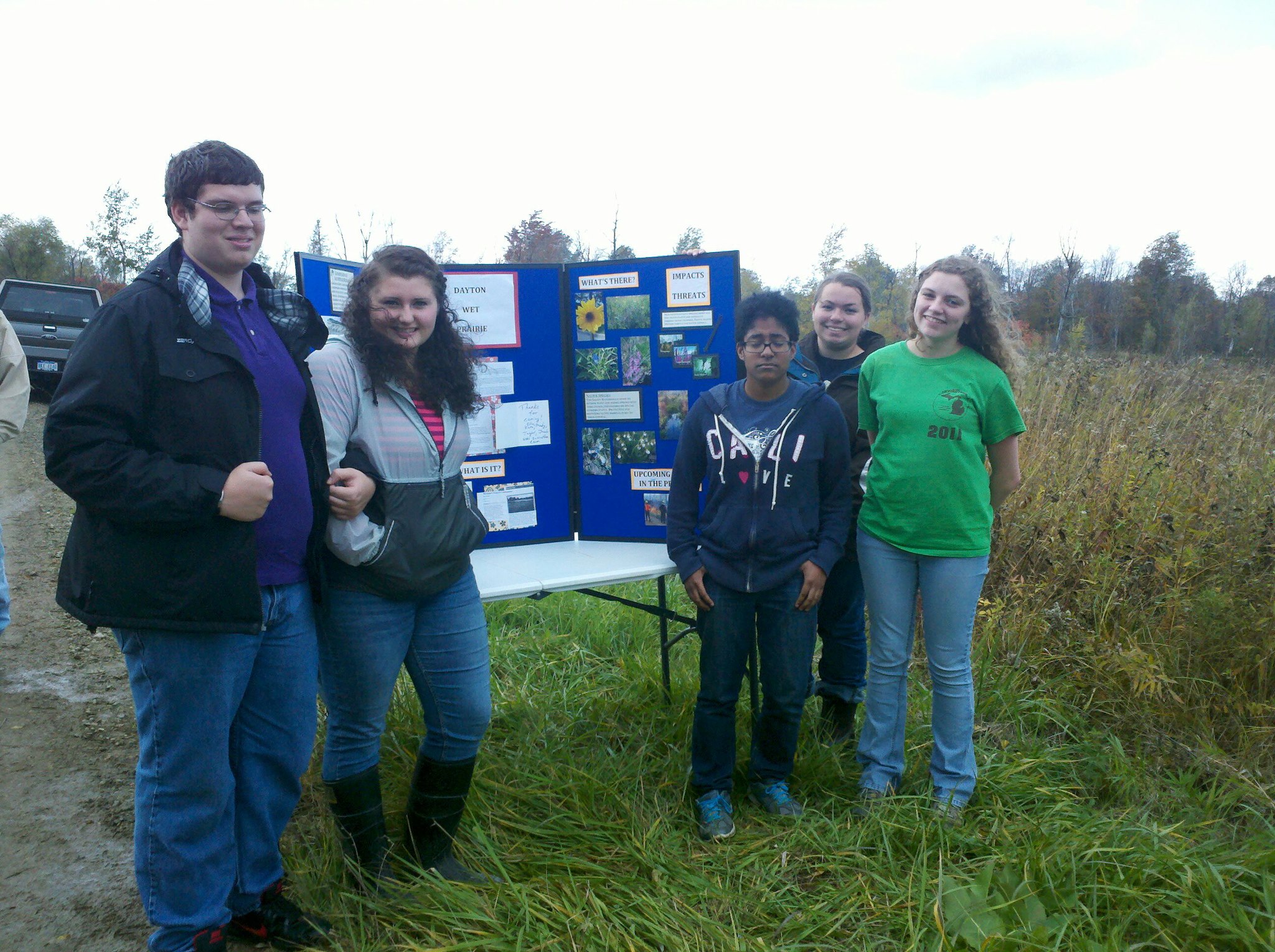
The Niles, MI Envirothon team at Dayton Wet Prairie

Yesterday we got to step into our local ecological treasure, a rare wet prairie. It was the prairie’s annual “open house,” when a botanist leads a tour into the fragile terrain. The conservation group doesn’t want the general public traipsing through just any day but that’s not much of a problem since the 40 acres of the preserve flank a little-used dirt road and the prairie itself is, well, wet. The ground is squishy. Jump on it in your rubber boots and it bounces.

We followed botanist Bob and a very well-informed group of high school students a little way into the wetland and were introduced to some of the more obscure members of the ecosystem, from sharp rice grass to the last blooming fringed gentian. The students are thrilled with a plan to close up a ditch that had been struck through the prairie years ago. The idea is to return more natural flooding to the area. Combined with an imminent burn, the project may restore the prairie to a more natural state. We can watch this happen in coming weeks and years. It was a good day.

It reminded me of this month in my personal life, a combination of treading carefully and taking decisive actions that feel like the equivalent of flooding and burning. Will these moves clear out the invasive fears and distractions? Will new growth be sturdy, natural, harmonious? There will be changes.

Last week, between making Earth First orchard’s last bushel of organic seconds into applesauce and hosting our annual fall party for city friends, I finished a book.

This is a book I thought I would never finish. I have been trying to tell this story, in one form after another, intermittently, for 14 years. That makes it sound monumental. It is not. It is a small story, fragile as a boggy ecosystem. The problem has been understanding it well enough to tell it. It has been a challenge of capturing, describing, defining something that defies linear storytelling conventions because it is all about connections.

I thought I had given up on it. I set it aside nearly two years ago, feeling utterly defeated. I did not want to look at the manuscript ever again, but I discovered several weeks ago that it was still wearing a hole in my heart. And so last week, on a warm, sunny day, I took the manuscript to the most beautiful place in the neighborhood, high up on a dune overlooking Lake Michigan, and dared myself to read it one last time. Dared. It took a lot of courage to face my own inadequacy as a writer.

The astonishing thing was, I began to love the story again, and the way I had told it. It stood up to the natural beauty around me. I saw that it was almost finished. It needed one last trim and some minor shifts, which I did in a few hours later in the week.

I will not say more about it now because releasing it into the world depends on a number of considerations, which I am wading through at the moment, jumping lightly on the bog to test the reverberations. But for the first time in all my attempts to tell this story, I have told it to my own satisfaction.

I feel cleaned out, flooded, burned, ready for the next creative project.