Holy Communion at the Hibachi

“I guess this is our secret vice,” I said to my husband over our after-church lunch. “We’d never invite our friends to join us here, would we?” He chuckled and glanced at the not-too-clean couple at the table next to us, then down at his plate piled high with samplings from the bounteous buffet of the Hibachi Grill.

It is possible to eat healthy at Hibachi if you choose carefully. But we don’t always. And it is not the nice array of fruit right out front that draws the clientele of the Hibachi Grill, or even the to-order stirfrys in the back, which give the place its name. It is the price–$4.99 for seniors like us, $5.99 for other adults, $2.99 for kids for all you can eat of a hodgepodge array of vaguely Chinese/Japanese/American foods guaranteed to fill you up. Continue reading

Practicing good life

I would like to be happier. My source of unhappiness is almost always myself. I seem to be profoundly, unalterably dissatisfied with myself. I often ruminate over my faults and consider my good qualities ephemeral exceptions to the rule of my nature.

And yet I do not feel like a sinner to be forgiven. I do not identify with that language at all. It’s not forgiveness that I need. Forgiveness implies staying the same, accepting one’s faults and missteps. It’s strength and persistence and discipline–all those qualities in which I feel deficient and yet which I possess in certain measure–that are called for. I just want to be better, to do better. That, however, is a source of constant dissatisfaction, i.e. unhappiness.

Obviously, if I am to be happier I need a different story. Not self-improvement. Not forgiveness. Not even self-acceptance.  What? Continue reading

My solar guy

Sometimes the best thing about church is community, a pool of friends and acquaintances who share the burdens, joys, and responsibilities of life and who unite often in common cause. Building that kind of community, however, requires work. You can’t pay pastors and leaders to do it all because then it’s not community; it’s spectator church. Because that kind of church does not feed our souls, Vic and I find ourselves taking on assignments and responsibilities in whatever church we attend. Continue reading

This Five needs you

Enneagram_SymbolIt’s the New Year. I’ve had another bout of self-dissatisfaction and thus have been making another try at self-improvement. This time the tool that came to mind was the Enneagram, the analysis of nine personality patterns we humans take on in the earliest stages of our lives.

What I like about the Enneagram is that it not only gives you insight into human differences and makes you more accepting of them; it also indicates paths for breaking out of the limited responses we learn when we are young. Self-understanding and self-improvement. Continue reading

The value of caring

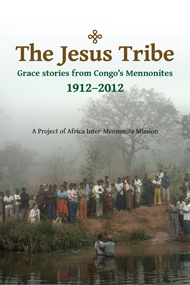
JesusTribeEnglish“Do you do freelance editing?” Barbara asked as we sat together at a dinner, belatedly celebrating the publication of a book I’d worked on two years ago. Barbara was managing editor of the small religious press that had published it. I could tell she had another project in mind.

I hesitated. I have, in fact, been trying to give up editing. “Not really,” I said, but not too firmly. It had, after all, been a pleasure to work with Barbara.

She began describing the manuscript but in the noise of dinner conversation I couldn’t get a clear idea what it was about. Only that it was a crosscultural, rather challenging editing project and she was desperate to find someone who could handle it. Continue reading

Do conservatives and liberals need each other?

My eclectic reading this week has me thinking about profound human differences–political, religious, and personal. In particular, what you might call the liberal/conservative divide that cuts through all of these realms.

I am convinced that political differences, for instance, largely mirror differences in personality. This is both comforting and scary. It is comforting to know that, underneath it all, our political opponents and even those we might consider our enemies are acting from human nature, which we might be able to understand, as fellow humans. But it is scary that, although we might understand each other, we can’t change each other. That is, if these differences are innately human we won’t be able to bring each other around to our point of view. And compromise won’t work.

Indeed, the political divide between liberal and conservative is widening and deepening. Differences are becoming entrenched. This article in today’s New York Times describes how that plays out in the twin cities of Duluth, MN and Superior, WI–two cities with similar populations and economies but now set on very different paths because of profound differences at the level of state government. Some immediate results are evident but others will only be seen in the long term. An interesting and poignant experiment.

I don’t know how I missed reading or even hearing about the 1999 novel, The Fifth Sacred Thing, until now. Set in 2048, it plays out an extreme version of the results of two such paths in two cities, in a California that has been devastated by both natural and human-made disasters. San Francisco has gone all earth-based spirituality, free love, and consensus. Hardly anybody owns anything but in the verdant city there is enough for all, and healers, artists, and musicians are particularly treasured. It is a self-contained, self-sustaining society but it is also isolated. And it is under attack from the police state that Los Angeles has become. Starhawk’s novel is a great read.

If I had to say where I stand of course I would put myself on the liberal side. I share the vision of a society where all are fed and no one is turned away from the table. Where all have meaningful work according to their skills and talents. Where healing of all kinds is available to all. I believe that the earth is sacred. That is, it should be honored as a primal source of our being, as parenthood is sacred, as love is sacred, though I do not believe in group sex and promiscuity. And oh, please, I am not attracted to the consensus process (I hate meetings), though I suppose something like that is necessary in an egalitarian society.

On the other hand, I do not believe that corporations and fundamentalist religion are irredeemable as systems, that is, that they are evil per se and lead inevitably to the horrors described in the novel.

That is, I don’t believe, with the author, that one approach leads to ultimate good and the other to ultimate evil. Because I believe these two paths represent basic, inborn (as well as cultivated) human differences. And since, well, all of us are created in the image of God. . . .

Perhaps the key is in how we exercise our innate natures. When we are healthy and secure we have strengths, in our different personalities, that are essential to living together in this world. When we are under stress or in conflict, these differences become extreme and contribute to the conflict and division between us.

My friend John Fairfield is working on a book that outlines a Christian theology putting our very differences at the center of the call of the Christian church’s work in the world as well as within the Christian community. This seems relevant to what I’m thinking about.

John describes the “healthy and secure” person of what I would call the conservative type as having a strong identity and being concerned with being faithful to tradition and discerning what is fair, what is good and bad behavior. This is good. Under stress of conflict, however, such a person is “tempted to reject those who are offensive, to preserve the purity of their community of identity. Under even more stress some become increasingly rigid, using their belief in the correctness of their beliefs to justify their control of the situation, by force if necessary. Some people will dominate, oppress, even kill, in the name of their beliefs.”

The healthy and secure liberal-type person, on the other hand, is hospitable, quick to learn and understand another point of view and synthesize that into something new, and reaches out to build bridges between opposing sides. Bravo! But in conflict, such a person may become wishy-washy, catering to opponents, hiding, fleeing, or exercising some form of deception. Passive-aggressive behavior is typical of this personality type. Touché.

John’s point is that we need each other, but we must relate to each other at the “healthy and secure” end of the spectrum and keep working to restore relationships to that level. Is this possible? Well, it is the work of a lifetime. Maybe several. Otherwise, we don’t have to look too far to see a vision of our dystopic, dysfunctional, divided future.

Radiant

IMG_2482

I have chosen a personal word for 2014: radiant. In choosing this word I am playing a little game with myself, using an indirect, or even a reverse-psychology approach.

What I really want, you see, is to get back on track, regain lost momentum, and accomplish something in the way of writing a book and other projects related to Congo and life in general.

Many wonderful things happened or got started in 2013, partly thanks to a really fine word I chose in January 2013: flow. But in the last month or so the flow has stopped, I’ve lost momentum and confidence, and motivation has ground to a halt. I have been feeling down on myself as a result.

The new year is a good time to press the restart button, so I was hoping to find a word that would work as well as flow did last year. But all the words I could think of had a slightly punitive cast to them, or, at least, a “should” factor that I felt might have just the wrong effect. Words like “momentum” or “pursue” or “resolve.” Yes, that is what I need but they do not inspire me like flow did. They require willpower and engage the inner parent rather than charm the inner child and the playful artist into cooperating.

I just spent 10 days with my three-year-old granddaughter and so I have gotten a refresher course in reverse psychology. Don’t eat the vegetables; they’re for grownups. It’s too far for you to walk; somebody should carry you. Of course, she saw through it, recognized it as a game, but she can’t resist games and she would play along, at least for a few bites or blocks, and everybody was much happier.

The no-you-can’t/yes-I-can game is one we play all our lives and I’m thinking it may have some merit. A little reverse, or at least indirect psychology, as opposed to the direct approach: You should do this. You must do this. We carry with us the three-year-old’s tendency to rebel at direct orders, as well as the three-year-old’s love of games. How can we harness these tendencies to continue to enhance our lives, become better persons, and even, maybe, reach a goal or two?

By choosing radiant as my word, I am telling myself I should concentrate on being rather than doing this year–even while I am hoping to do quite a lot.

The thing about concentrating on doing and achieving is it can turn you into a noodge and a grouch and a bore who believes that anything important happens as a result of your own willpower. Meanwhile, life can pass by under your nose and you don’t appreciate it, let alone pick up the energy that is available to you each day from your surroundings, your interactions, and your own soul.

The radiant person, by contrast, both radiates and reflects life energy, going with and contributing to flow. This is how I want to be this year. What happens as a result is anyone’s guess and my surprise.

A happy and radiant new year to all.

Pass the compassion and forgiveness

I am hosting a crowd for a funeral in my large mansion somewhere in the deep South. I am bustling about getting everything ready, including an elaborate meal. I have chosen a white eyelet dress to wear but during the preparations I wear a white blouse and brightly colored skirt. The guests have not yet arrived but it is clear that they will of different cultures and races. It is also clear that my butler, George, does not approve of this cultural diversity. I am afraid that his resentment might sabotage the whole event. I am the boss, after all. I try to be firm with George. And then I change into the white eyelet dress. End of dream.

I’ve been doing a lot of crosscultural hosting recently, and I can understand how Butler George represents a part of me, as does the hostess. Butler George is the one who preserves traditions (e.g. Thanksgiving), who assures that everything runs well and that proper form is followed. Butler George was resenting the Chinese grandfather who was popping pistachios into my granddaughter’s mouth just before we sat down to eat. And Butler George was indignant that, in the middle of family time and Thanksgiving preparations, messages were coming from Congo hinting that more money was needed for certain things. Meanwhile, the Hostess (in her prep-time multicultural outfit) was noticing how husband and son-in-law would sporadically ask what they could do to help get meals on but then revert to their computers with the assigned tasks half finished. Continue reading

Twenty-minute miracle

DSC02633

I am needing something.

I sit in meditation and the need becomes so great that I want to jump up and run away from it. I want to fix it. I want to fix myself. I want to do something to make myself feel better. I want to fill up the great cave that opens in me.

With what. Self love? Food? Tea? A message from a friend? Plans for the day, the week, the next project? Clean laundry hanging on racks all over the house?

I let the need sit there, or rather, I make myself sit with the need. I have set my meditation timer for 20 minutes and, by God, I am going to sit it out.

By God, ten minutes in, the need identifies itself as the need of God. Big, real, impossible. The unfindable, undefinable, ineffable God. No less.

What can I do about that? Nothing. I can’t make God come to me. I can’t even make myself recognize that God is already there. I wait.

Seventeen minutes in, the phone rings. I jump up. Maybe God is calling.

It is Comcast Cable. I don’t answer.

I sit out the last three minutes. At the chime, twenty minutes elapsed, I jump up and check the dishwasher to see if the soap compartment has opened. It’s been acting up recently, and the thought was nagging me as the dishwasher swished background noise to my meditation.

The compartment is open. Things are working.

Somehow, I don’t know when, the need has shifted, dissolved. It no longer announces itself as impossibility, absolute aloneness. A great, neon “Vacancy” sign now flashes “No Vacancy.”

I make tea. I write. I email about my committee’s budget request for next year. The clothes washer sings its little song, announcing the end of the cycle. I hang up the laundry.

Angst and need are gone. Love has moved in.


Church culture shock

Yesterday I experienced reverse culture shock. We’re back home and we went to church.

We had been to church four consecutive Sundays in Congo. Two of those Sundays were major, five-hour services celebrating the ordinations of women and men. The weather was steamy. Crowds milled and were often noisy. There were multiple sermons and exhortations as well as a great deal of pomp and ceremony.

These services were in many ways ordeals, tests of our endurance, to say nothing of the endurance of the ordination candidates.  They were clothed in black, neck to toe, and they were robed in yet another layer of ceremonial clerical cloth during the ceremony. The ordinands had also spent the previous night sleepless, in prayer. They were facing the audience and you could see some suppressed yawns, dark circles under the eyes. Babies slept, woke, nursed, played, slept again. After the ceremonies at least one of the new reverends got sick. She was still recovering three weeks later.

Ordination candidates Ngombe and Swana, backed by their husbands

Ordination candidates Ngombe and Swana, backed by their husbands

And yet I would have to say that, while those services were too long, they did not seem like they were five hours long. That is because they included lots of wonderful music. The music invited dancing, clapping, moving around. And it was really good music–practiced, perfect harmonies in pure, high-volume blends, mostly a cappella, sometimes with drumming. It was original music, or original adaptations of familiar hymns and gospel songs, hyped up with sophisticated rhythms that made you want to move. The congregational singing was as energetic and harmonious as the choir music.

The other two services were more or less ordinary church, but with the same, music-boosted energy. One went on for three hours but that was partly the fault of us visitors. One of us preached and the other five were invited to say a word, and it all had to be translated. The other service flew by at a mere hour and a half? Two hours? I didn’t check the time.

Now. I am not looking to duplicate that worship style here at home. My faith heritage comes in an entirely different mode. I love Mennonite four-part a cappella singing where everybody reads the music lines in the hymnbook and gets them right, no improvisation. I love the envelope of peace that wraps me in a quiet service. I do love a good, short, thought-provoking sermon.

Yesterday back at home church the crowd was a bit sparse when it came time for the first hymn. It was a unison hymn, and not very familiar. We sang it too quietly. I heard myself struggling with the notes. I realized I had gotten used to being carried along by group singing energy, even drowned out, willing to cast my voice out with the multitudes at the highest volume possible. Here I was sticking out like a sore thumb in isolation.

We were greeted quietly by the worship leader. No “Alleluja!” “Amen!” call and response. Of course not. We don’t do that. Not that I wish we did. The sermon was good, and thoughtful. The audience listened attentively, responding when asked but not out of turn. We were our reserved, well-behaved selves.

The service was one hour and a quarter, edging toward an hour and twenty minutes, and I was ready for it to be done when it was.

I love this church, and I really love it as a community. I know I could find livelier worship styles in other churches here but I’m not going out looking for them, let alone try to impose them on my church. Still, I really miss that joyful energy of my Mennonite sisters and brothers in Congo.

bondeko