Home. Sick.

We are home, my husband and I, after three-and-a-half weeks in the Democratic Republic of Congo. My body took the occasion of homecoming to let down and get sick.

It didn’t happen suddenly. The first day home was pretty good. I got up at the right time, no jetlag, got my first article off, sorted through pictures to go with it and sent them, too. I got my hair done–that was a real emergency case. We shopped for food. I went to a meeting in the evening about the Enbridge grant. (The group decided to fund the creation of a native-plant garden and history sign at the community town hall rather than a boardwalk into the wet prairie, which I had championed, but that was okay. I liked the garden idea, too.)

And then I got a literal gut reaction to being home. This has gone on for two days. I have started the antibiotic that I took to Congo for this very reason but never had to use while I was there. Jetlag is hitting, too. I am wiped out early in the evening and rising too early in the morning. It seems to be getting worse the longer I am home.

I managed to get articles off to two more publications yesterday and did loads of laundry but today I think I will just let myself be sick.

That’s it, really. My immune system is tied to my willpower. I’ve been barreling through an exciting but stressful journey. I couldn’t afford to get sick while I was away but now I can. In fact, I can be helpless and coddled. I can send my husband out for chicken soup and loll on the couch, by the fire, with the cat.

Why do people travel, after all? For new experiences, and we think they should be of the pleasurable kind. But pleasure doesn’t always change you. For me, travel is always at least partly about testing my limits, pushing the growth envelope.

This trip did change me. I feel more competent and confident about many things. I learned a great deal. People are impressed that we did what we did–they don’t add, “at your age” but it is there. Young people are supposed to be the adventurous ones, the foolish-fearless ones. Here we are at age 68, defying convention, paying luxury travel costs for a trip that was full of adventure and human contact but pretty grueling and hardly any scenery to speak of.

I care about results, about progression, about stories–including the story of myself. I want to see change, beginning in myself. I am as self-centered as they come, even while striving to become a better person–more compassionate, grateful, generous; more in harmony with the universe; a purer channel of love. I want to see those changes happening. I take satisfaction in self-improvement.

All of those qualities have to do with the way I relate to other people, of course, as well as the divine and the earth. So in that way I am not only self-centered. I try to use my self-centering tendencies to make myself less self-centered, if that makes any sense. I am just being honest about how much this kind of travel is about me as well as the good I think I can accomplish.

I often wish I could get out of the way and write more clearly and generously about what I see and less about how I feel about it. But right now my body is putting itself first and foremost in my attention, saying, this was a challenging trip. We’ve pushed the envelope. Can we let up now?
Ndjoko Punda

We have just emerged from the heart of internet darkness. Still, in the bustling city of Lubumbashi, at the southern tip of the Democratic Republic of Congo, electricity and wi-fi are intermittent so I will post this when I can and put pictures at the end because that’s the easiest way to deal with mobile technology.

So much to write and yet I want to go out and do, too, because Vic and I are in L’shi for the first time since we lived here in 1973-74. So until we gather energy to walk up to the new shopping center that has sprung up near the new golf course on the edge of a newly created lake, I’ll scribble a bit. Much has changed in this relatively prosperous town in the copper mining region. It is bigger now. We don’t recognize much. Tomorrow we’ll go look for the street we used to live on and visit the university where Vic taught and maybe try to find the hospital where our daughter was born.

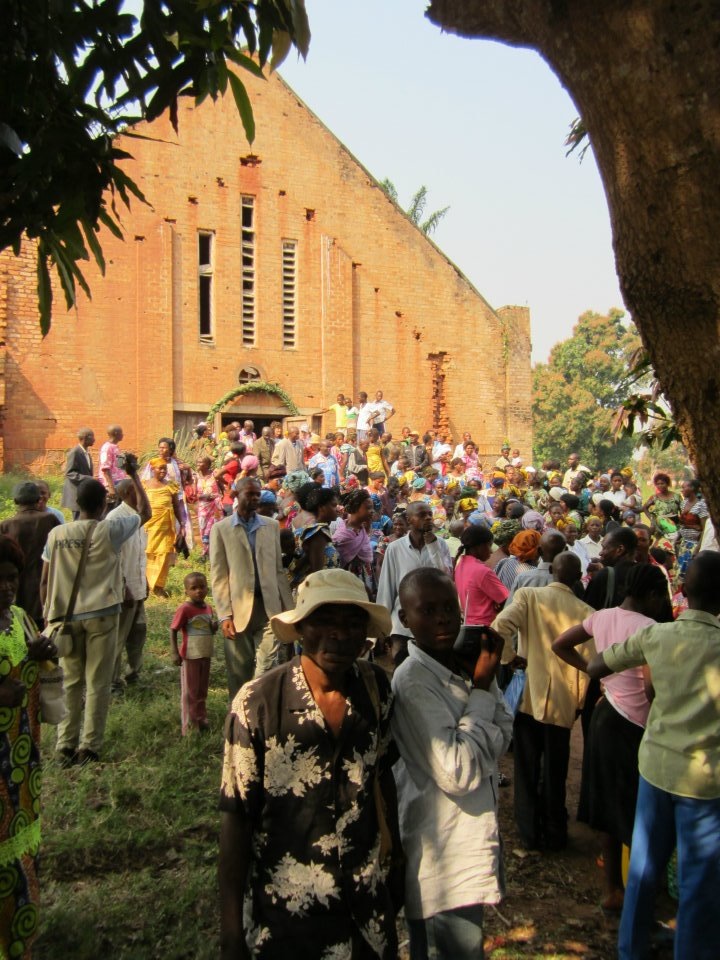
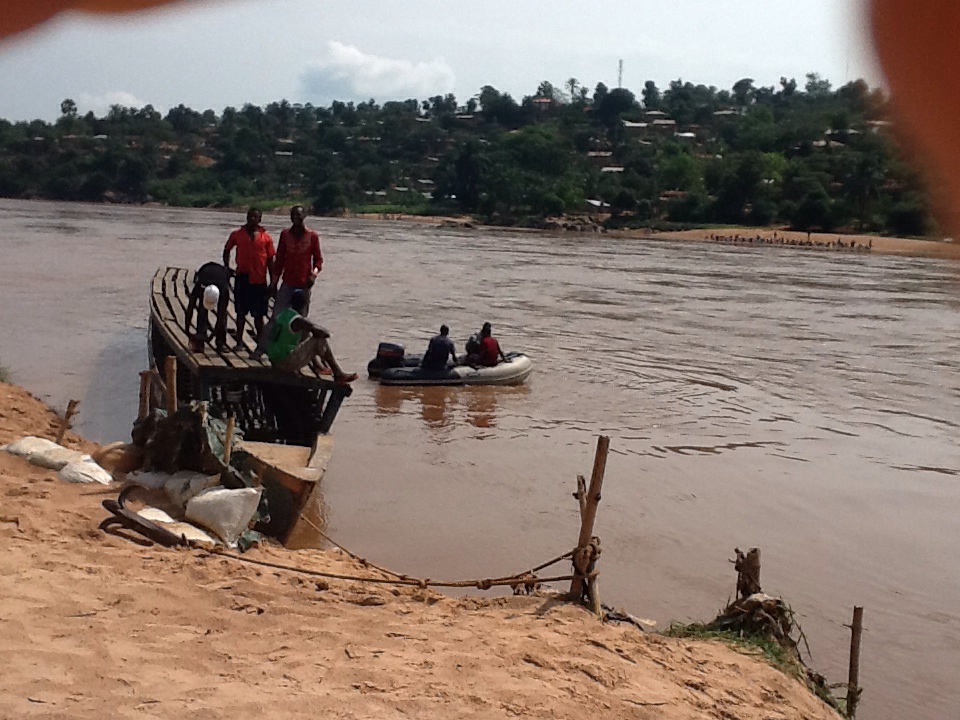
We spent last week in the province of Kasai Occidentale, mostly in the dusty diamond town of Tshikapa, which is HQ of the Mennonite Church of Congo. We attended another ordination that included a woman, talked to many, many people, met friends and made new ones, and Vic and I took a river trip to Ndjoko Punda, the ultimate stop on this pilgrimage.

On the eve of this whole trip, back around September 18, I had a dream about looking across a wide river through windows without glass. In the river were large crocodiles, dangerous but not immediately threatening. A parade of animals walked by on the opposite bank–zebras, giraffes and what I at first identified as a wildebeest. But it turned out to be a combination of centaur and unicorn–a wildebeest with a human torso and head which looked like that of a sorcerer, and out of this head grew a single, tree-like antler.

My sense was that the spirits were waiting for us on the other side of the river. Not clearly good or evil but powerful.

When we were waiting on the edge of the river last Thursday for Kazadi, the volatile dinghy pilot, to get the tiny rubber boat and outboard motor ready to go down the Kasai River, I recognized the place of my dream and I thought about crocodiles. We didn’t see any but something was there, churning up difficulties at every stage of the trip.

This trip will be a chapter in a book some day. There is the short version: we did get to Ndjoko Punda. We did hear and record the Grand Tam Tam choir. And we did get back safely. And there is the long version, the book chapter. I am trying to see if I can get an intermediate blog version out of it. It might go something like this:

We did go to Ndjoko Punda but not when we planned to go and not with the person we had been negotiating with extensively and not entirely on our own, thank goodness, because Vic and I would never have managed sorting out all the complications ourselves. French didn’t cut it; Tshiluba was essential. And it was clear that we were very, very white with all the cultural baggage that brings with it. We were so white that we scared babies. Literally.

We did hear and record the Grand Tam Tam choir–and seven other choirs that we did not ask to hear and really did not have time to listen to because our time was compressed by the difficulties of getting there. It was glorious and hectic.

We did get back safely, our pockets empty of cash. Along the way we learned quite a bit about artisanal diamond mining along the river; how to repair rubber dinghies; and negotiating the rapids in the Kasai River as well as the ravines that used to be roads in Ndjoko Punda (on the back of motorbikes). We did spend the last two hours of the trip churning up the river at top speed in the dark, no moon. Fortunately, Kazadi, who had little sense of time and got into one fistfight along the way, did know his river. And the stars were lovely!

Actually, the whole trip–including an overnight stay with our fellow Mennonites at this 100-year-old former mission–was lovely, hard, exciting, and worth every dollar we spent and gave, even those we hadn’t budgeted.

I have had my wished-for adventure. I am rather proud of myself for insisting on it though it seemed impossible at many points. The spirits where there, waiting and powerful. Presiding over all, though, was Holy Spirit. We were blessed and I do not use that term lightly. I think we were a blessing, as well.

And now we are lolling in luxury in a lovely guesthouse and acting like regular tourists. As the plane from Kinshasa filled up last night with wealthy-looking expats and Africans who were also going to Lubumbashi, we felt like country bumpkins. The dust of Tshikapa was under our toes, I was wearing glad Congo cloth. I hadn’t looked in a mirror for 10 days. We had come from a different world.

I love that world we came from. People from there are calling us–just now one more scratchy call from Ndjoko Punda and this morning at sleepy 7 am a call from Tshikapa–to make sure we have arrived safely but I feel that somehow, with all our advantages (including enough cash but also the care we are given) we will always arrive safely. How can we reciprocate such care?

P.S. As I go to awkwardly load photos onto this post, for some reason this boat picture, of someone else’s dinghy, is the last picture available. Nothing after that except a few I took this morning. A whole lot of black pictures. I’m sure they’ll show up sometime, just not when I need them. That’s the way this whole NP business has been. Spirits? Just sayin’.

20131008-135946.jpg

An ordination in Kinshasa

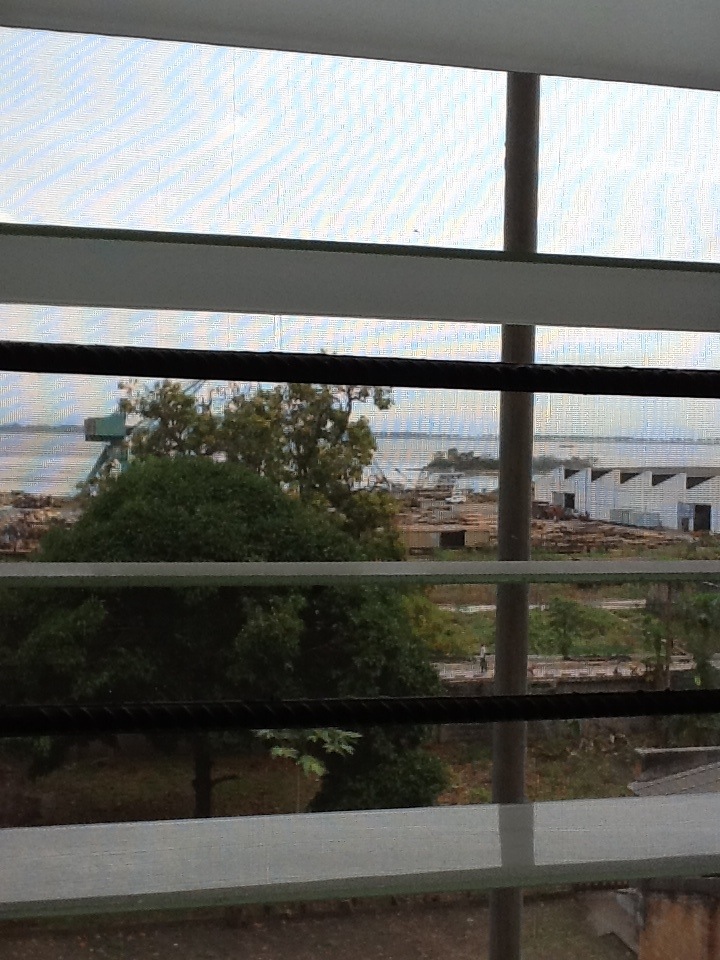
I set my meditation timer and then spot a mosquito dancing against the screen that frames my view of the Congo River in our room at Procure Ste. Anne. I spend the first meditation minute chasing down and killing the mosquito.

Later, after breakfast, I go up toward my room on the third floor. But my husband has stayed down at the desk to sign us up for dinner and he has the key. As I wait in the open stairway, I hear a fugue of chants rising from a distant room. A choir of nuns? We are after all staying in a monastery guesthouse. But a woman’s voice becomes louder and I see the singer coming out of a room. She is the cleaner. A minute later a man comes up the stairs carrying a mop and bucket. He begins singing softly and his chant twines with hers, rising unearthly in the high corridors.

The sacred and the mundane are never far apart here.

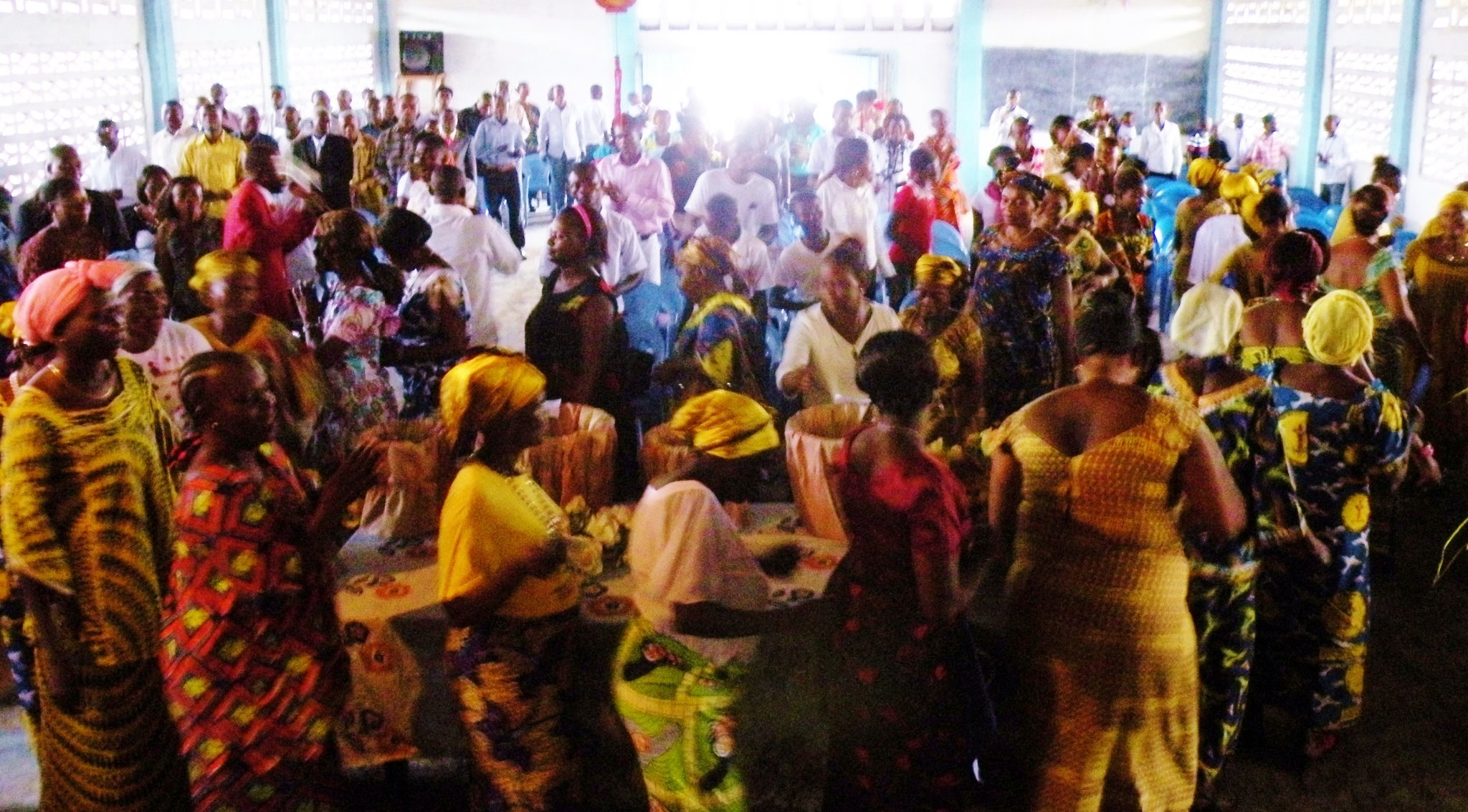
I’m not sure what I’ll remember of the ordination service yesterday, when it’s all said and done. How hot I was five hours. Spotting so many faces in the crowd of 500? 1000? people whom I knew or thought I knew. The fact that I hadn’t remembered to try to estimate the size of the crowd, what kind of journalist am I. The glorious harmonies of two men’s choirs and “Mamas United.” The bangy, screeching, amplified instrumentals of another. Amplification and French mixed with Lingala and my hearing impairment making it difficult for me to understand anything, even with a translator behind me (what kind of journalist am I, thinking I can report on this, knowing this about my limitations.)

Taking my own discomforts and preferences out of the picture, I remember the attention of the crowd, the church leaders, the speakers, the prayers being directed at two women being ordained. Plus two men. The four sat dressed in black, head to toe to fingertip, facing the crowd from a corner and backed by their spouses, who later stood behind them like shadows on the platform as they were instructed, prayed over, and, finally, ordained. The women were the stars of this occasion, a century-old church naming women as pastors for the first time. “Révérende” with an e.

During the moment itself, they were surrounded by other ordained people who were present, many men. But the American women who are traveling with me are also ordained, and they were invited onto the platform. Sandy went up and joined the prayers over the kneeling candidates. She was asked to offer a spoken prayer for one of the candidates. Singing went on. After a while the crowd on the platform parted and the ordinands emerged, wearing clerical robes over their black suits. The newly ordained pastors remained somber throughout, sweating and, I thought, stifling some yawns. It was a very long service.

I tried to take some pictures but my friend Charlie rescued me early on. Charlie is the journalist I arranged to work with while I am here. It was a wise move. Charlie is a real journalist. She took my camera and traipsed around during the service in her pink dress and 4-inch heels, capturing the moment. That’s Charlie in the picture, standing next to Amanda in the second picture. Amanda could have gone up on the platform but decided not to. Although the two were just waiting for their cameras to be handed back by the bolder photographers they’d given them to, who had crowded in behind the pastors, I thought it captured something.

I can’t share the pictures Charlie took because they must be downloaded to a computer I don’t have with me. I’m trying to travel as light as possible and that means iPad. I’ll try to use it more so I can post, but the quality isn’t always the best.

Toward the end, Charlie and I went outside in the hot sun and talked to people. What were their impressions? What did this mean? “Joy” was the word everyone used, women and men, young and old. “Great joy.” “Immense joy.” “Profound joy.”

One 55-year-old pastor said he had been working for the ordination of women since he entered the ministry at age 25. Why had it taken so long? “This is a very conservative church,” he said.

Women were more blunt. A female member of parliament said, “Men want to hold onto power in politics and in the church.”

What we missed was the part of the service where the ordinands were given gifts by their families and supporters: Refrigerators, microwaves, TVs, and perhaps ironically symbolic gifts of brooms and duspans.

Politics, emotion, discomfort, endurance. Spirit was there, too. My iPad took the strangest picture I have ever seen. It would have been my only good shot of the day, of the candidates kneeling. But it is a picture of blinding light. Probably just multiple flashes going off at once. But I wonder.

  • 20130923-094459.jpg

    20130923-103852.jpg

    20130923-104019.jpg

    Reflections on the eve of travel

    My husband and I leave tomorrow for nearly 4 weeks in DR Congo. We will celebrate the ordination of the first women in the Mennonite Church of Congo, listen to choirs, build church partnerships, revisit old haunts. I will write, Vic will do audio and video. I have written a number of posts about this (see the Congo menu) but this one sums it up.

    I started thinking last night before I went to sleep about how much preparation I have done for this trip. I cut off those thoughts immediately because, although they were good thoughts, I knew they could keep me awake for hours. I will give them free rein now since I am all packed (though Vic isn’t) and all I have left to do is clean the house and finish up the instructions for Patti, our house/cat sitter.

    I thought how the first recent trip I made to Congo, last May, had been full of revelations. The possibility of genuine friendship with Congolese. The mad joy of worship that went straight to my heart and gut. African resilience and warmth. The money bugaboos. Mistakes that could be made and redeemed. The possibility of church partnership–this, above all. It was a revelation to me that the church offered the greatest possibility for genuine international connection of the sort that I had not yet known, in all my extensive international experience. Church partnership offered the possibility of ties based on mutuality and warm personal relations as well as working through differences and misunderstandings.

    The second trip, in July, to celebrate the centennial of the Mennonite Church of Congo, confirmed and deepened the revelations of the first trip. But it was also full of lessons about my own limitations. My physical fragility: I injured my knee first thing and limped through the whole three weeks. My ability to make mistakes I was cautioning others against (a wrong turn in the Brussels airport). My psychic fragility: I came to hate the swarming crowds that greeted our delegation of 30 North Americans.

    Above all, that trip was a lesson in how unprepared I was to carry out a dream that had emerged between the two trips, to write a book about the church. Shyness and fatigue overcame me when it came to taking notes, talking to new people, or even making connections with people who had written or been featured in the book I’d edited–a collection of centennial stories called The Jesus Tribe.

    And yet I needed to go back. I knew this but I didn’t know how or why. I only knew that there were things I needed to do before I could know if, why, and how I would continue this Congo connection. I began doing those things immediately after I returned. I have written about that here. The preparations included signing up for spiritual direction, losing weight, getting in shape, finishing and publishing a book, working on the church partnership, praying, meditating, becoming a member of the church we’d been attending for two years, working on my relationship with my husband, working on my confidence and self-esteem, writing and more writing, and deepening and broadening my ties with Congolese Mennonites. And then things fell into place and now here we are, about to actually do it.

    By the way, I watch bemused as Vic suffers the crisis of confidence that I felt during my second trip–“I thought I could do this but it is harder than I thought.” He’s technologically gifted but dealing with A-V involves a whole new set of technology, which is still spread out over our dining room table.

    IMG_1286

    I have inevitably high expectations of this trip and of myself. In the past I would have tried to knock down these expectations because expectations have seldom served me well. They have led to disappointment. And there has always been an element of magical thinking in my expectations–the possibilities, the signs, mean that it was meant to be this way. I took some magical thinking with me on my second trip.

    Now I can say that I have almost none of that. I have done my homework and prepared as best I know how. While I have little control over the outcome of what happens from now on, I do know that I have cleared the channels for Spirit to work through me. This is not a magical expectation but an openness to magic because that is how God works.

    As miraculous as anything is the sustained certainty that I have about being on this path. I have no doubt that, for whatever reason, I should be doing exactly this. But “should” is the wrong word. There is no “should” in what I am doing. Nor is it like the voice of God in the night calling me with a definite mission, a task. I have not been moved by someone’s challenge, an altar call. It is, rather, a somewhat plodding necessity, one thing leading to another, a combination of joy, duty, problem-solving, obligation, opportunity, revelation, adventure, relationship.

    Love is the single word for it. It is a bit like parenthood. You start it and then there’s no turning back. Turning back is not a possibility, nor would you want to, even if it were possible, because it changes who you are and shapes what you do in the world and you become attached to all involved, including the person you have become.

    Preparing for a pilgrimage

    adorationngaba

    photo by Nina Lanctot

    I am going to Congo again in a month. These trips are never easy and this one is especially complicated because I have taken responsibility for most of the arrangements for a small delegation of people who haven’t been there before.

    I guess I’m the expert since I’ve been there twice in the last year but when a place we counted on staying turns out to be booked, I’m stumped.

    And how much will translators cost for my fellow travelers?

    And how the heck can we get to Ndjoko Punda?

    I ask myself regularly, why am doing this? Remind me!

    Sometime before my first recent visit, in May 2012, (my first visit since the 1970s) I got the sense that going to Congo would be a sacred journey. I don’t know why, exactly. My involvement with the Congo Cloth Connection–which was all about beauty–had revived my dormant crazy Africa love. But this was about more than sentiment, more than a romanticized attachment to things Congolese. I decided to prepare for that trip as if it would be a pilgrimage.

    Before I went I prepared with prayer, offerings, and ceremony. When I was in Congo I tried to see every event and circumstance with the eyes of the heart. I considered the possibility that every step I took over garbage-strewn streets was on sacred ground, that every traffic jam was a trial on the journey to a sacred destination. And that was as close to the truth of that trip as any story I can tell about it. God was everywhere! I thought often of labyrinths. At the center of the labyrinth of rutted streets was the outdoor funeral; the roofless church building bursting with praise; the dinner served in the hot, crowded home; the store stacked with gorgeous cloth.

    kalonda exteriorjs

    Because of that experience the second trip, just two months later, became even more obviously a pilgrimage. It was a celebration of the centennial of the Mennonite Church in Congo, a visit to places and people important to that history. Like any true pilgrimage, that trip was full of trials for me–an injury to my knee, too many encounters with noisy, welcoming crowds–but these did not diminish the sacredness of the experience. On that trip the holy of holies for me was the unique music of Congolese church choirs.

    So I am now setting out on a third pilgrimage, this one with three themes. The first is choirs. They are calling me back and I want to bring my husband into that experience. Vic is going with me and we are going to listen to and record/video as many choirs as possible. We are going to great lengths (upriver in a rubber raft with a diamond trader) to record the best choir I heard last July, a choir whose music seemed to come directly from the spirit world.

    The second is to celebrate the ordination of the first women as pastors in the Mennonite Church of Congo. That is what brings our fellow travelers with us. We all come to celebrate with these women and the church that has taken this step. I have writing assignments around that and, in fact, I am writing about all of this. The two ordination services we will attend will be splendid, full of music and spirit. They will bring the Mennonite community together and we will be among friends.

    Finally, Vic and I are making a personal pilgrimage to Lubumbashi, the city where we lived for two years back in the 1970s. Is the hospital where our daughter was born still standing? Have the shattered windows in the university administration building been repaired and does the chemistry lab have running water? Will the Park Hotel still host us in shabby grandeur? Is the French Consulate swimming pool, where Joanna took her first steps, still open? We will try to find our airy little house on Ave. des Mandariniers, surrounded by jacarandas, poinsettias, and hibiscus, but who knows.

    All of this feels holy. Pilgrimages include trials, like squat toilets and iffy lodging, and the trials begin now as I deal with logistics, not my favorite thing to do at all. The rewards lie ahead.

    choir

    Orange and yellow guinea fowl

    with Jeanne, fellow cloth connector

    with Jeanne, fellow cloth connector

    I spent last week surrounded by African cloth. It was in an over-air conditioned exhibit hall in Phoenix, where the outside temperatures rose to 118 during the week. One airline worker said when some of our friends arrived, “Welcome to hell.”

    Our cloth booth was a heavenly place in what I wouldn’t call hell exactly but it was a sterile, artificial environment. It didn’t help that I was working the booth 11 am to 11 pm with little chance for solitude and no inviting nature nearby. Now that I am home I’m basking on my front porch, even though it is dark and humid and pouring rain. At least it’s natural.

    I’m thinking of turning one of those lengths of bright cloth into a tablecloth and napkins for my porch table. It took five days of looking at the hundreds of fabric lengths in our display till I settled on that piece as the one I wanted to take home. Orange and yellow plaid with guinea fowl.cloth

    Maybe it was because my eyes got used to all the colors, since I was exposed to them for so long, and so I gradually came to love the brightest one I saw.

    Maybe it was because I thought of how my granddaughter would enjoy the strange chickens on the design.

    Maybe it was because I thought of how that tablecloth would brighten up my screened-in porch, which is all browns and grays and surrounded by green, green, green.

    This is all true but really it was because no one else wanted it. We had two 6-yard lengths of this design and they were among the few pieces that didn’t move at the Mennonite Church USA convention last week. No quilters wanted a yard of it, no shirt makers or skirt makers or pillow coverers were tempted. This design goes with nothing. It is what it is, bold and bright.

    This is how Congolese women dress, power to them in their confident beauty. They would consider it a waste to use it on a table. It needs to strut its stuff in the marketplace. But still, it finds its way to my house and that is something.

    Our project, the Congo Cloth Connection, is about influencing each other, finding common ground, forming relationships between Mennonites in Congo and the USA. It is secondarily about raising money for projects in Congo. With the donations we’re collecting for this cloth we’re funding scholarships for Congolese Mennonite women studying for the ministry. This is a new thing–the church only recently approved the ordination of women–and it’s the feminist issue among our friends there.

    This fall I will carry scholarship money for four women in Kalonda, DR Congo, age 21 to 62, who are fulfilling their dream of becoming pastors. While I dress my table in their cloth, they study the Anabaptist theology of our mutual heritage.

    We’re not selling the cloth (hand-carried in suitcases by our traveling friends) online. This is not a long-term, big $ project. It’s just a way of making connections of beauty and joy between a few churches in the Midwest and our growing network of friends in DRC.

    Orange and yellow guinea fowl crossing the continents, coming home to roost.

    porch


    Art. Peace. Heavy metal.

    sacred tree

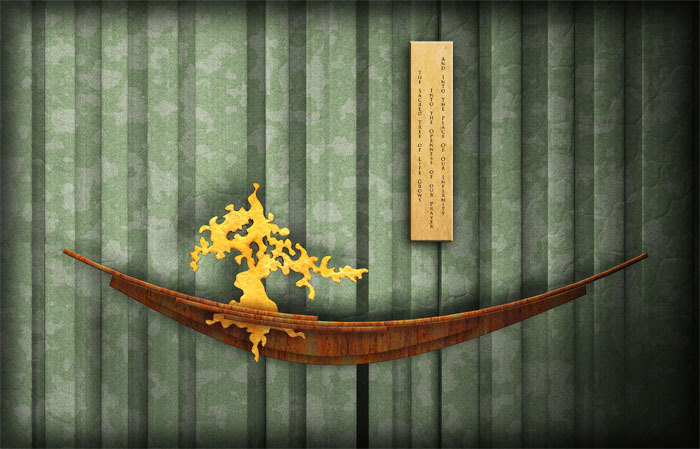
    “I’m sitting in the Art Institute of Chicago café – getting around to telling you more about the Sacred Tree Project,” writes my friend, the fabulous sculptor/designer/craftsman David Orth on the site of his kickstarter project. It’s “a multicultural sculpture in steel, carved wood, gold leaf, papyrus, and ink.”

    I have never seen a more gorgeous kickstarter project. I’ve pledged and urge you to do so, too. Consider $115 or more because the pendant that comes in at that level and above is to die for. But anything David makes will astonish you with grace and perfection.

    I’m going to give the rest of this post over to David because this project is exactly what this blog is about and falls through some of the same cracks (“too religious for many, not religious enough for the rest.”) Here’s what he says, writing from one of my favorite places, too:

    I taught design and sculpture here [at the Art Institute] a few times and I hate the reminder that they haven’t called in years. But this is still one of my best ways to spend a couple of hours – bouncing around between the African masks, the Japanese basketmakers, Van Gogh, the stone Buddhas, and that Eames Chaise lounge – thing.  I’m wearing five dollar boots from the local resale, but I feel insanely rich here – caught up in this wealth of diversity and depth.

    I’m flashing back to a meeting I attended a year ago. For the strangest two hours this church was packed with Muslims, Christians, and Jews. They were singing their songs and playing their music for each other.  Then we all sang some ditty about love and faith – together.  I’m wearing the same damn boots and having that same uncanny feeling of wealth.

    The old mystical Jews had this idea that vessels full of light, in some cosmic tragedy, were shattered into thousands of pieces. They said that our task now is to gather the pieces. In my mind, this gathering includes not just the old familiar traditions of East & West, such as my own Mennonites & Episcopalians – and the Buddhists I like to drop in on – but also the new Pagans (who seek to connect us back to the earth) and the Atheists (who wish we could be more honest and genuine). We need it all.

    I’m rambling again. Starting to get sappy. A lot of suffering and rage going on right now, but I’m feeling something good coming on – like a slow train.  The Sacred Tree Project is a piece of it.  This project, dramatized in sculpture, gathers up spiritual threads and practical concerns from all directions, thumbs its nose at none, and invites the public into their own connection with the cosmos – with the divine – whatever you like to call it.  Today I’m calling it the Sacred Tree – a name all traditions have been comfortable with – for a long time.

    So Here’s the Thing

    I need some help pushing the Sacred Tree Project out the door – for its first walk down to the end of the block. But it’s a chicken-or-egg problem. The Sacred Tree Project is too religious for many – not religious enough for the rest – easily lost in the gap.  Getting one actual Sacred Tree sculpture out into the world, anywhere, feels like the next step. From there, I think we can take a better look at our work and we’ll have exposed the Sacred Tree Project to the public imagination. But I need you visionary folks to push me out the door and walk with me to the end of the block. . . .

    Go to the project’s kickstarter site to learn more about the project, see more of David’s work, and pledge. Kickstarter projects accept pledges but you don’t pay up –and they don’t go anywhere–unless they are fully funded within a limited time. This one has only 34 days to go. Take a look.

    A mystic in trouble

    Why do I even do this? I ask myself several times a day when I am tending Congo matters. How did I get myself into this difficult situation, who am I to be doing this? But the question is always rhetorical, not because I know the answer to it but because I know I will keep doing whatever it is I am doing, even though it is difficult. The situation I’ve gotten myself into is exactly where I want/need to be, even though it isn’t always pleasant.

    But I try to address the question head-on every now and then because motives and reasons can sneak around and bite you in the back if you don’t keep an eye on them. They do keep changing, even if your actions remain outwardly the same. If you aren’t aware of the changes you can start lying to yourself, unwittingly, and that is never good. The better side of this is that as time goes on motives may become clearer, and it is always rewarding, always a good thing, to understand yourself better, to understand what is happening to you that causes you to behave in the way you do.

    The situation I am referring to is that I continue to take a very active interest in a particular Christian community in perhaps the poorest country in the world, a country ridden by impossible conflicts, though those conflicts are largely outside the territory of this community. So, it’s not because I think I can do anything about the chaos and suffering in eastern Congo. It’s not, in fact, because I think I can do anything about any kind of suffering in Congo, including the suffering of poverty. Relieving suffering is not my motivating force, not what calls me, although it may be a blessed side effect of some things I do.

    I do hope not to create more suffering for others though that, too, can be a side effect. So maybe I will create suffering, unpleasant as that may be for me to witness, because suffering is necessary for growth. I’m finding this in my own case and who am I to say growth should be easy for other people? I am suffering a little right now, asking myself, why do I even do this? Because it isn’t easy; it is, in fact, sometimes agonizing.

    Early on what got me into the Congo thing, which has intensified over the last year and a half, was a combination of nostalgia (for a previous experience in the distant past), love of beauty (Congo Cloth), and serendipity: the unfolding of a series of circumstances that came together in quick succession, making certain actions and developments seem right.

    Then, quickly, it came to be about relationships. When you start relating to a new group of friends, become involved in a new network, certain things become possible and certain things are asked of you and you respond. Relationships require communication and lead, inevitably, to responsibility but they are also sustaining. So I can say that I need this new group of friends; that they are becoming like another very extended family for me, creating warmth and home and familiarity in ways I could not have imagined two years ago.

    But none of this gets at the big, mysterious Why. Why Congo, why me, why now?

    I could put it down to feeling called. It is that for sure, but the answer does not satisfy me so why should it satisfy you? I have done a lot in my life without the (maybe sometimes dangerous) certainty that goes with feeling called, and so I don’t think a sense of call is necessary to compel me to do odd things like work for nuclear disarmament or wrack my brains over environmental policy. But I have done these things out of a similar combination of circumstance, attraction, relationship, responsibility, and mystery. And with the similar frustrations and agony that come with doing anything difficult (even apparently impossible).

    The common thread here seems to be, “difficult things.” Why do I repeatedly go for the difficult, the impossible? It seems to be in my DNA, but it is also a result of how I live, that is, by such airy methods as prayer and paying attention to dreams, and in an everlasting quest for wisdom (knowing I will never have enough of it to make sense of myself, let alone the world). These difficult situations are the practical results, for me, of living as a mystic.

    Living as a mystic gets me into difficulties. I get focused on something and can’t turn away. Prayer and dreams trick me into taking bold steps that make no logical sense. But living as a mystic also gets me through difficulties. It does not, believe me, keep me from making mistakes. The mistakes, however, usually get transformed into wisdom and learning, and correcting them requires more bold moves in a good direction. Away from fear, toward love. That movement, propelled by spiritual power, is what it is all about.

    Mystics, unite! The world needs us, getting down and dirty, getting into trouble.

    Goals, objectives, and God

    In my professional life I learned to sling the jargon of strategic planning. I know the difference between goals and objectives. And I know how to write reports and proposals that make it sound like the life of an organization or a person can be arranged in a logical hierarchy: the overarching mission, then the goal, then the objectives that serve as milestones toward the goal.

    Generally, however, I don’t believe it. I think life is much more organic, less predictable, and both more difficult and fun than that. Life is not logical. Life happens in the unpredicted cracks in the sidewalk of your consciousness. This is true for organizations as well as people.

    But recently my life has surprised me by sorting itself into goals and objectives. True, it has done this in an upside-down way. The objectives have come first and the goal has emerged more slowly, but now that the goal has emerged the objectives make sense, they hang together. They clearly lead to the goal and are necessary if I am to accomplish it.

    The goal is to write a book about Congo through the lens of the joy of worship music–écrire un livre sur Congo à travers le prisme de la joie de la musique d’adoration (I am running everything through a mental or Google translator these days).

    I was not able to articulate this goal until very recently, although versions of it popped up now and then over the past year. I have only sensed the need for a Next Big Thing, a major writing project, without being able to define it.

    Instead, certain objectives presented themselves one by one. I have been acting on these objectives without knowing the goal, in fact, because I didn’t know the goal. I didn’t know what the Next Big Thing was but I could do each of these smaller things that presented themselves and captured my attention. (I have blogged about all of these but won’t pepper this post with links.)

    1. Learn. I edited a book about the Congo Mennonite Church in late 2011 to early 2012 and in the process learned the church’s fascinating history, something I hadn’t learned in my three years in Congo back in the seventies.

    2. Go. But my involvement with Congo Cloth Connection predated that, and I went to Congo last May with that project. I had a great time and my love of Congo Cloth expanded to include Congolese church music.

    3. Network. Following up on both of these things, I decided to go to Congo again for the centennial celebration in July. Thus in the space of a few months I was drawn into a network of warm relationships with Congolese Mennonites.

    4. Deepen. Last fall I began working with a spiritual director and established a meditation practice.

    5. Publish. I decided I couldn’t move on to a Next Big Thing until I decided what to do with a manuscript that had been languishing for several years in the “what am I going to do with this” pile. In the course of a few months I revised and published it as The Dream Matrix.

    6. Energize. The July Congo trip had worn me out. I decided I needed to lose weight and adopt a diet and fitness regime for maximum energy. I have done this over the course of the past eight months: Weight Watchers, gluten-free, mostly vegan, 3 miles a day. Two-tenths of a pound to go as of today to reach my goal (objective!) weight.

    7. Flow. My daughter-in-law gave me a Christmas gift prompt that led me to adopt the word “flow” as my theme this year, to keep all these streams flowing and moving in the same direction. It worked when I needed it most, in the first quarter of this year.

    8. Dream. Publishing The Dream Matrix prompted me to lead a dream class in church and pay attention once again to my own dreams. Some of this sequence has emerged through those dreams.

    9. Partner. The Congo relationships have continued to blossom as I work on a partnership between my church and a congregation in Kinshasa, host visitors, and address cross-cultural challenges.

    10. Write. Writing this blog has catalyzed each of these developments because I write my life—I write about it and I write my life into being if that makes sense. But in addition, just as I was beginning to dare to articulate my goal, an opportunity came up to write—to travel to Congo in September and October of this year to report on the ordination of the first women in the last branch of the Congo Mennonite Church that had been holding out on ordaining women. Choirs will be there. I know some of these women. My husband and I are beginning to plan our trip.

    All of these objectives just happen to lead toward this newly articulated goal. This, my friends, is how I experience God. God is in the gift of the goal, God is in the timing of each of these so-called objectives. Maybe God is the great Strategic Planner.

    This organic life

    house

    I need to put the hummingbird feeder out. The birds are due any day now or perhaps they’re already here and snubbing us because I haven’t put the feeder out.

    This thought arises suddenly and makes me think of the miscellany of my to-do list. It is rich and shapeless, everything wanting to be done at once.

    Sitting on the porch, watching the colorful birds of spring (indigo buntings, siren-yellow finches, rose-breasted grosbeaks) and wood ducks looking for a nesting place in our woods—this is high on my spring to-do list. Alas there is no water on our property so it is not prime wood duck real estate but they come looking every year because we have great tree holes. We also have a hawk nest this year so beware, little birdies.

    Wood nettle shoots are at their prime. I must go out and snip another bagful. I took a mess of nettles to a church potluck yesterday (steamed briefly, tossed with olive oil, garnished with violets). Every year I introduce more people to this spring delicacy. It takes some faith to bite down on plants that will sting like crazy if you grab them raw but immersion in a hot bath makes them sweet and safe. I don’t like the more common ditch nettles, however. See my post last year on this.

    Having dreams is on my weekly agenda. The only preparation I can make for the communal dreaming class I am conducting for nine weeks at church is to have dreams myself, and I don’t have a lot of control over that. As it turns out, I often don’t even bring up my own dreams because other people’s dreams fill the hour. The dreams are rich and amazing and reveal their meanings as we talk about them. I discover again that I am quite good at helping people interpret their dreams. Some shared images appear in our dreams. Speculating about what this means.

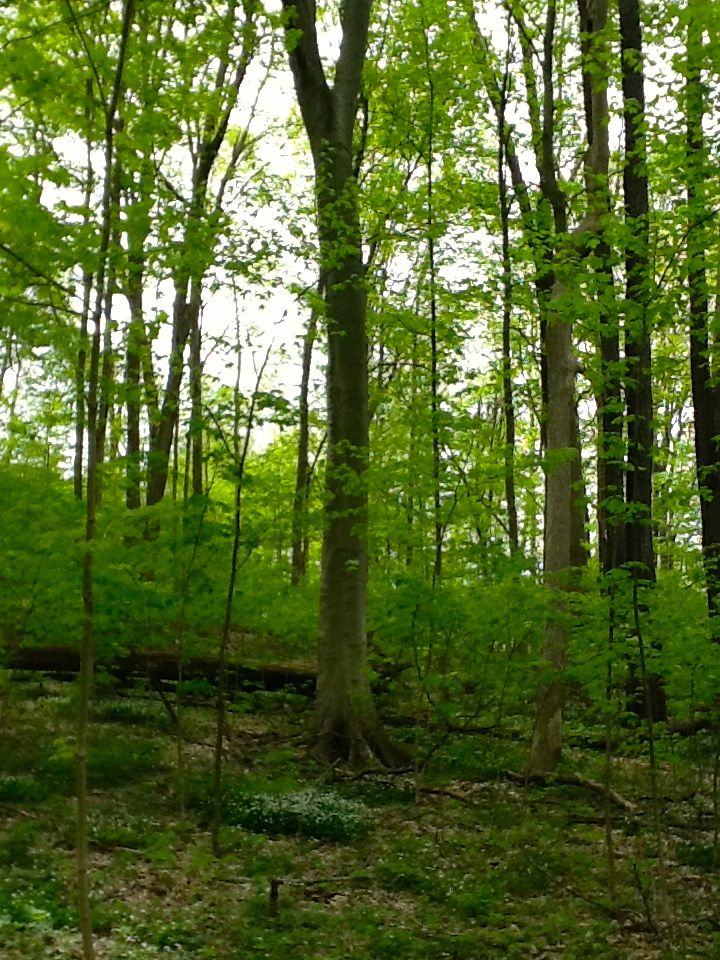
    I am praying daily for friends of a friend who are being held captive in a foreign land. This requires making time and place for the prayer to be received (that is, knowing what I should pray) and offered. It is not a prayer to be breathed at my desk although I do that, too. I usually go out with the trees, to get their help.

    Helper trees

    Helper trees

    I am thinking through and consulting others about aspects of a partnership between my congregation and a congregation in Kinshasa that I know well from two visits there last year. Especially, how do you address or get around the vast economic differences without opening great cans of worms? I write up a proposal and send it off to a few people for vetting. This is difficult and necessary headwork in a project that is, for the most part, a work of joy and spiritual enrichment.

    I am deciding what to do about biking. What would it feel like to give it up? Why did I have a sudden surge of jealousy when Vic asked how I would feel if he decided to buy a new bike (and I didn’t)? On the other hand, why am I enthusiastic about the idea of funding scholarships for Congolese students instead of buying a new bike? Sorting out my own feelings. Sorting out the state of my body as well as my spirit.

    I just arranged for an energy healing session to address my recurrent UTIs, which have now become resistant to most antibiotics. This is related to the biking question because I can’t afford to keep having UTIs and biking seems to instigate them sometimes.

    And it relates, in turn, to dreams, because I had a dream in which energy healing was being done on an Atlantic beach. I was to take my turn at healing and being healed before even putting a foot in the water. The ocean represents Soul waters for me. Also, the Atlantic links us to Africa, so perhaps it is a reference to my next trip to Congo.

    That trip is taking shape and moving up on the to-do list. I may post about that soon.

    Maybe my to-do list is not shapeless so much as organic, one thing merging into another and branching into yet others.