It was not a good morning. First there were the reminders of my late beloved kitty-cat, put to sleep yesterday after 19 years with us. As my daughter said, that’s as long as raising a child and, indeed, I was experiencing empty-nest syndrome as well as grief this morning. Little stutter-clutches at my chest as I poured milk in my tea and didn’t pour any for Lalo, started the vacuum cleaner and momentarily worried about scaring him, hesitated before I set my laptop down on his favorite chair by the woodstove. Continue reading
Lalo
 Our cat is 19 and a half years old. I think he is nearing the end of his life.
The vet told us six months ago that his kidneys were failing, which typically happens with old cats. But he has seemed fine, just slowing down, sleeping most of the time. Yesterday, however, he started limping and stumbled down the steps when he went to the basement where we keep his food, water, and litter box. We immediately brought all that upstairs. But in the last 24 hours he has grown even weaker and can hardly stand up. It’s the weekend. We have an appointment with the vet Monday morning. We’ll see. Meanwhile, he continues to appreciate attention and petting. Vic and I are trading off on that because if both of us move away, he, too, tries to move. Right now he is curled against my leg, sleeping. If my presence is a comfort to him, this is where I will stay today. Continue reading
A book for struggling writers
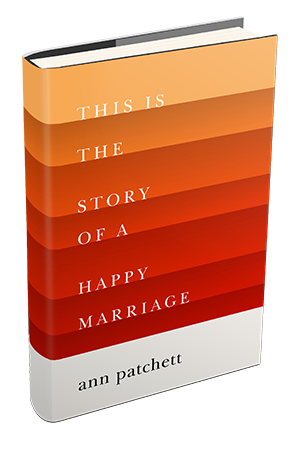 Writer friends, here is a book you must read although you wouldn’t know by the title: Ann Patchett’s This is the Story of a Happy Marriage. I read anything Patchett writes (Bel Canto, State of Wonder) but I was especially attracted by the title. I, too, have a happy marriage and I’m tired of reading about dysfunctional ones.
It turns out to be a collection of her essays, including the eponymous one. But most of what I have read so far has had to do with writing. That’s why I can’t wait to tell you about this book even though I am only 19 percent into it, according to my Kindle. I haven’t even come to the essay that made me buy it
Reading the introduction and the first essays, especially “The Getaway Car: A Practical Memoir about Writing and Life,” has been extremely timely for me as I struggle my way into writing what I think may be a book. I am highlighting whole paragraphs, like this one:
Forgiveness. The ability to forgive oneself. Stop here for a few breaths and think about this because it is the key to making art, and very possibly the key to finding any semblance of happiness in life. Every time I have set out to translate the book (or story, or hopelessly long essay) that exists in such brilliant detail on the big screen of my limbic system onto a piece of paper (which, let’s face it, was once a towering tree crowned with leaves and a home to birds), I grieve for my own lack of talent and intelligence. Every. Single. Time. Were I smarter, more gifted, I could pin down a closer facsimile of the wonders I see. I believe, more than anything, that this grief of constantly having to face down our own inadequacies is what keeps people from being writers. Forgiveness, therefore, is key. I can’t write the book I want to write, but I can and will write the book I am capable of writing. Again and again throughout the course of my life I will forgive myself.
On the one hand I wish I had come across a book like this when I was younger. Maybe I would have started earlier and become a real writer. I wish I had happened upon the right mentors at the right time, like Patchett did. I wish I had known, and that everybody around me had known, when I was a kid, that I wanted to be a writer. As she says, this was perhaps her greatest gift. But being a writer was not in the realm of possibility for me, a little Mennonite girl growing up on a farm in the 1950s. My goodness.
So here I am, at 69, struggling to write anyhow. The thing is, the struggle I go through is the same as what Patchett describes. The self-doubt, the feeling of inadequacy, the distance between the conception and the writing, the effort always to do something beyond your capability, the profound dissatisfaction with the final product (you’ve killed it, she says, with your own hand) are not peculiar to me. I should know this by now, I’ve read enough writers about writing. But her essay catches me in the act of going through this inevitable charade as I start to work on what I hope will be my second book. I can’t. I hate it. And yet I must. I love it.
I am not capable of writing at Patchett’s level, for sure, or at the level of most of the writers whose books I feast on every evening. I profoundly admire and envy them. But I write what I can and what I must.
This Five needs you
 It’s the New Year. I’ve had another bout of self-dissatisfaction and thus have been making another try at self-improvement. This time the tool that came to mind was the Enneagram, the analysis of nine personality patterns we humans take on in the earliest stages of our lives.
What I like about the Enneagram is that it not only gives you insight into human differences and makes you more accepting of them; it also indicates paths for breaking out of the limited responses we learn when we are young. Self-understanding and self-improvement. Continue reading
The value of caring
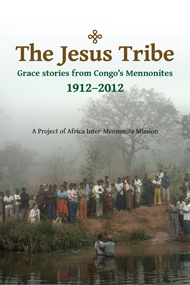 “Do you do freelance editing?” Barbara asked as we sat together at a dinner, belatedly celebrating the publication of a book I’d worked on two years ago. Barbara was managing editor of the small religious press that had published it. I could tell she had another project in mind.
I hesitated. I have, in fact, been trying to give up editing. “Not really,” I said, but not too firmly. It had, after all, been a pleasure to work with Barbara.
She began describing the manuscript but in the noise of dinner conversation I couldn’t get a clear idea what it was about. Only that it was a crosscultural, rather challenging editing project and she was desperate to find someone who could handle it. Continue reading
Do conservatives and liberals need each other?
My eclectic reading this week has me thinking about profound human differences–political, religious, and personal. In particular, what you might call the liberal/conservative divide that cuts through all of these realms.
I am convinced that political differences, for instance, largely mirror differences in personality. This is both comforting and scary. It is comforting to know that, underneath it all, our political opponents and even those we might consider our enemies are acting from human nature, which we might be able to understand, as fellow humans. But it is scary that, although we might understand each other, we can’t change each other. That is, if these differences are innately human we won’t be able to bring each other around to our point of view. And compromise won’t work.
Indeed, the political divide between liberal and conservative is widening and deepening. Differences are becoming entrenched. This article in today’s New York Times describes how that plays out in the twin cities of Duluth, MN and Superior, WI–two cities with similar populations and economies but now set on very different paths because of profound differences at the level of state government. Some immediate results are evident but others will only be seen in the long term. An interesting and poignant experiment.
I don’t know how I missed reading or even hearing about the 1999 novel, The Fifth Sacred Thing, until now. Set in 2048, it plays out an extreme version of the results of two such paths in two cities, in a California that has been devastated by both natural and human-made disasters. San Francisco has gone all earth-based spirituality, free love, and consensus. Hardly anybody owns anything but in the verdant city there is enough for all, and healers, artists, and musicians are particularly treasured. It is a self-contained, self-sustaining society but it is also isolated. And it is under attack from the police state that Los Angeles has become. Starhawk’s novel is a great read.
If I had to say where I stand of course I would put myself on the liberal side. I share the vision of a society where all are fed and no one is turned away from the table. Where all have meaningful work according to their skills and talents. Where healing of all kinds is available to all. I believe that the earth is sacred. That is, it should be honored as a primal source of our being, as parenthood is sacred, as love is sacred, though I do not believe in group sex and promiscuity. And oh, please, I am not attracted to the consensus process (I hate meetings), though I suppose something like that is necessary in an egalitarian society.
On the other hand, I do not believe that corporations and fundamentalist religion are irredeemable as systems, that is, that they are evil per se and lead inevitably to the horrors described in the novel.
That is, I don’t believe, with the author, that one approach leads to ultimate good and the other to ultimate evil. Because I believe these two paths represent basic, inborn (as well as cultivated) human differences. And since, well, all of us are created in the image of God. . . .
Perhaps the key is in how we exercise our innate natures. When we are healthy and secure we have strengths, in our different personalities, that are essential to living together in this world. When we are under stress or in conflict, these differences become extreme and contribute to the conflict and division between us.
My friend John Fairfield is working on a book that outlines a Christian theology putting our very differences at the center of the call of the Christian church’s work in the world as well as within the Christian community. This seems relevant to what I’m thinking about.
John describes the “healthy and secure” person of what I would call the conservative type as having a strong identity and being concerned with being faithful to tradition and discerning what is fair, what is good and bad behavior. This is good. Under stress of conflict, however, such a person is “tempted to reject those who are offensive, to preserve the purity of their community of identity. Under even more stress some become increasingly rigid, using their belief in the correctness of their beliefs to justify their control of the situation, by force if necessary. Some people will dominate, oppress, even kill, in the name of their beliefs.”
The healthy and secure liberal-type person, on the other hand, is hospitable, quick to learn and understand another point of view and synthesize that into something new, and reaches out to build bridges between opposing sides. Bravo! But in conflict, such a person may become wishy-washy, catering to opponents, hiding, fleeing, or exercising some form of deception. Passive-aggressive behavior is typical of this personality type. Touché.
John’s point is that we need each other, but we must relate to each other at the “healthy and secure” end of the spectrum and keep working to restore relationships to that level. Is this possible? Well, it is the work of a lifetime. Maybe several. Otherwise, we don’t have to look too far to see a vision of our dystopic, dysfunctional, divided future.
Favorite flix of 2013
Every year my husband and I try to send out a Christmas (or thereabouts) letter to our friends. I usually write it and I am usually, like this year, late. But I feel some obligation to do it because people care. I don’t know how much they care to know what we’ve been doing, but they do care about our movie and book lists. These have been, as far as I can tell, the most–probably only–popular features in our annual letter.
This year I am doing the best-of lists in this blog. I listed books on December 16. Here are our 5-star-rated movies of 2013 (not all of them produced then), in no particular order: Continue reading
Radiant

I have chosen a personal word for 2014: radiant. In choosing this word I am playing a little game with myself, using an indirect, or even a reverse-psychology approach.
What I really want, you see, is to get back on track, regain lost momentum, and accomplish something in the way of writing a book and other projects related to Congo and life in general.
Many wonderful things happened or got started in 2013, partly thanks to a really fine word I chose in January 2013: flow. But in the last month or so the flow has stopped, I’ve lost momentum and confidence, and motivation has ground to a halt. I have been feeling down on myself as a result.
The new year is a good time to press the restart button, so I was hoping to find a word that would work as well as flow did last year. But all the words I could think of had a slightly punitive cast to them, or, at least, a “should” factor that I felt might have just the wrong effect. Words like “momentum” or “pursue” or “resolve.” Yes, that is what I need but they do not inspire me like flow did. They require willpower and engage the inner parent rather than charm the inner child and the playful artist into cooperating.
I just spent 10 days with my three-year-old granddaughter and so I have gotten a refresher course in reverse psychology. Don’t eat the vegetables; they’re for grownups. It’s too far for you to walk; somebody should carry you. Of course, she saw through it, recognized it as a game, but she can’t resist games and she would play along, at least for a few bites or blocks, and everybody was much happier.
The no-you-can’t/yes-I-can game is one we play all our lives and I’m thinking it may have some merit. A little reverse, or at least indirect psychology, as opposed to the direct approach: You should do this. You must do this. We carry with us the three-year-old’s tendency to rebel at direct orders, as well as the three-year-old’s love of games. How can we harness these tendencies to continue to enhance our lives, become better persons, and even, maybe, reach a goal or two?
By choosing radiant as my word, I am telling myself I should concentrate on being rather than doing this year–even while I am hoping to do quite a lot.
The thing about concentrating on doing and achieving is it can turn you into a noodge and a grouch and a bore who believes that anything important happens as a result of your own willpower. Meanwhile, life can pass by under your nose and you don’t appreciate it, let alone pick up the energy that is available to you each day from your surroundings, your interactions, and your own soul.
The radiant person, by contrast, both radiates and reflects life energy, going with and contributing to flow. This is how I want to be this year. What happens as a result is anyone’s guess and my surprise.
A happy and radiant new year to all.
A Charlie Brown Christmas

Twas the night before Christmas and there was no tree.
The son and daughter-in-law’s plan was to get the tree on the weekend before Christmas, a day or so before we arrived from 800 miles away, but that was the weekend of the ice storm and so the outing to get a tree didn’t happen. Continue reading
Page-turners
I was going through my Manage Your Kindle (aka manage your reading habit) list just to remind myself of what I’d been reading this year. Quite a lot, but not everything meets my book-hog criteria of good writing and great storytelling: that page-turning quality that sweeps you in. Books I didn’t want to end. Many also packed interesting information into great stories and plots. Here is a list of novels I read in 2013 (not all of them published this year) that did that for me: Continue reading
 the practical mystic