Tour director

People ask, Are you getting ready for your trip? My next trip to Congo is less than a month away and yes, there is some kind of prep nearly every day. Today it is getting the overdue haircut I’ve delayed so that it will last until I get back and stopping at the health food store to stock up on probiotics to ward off digestive problems.

Emails, too. I receive confirmation that St. Anne’s in Kinshasa has my revised reservation for 4 rooms. (See this blog for a picture.) Nothing yet from Jeffrey Travels (except that they received my message and would get back to me the next day, which was yesterday) or Bougain Villa in Lubumbashi, where I asked yesterday for reservations. They responded promptly to my request for information, which is one reason I decided to go with them but now I’m wondering. So much depends on promptness and accuracy of communication. Successful communication in a place like Congo always seems miraculous.
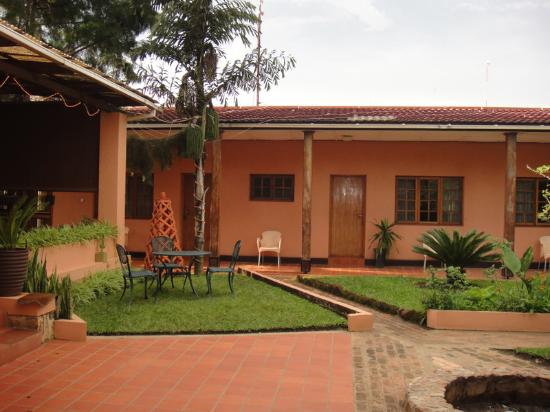
Hoping to stay here in Lubumbashi

Hoping to stay here in Lubumbashi

This is not prejudice but reality. The St. Anne guesthouse manager assures us they have consistent Wi-Fi because they have a generator. That’s what it takes even in the capital city, where electricity and water are intermittent, postal service iffy. Cell phones are lifelines but I’ve discovered that my hearing and French are not up to understanding everything through crackly international cell connections.

My mind is in Congo much of the time. I am thinking everything out, imagining every event and excursion and night of rest because someone has to on a trip like this. That responsibility has fallen to me though nobody asked me to do it. Taking charge of this trip, this pilgrimage, and my fellow pilgrims, is more like an ethical response.

Of the 5 Americans who are going to Congo to attend the same two events — ordination of the first women in the Congo Mennonite Church in two cities — I am the only one who has been to the country recently and who is fluent in French. Except for my husband, whose French is rusty and whose Congo experience dates to the 1970s, my fellow travelers have never been to Africa and speak little to no French. So what was I to do? I couldn’t exactly let them fend for themselves, could I?

I suppose I could have, but that would practically guarantee some really bad experiences. Not that I can prevent all bad things from happening, but I want people to experience as much of the good as possible. I have been intrigued, enlightened, charmed, and forever changed by my two recent trips to this amazing country. So I have decided to embrace the role of tour director and see what I can learn from it, see whether I can help others find themselves, love, Jesus, friends, and more good things in Congo, as I have done. So here goes.

There’s always something. Two days ago it was a rumor that plane connections to and from Tshikapa were only Wednesday and Friday. There goes the Monday flight that was supposed to bring my fellow travelers back to the capital for their Tuesday flight home. But it turns out that the report was incomplete. The domestic airline had actually added flights. You can now get to this diamond-mining town in the middle of nowhere, which is home base for the Congo Mennonite Church, on Monday, Wednesday, and Friday instead of just on Monday. Phew.

But wait. Wasn’t I going on this trip to write? I’ll try to wedge that in somewhere.

tshikapa walk

Fellow travelers walking in downtown Tshikapa last July


Spending pipeline money

Dayton Wet Prairie in August

Dayton Wet Prairie in August

A broadband tower? My husband perked up when I told him that was on the list of possible projects the township was considering funding with the Enbridge pipeline guilt money.

The Enbridge money is a $15,000 grant to the township offered by the company that is plowing through our farms and gardens to update the pipeline that takes Alberta tarsand gook to the east coast and beyond. (Why does the pipeline dip down to the US side of the Great Lakes? Because the Canadians don’t want it.)

The only guideline for spending this tiny grant was that it was supposed to be for “environmental stewardship.” I didn’t see how broadband fit into that but, although I’d gotten myself on the committee to decide how the money should be spent, I hadn’t come up with any real ideas before the committee had its first meeting last evening. I thought I might even support a broadband tower if it came down to that. Better than cemetery improvement, which was another proposal.

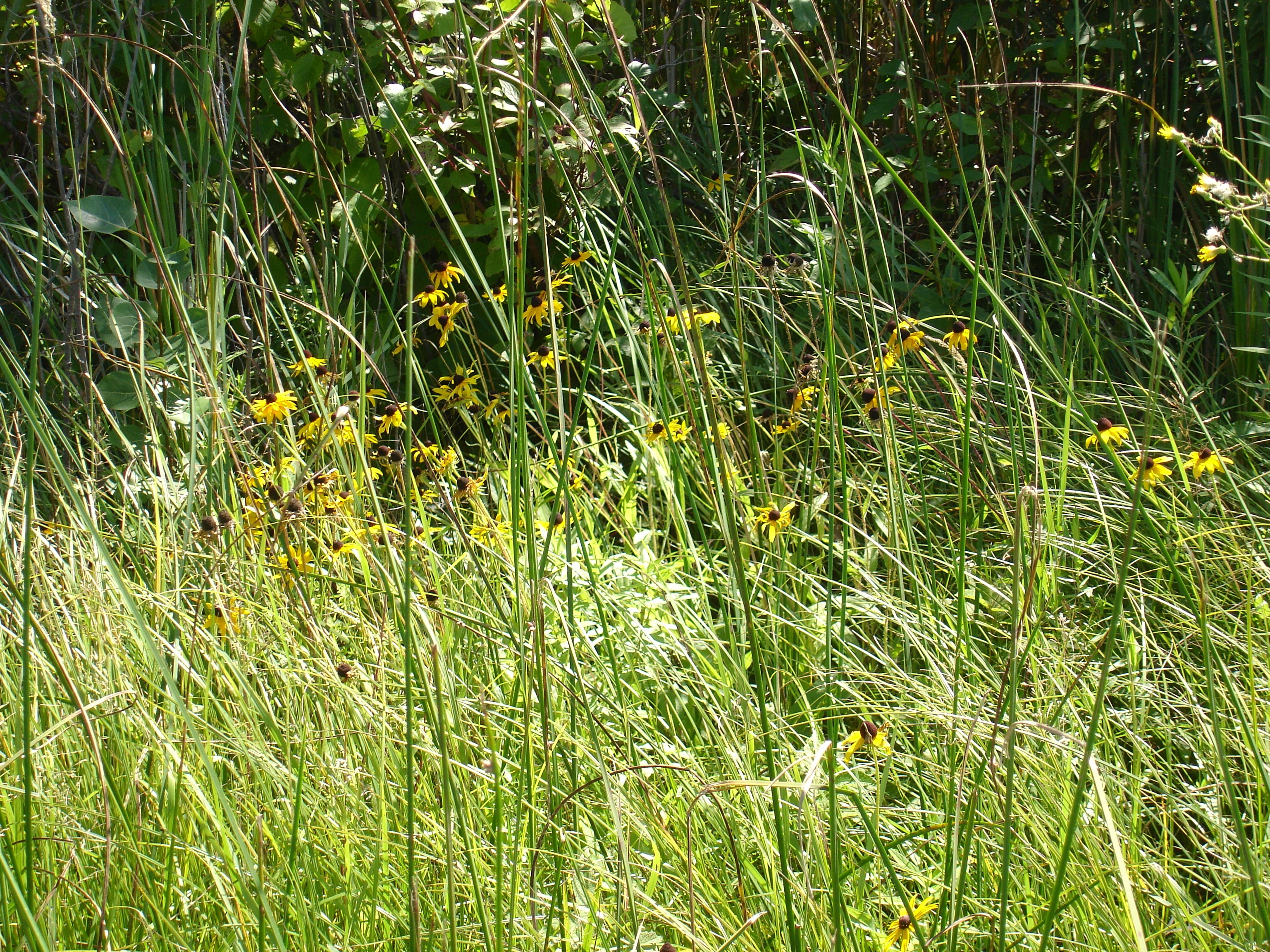
I’d tried to get a local conservation group to bring ideas to the table. The group maintains a lovely wet blooming prairie on a dirt road a mile from our house. Wet blooming prairies are relatively rare. And fragile. You don’t want people tramping through, but I love walking the road and seeing the prairie at various times of the year. Now it’s moving into its loveliest stage of gold and purple and white blooms.

milkweed

Swamp milkweed in the wet prairie

But the conservation people hadn’t followed up on my phone call and email. So I just brought up the prairie at the meeting, saying it was a rare treasure right here in the middle of our rural township that very few people even knew about. The township supervisor said he’d never been by to look at it. But everybody was interested.

The brainstorming session ranged through a welcome sign for Bertrand Township, a new heat-exchange system for the township building, redbud trees along Redbud Trail, a new memorial for the fire station. The idea of a broadband tower was dismissed–not “environmental” enough, even though another township had used their grant for that. Sorry, Vic.

The idea of doing something with/for the wet prairie quickly rose to the top and stayed there. This rural township is politically and socially conservative. I was surprised that my fellow committee members–the Republican township supervisor, his assistant, a financial consultant, and a firefighter–were so enthusiastic about doing something truly “environmental” with the money. I promised to keep pursuing the conservation group for ideas about how we could team up.

The group doesn’t do much in our area–their work is mostly closer to Lake Michigan, where Chicago people have summer homes. I notice from the website that the three staff members all left high-powered jobs in Chicago to move to the tranquil dunes and woods of Southwest Michigan. I guess I should include myself in that category. We ex-Chicago people are not always beloved by the “locals.”

So when I spoke with the group’s outreach director this morning I emphasized how important it was to build good relations with the community and how nice it was to see some “local” enthusiasm for environmental preservation. She agreed. We talked about possibilities. She’ll get back to me.

susans

Food stress

Yikes. This is what happens when I let up just the least bit on the diet discipline. I am up 3 pounds from my goal weight, which, by the way, lasted only that one week. The weight comes back right to my midriff, a ballooning muffin top that I can feel growing by the day.

I just dumped into the trash the cinnamon rolls and Pringles that my latest houseguest didn’t finish. I didn’t even compost them. They would poison the animals that check out the garbage. What possessed me to buy bread, chips, ice cream? The stress of not knowing what to feed people.

The food thing is really the biggest stress of having houseguests. This is true even when it’s our kids, whether it’s their food restrictions or ours, or the changing tastes of the little one. We develop our own eating and food prep patterns. As a good hostess I am attentive to the tastes of my guests and I don’t feel quite right just making them eat the way I do day by day.

I just read an article about Bill Clinton going vegan. He entertained the reporter, who was expecting tasteless food. Of course, some wonderful chef had laid out a feast of all kinds of wonderful salads and dips and beany things–things I know how to prepare, and also how much time it takes to do so. Sure, it is wonderful to go vegan, and you can make things taste really good as long as the people you are serving have a sense of food adventure and you have time and you don’t mind missing the mark sometimes with a dish.

But my guest for much of the past two weeks was a teenager from Congo who was accustomed to an entirely predictable diet of rice, fufu, manioc greens, meat, and fish (not so much the fish). Back home she’d also had a chance to develop a taste for soft bread and chips of all kinds, as well as sweets, especially vanilla ice cream. So after I had watched her picking at my healthy vegetables and mostly leaving them on the plate and taking her slender self away from the table to chat with her 2,000 facebook friends on my iPad, I started giving in to her tastes and let her pick her diet off the grocery shelves, rather than trying to cook up, juice, and salad-i-fy my bounty of CSA produce. In the process, I got off track myself because I don’t like to prepare two or three different dinners.

I can’t blame Deborah for those 3 pounds. My body is just trying really hard to get fat again. There is no such thing as a weight-maintenance diet for me. It is lose or gain and I’m gaining, fast. Gotta go back to losing.

But first we are getting together with my brothers and spouses this weekend in North Dakota. Most of us struggle with the weight thing but I don’t see us getting together to go on long walks. We will eat together (all healthy food of course) and sit around talking and laughing and arguing. I’ll probably pack on another pound because that’s just the way it is. A good time will be had by all.

Preparing for a pilgrimage

adorationngaba

photo by Nina Lanctot

I am going to Congo again in a month. These trips are never easy and this one is especially complicated because I have taken responsibility for most of the arrangements for a small delegation of people who haven’t been there before.

I guess I’m the expert since I’ve been there twice in the last year but when a place we counted on staying turns out to be booked, I’m stumped.

And how much will translators cost for my fellow travelers?

And how the heck can we get to Ndjoko Punda?

I ask myself regularly, why am doing this? Remind me!

Sometime before my first recent visit, in May 2012, (my first visit since the 1970s) I got the sense that going to Congo would be a sacred journey. I don’t know why, exactly. My involvement with the Congo Cloth Connection–which was all about beauty–had revived my dormant crazy Africa love. But this was about more than sentiment, more than a romanticized attachment to things Congolese. I decided to prepare for that trip as if it would be a pilgrimage.

Before I went I prepared with prayer, offerings, and ceremony. When I was in Congo I tried to see every event and circumstance with the eyes of the heart. I considered the possibility that every step I took over garbage-strewn streets was on sacred ground, that every traffic jam was a trial on the journey to a sacred destination. And that was as close to the truth of that trip as any story I can tell about it. God was everywhere! I thought often of labyrinths. At the center of the labyrinth of rutted streets was the outdoor funeral; the roofless church building bursting with praise; the dinner served in the hot, crowded home; the store stacked with gorgeous cloth.

kalonda exteriorjs

Because of that experience the second trip, just two months later, became even more obviously a pilgrimage. It was a celebration of the centennial of the Mennonite Church in Congo, a visit to places and people important to that history. Like any true pilgrimage, that trip was full of trials for me–an injury to my knee, too many encounters with noisy, welcoming crowds–but these did not diminish the sacredness of the experience. On that trip the holy of holies for me was the unique music of Congolese church choirs.

So I am now setting out on a third pilgrimage, this one with three themes. The first is choirs. They are calling me back and I want to bring my husband into that experience. Vic is going with me and we are going to listen to and record/video as many choirs as possible. We are going to great lengths (upriver in a rubber raft with a diamond trader) to record the best choir I heard last July, a choir whose music seemed to come directly from the spirit world.

The second is to celebrate the ordination of the first women as pastors in the Mennonite Church of Congo. That is what brings our fellow travelers with us. We all come to celebrate with these women and the church that has taken this step. I have writing assignments around that and, in fact, I am writing about all of this. The two ordination services we will attend will be splendid, full of music and spirit. They will bring the Mennonite community together and we will be among friends.

Finally, Vic and I are making a personal pilgrimage to Lubumbashi, the city where we lived for two years back in the 1970s. Is the hospital where our daughter was born still standing? Have the shattered windows in the university administration building been repaired and does the chemistry lab have running water? Will the Park Hotel still host us in shabby grandeur? Is the French Consulate swimming pool, where Joanna took her first steps, still open? We will try to find our airy little house on Ave. des Mandariniers, surrounded by jacarandas, poinsettias, and hibiscus, but who knows.

All of this feels holy. Pilgrimages include trials, like squat toilets and iffy lodging, and the trials begin now as I deal with logistics, not my favorite thing to do at all. The rewards lie ahead.

choir

How to eat a lot of veggies

Today's haul

Today’s haul

What were we thinking, joining two CSAs this year?

I was thinking you can never have too many fresh vegetables, even if you are only two people and even if it is a bumper-crop year for the farmers who are growing your vegetables.

I was thinking I’d freeze or juice all those extra veggies.

We made this decision back in February, when we were hungry for vegetables and summer.

But now it is July and we are getting a big box of vegetables every Sunday and Tuesday and it is one mad scramble to keep up. My goal is to eat or preserve everything, wasting nothing grown by the labor of our farmer friends.

The scramble this year includes scrambling eggs. One CSA gives us eggs and I didn’t have the heart to tell the farmer we are pretty much vegan. They are really good eggs. I eat one every now and then. When we have guests I make a lot of eggs for breakfast. But right now I have 20 eggs in the fridge and one guest arriving for six days. Can she eat three a day? I will not force feed her.

Zucchini is always a losing battle but I was doing really well. I was down to only three until today, when I got three more. Time to freeze again.

There is a trick to eating a lot of vegetables: make them smaller.

Juicing is one way to do this. You can cram a lot of vegetables into your juicer and they trickle out as pure nutrition, minus the filler.

However, because of excess supply I have skewed my juice recipes toward greens and cucumbers without the balancing sweetness of apples and pears, which are not yet in season, so my juices taste like they are really good for you but … not really good.

Cooking is still the easiest way to make greens smaller. Stirfry, stirfry, stirfry.

My favorite way to make kale smaller is to tear it up for a raw salad and then massage a dressing into it until it wilts down and turns really dark green. A sweet balsamic vinegar, salt, and olive oil work well. The massage reduces the bitterness of raw kale as well as its volume. I can eat a lot of kale this way.

Both our farmers are having really good cucumber years. You can’t cook cucumbers. You can’t freeze them. I don’t like pickles all that much and I really don’t like making them.

Today I got a fresh supply of cucumbers. I thought we had been eating a lot of cucumbers in our salads and using them in juice but I dug 10 cucumbers out of my fridge from previous weeks. Sadly, one was ready for the compost bucket.

I juiced a cucumber and tasted the juice plain. Yuck. I juiced another with an orange. Not bad. Eight to go. Oh. Plus four that I got today. Twelve cucumbers to use before Sunday, when we will no doubt get more.

The principle of making vegetables smaller applies in a technique that is opposite from juicing: extracting the water from them. This works especially well for cucumbers. It also can apply to cabbage and zucchini.

So I sliced up a lot of those cucumbers and a red onion in my food processor and mixed them with a little salt. After a half hour I squeezed out the water. They’d wilted down by about half. I tossed them with a little sugar, cider vinegar, and oil. This salad will keep for days in the fridge.

My husband and I grew up on this salad, a staple of Pennsylvania Dutch cuisine. I guess our ancestors had a lot of cucumbers to deal with.

Vintage salad in vintage bowl

Vintage salad in vintage bowl


The pipeline cometh

road work

“Road Work Ahead,” the signs say. They make their first appearance a mile and a half from our house in the woods.

I walk down to take a picture. The “Smile Ear to Ear” is for our nearby farmstand, where sweetcorn is also making a first appearance.

Smile. Be happy. A corridor marked with party flags has been laid out through another neighbor’s strawberry patch.

flags

But this is not about our country roads, which are always in need of repair. It is not about parties or backyard festivities.

A mile farther east, the nature of the “road work,” the activities taking place in our neighbors’ backyards, becomes clearer.

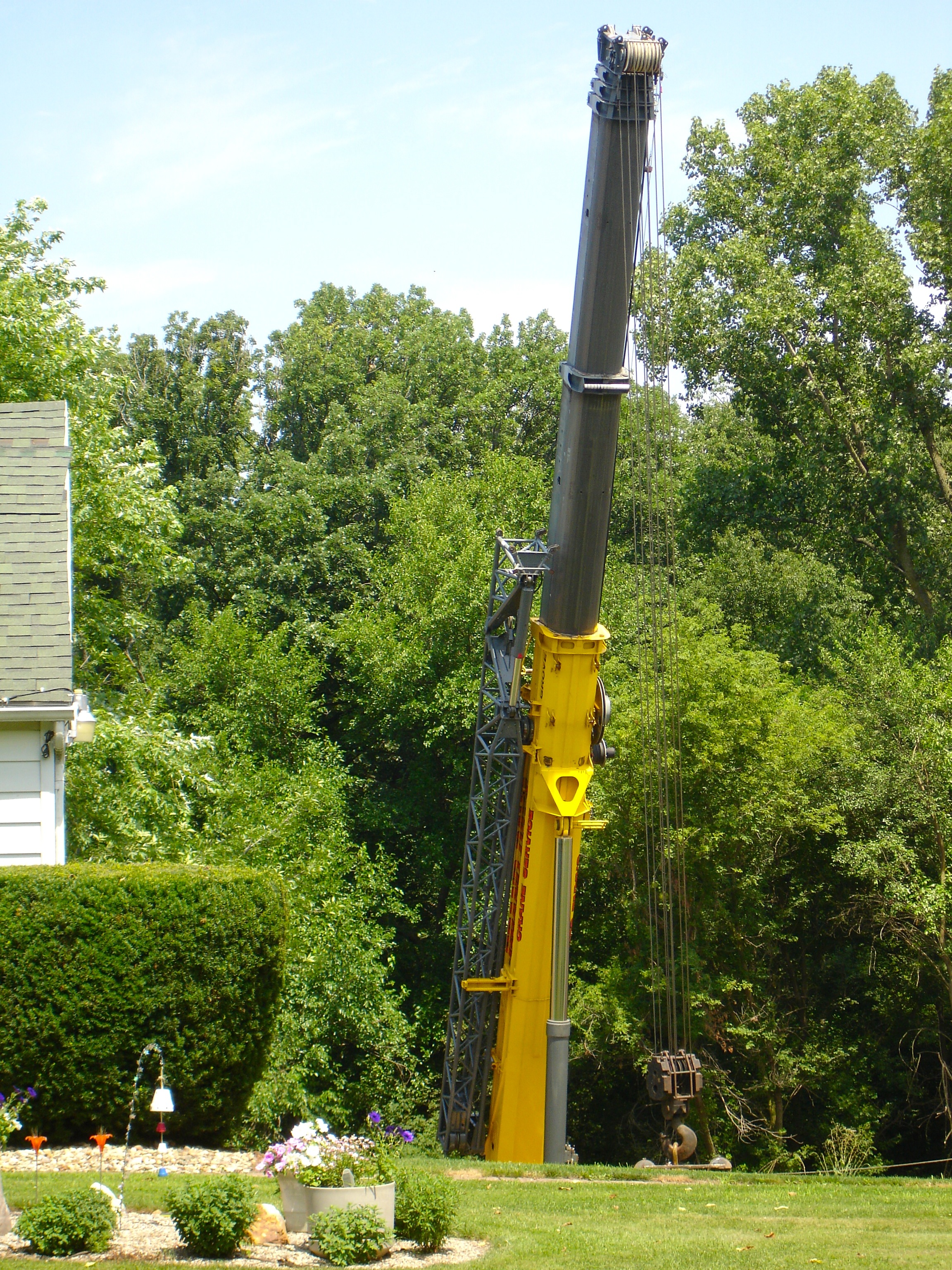
A crane pokes up behind a flowerbed.

crane

A ridge of dirt rises a few yards beyond the shade trees.

backyard

A “road” is being carved through cornfields.

pipeline

The trucks, the heavy equipment, the port-a-potties, and the pipe show up another mile further to the east.

trucks2

The “road” is for the Enbridge Pipeline, which is being laid to carry oil from the Alberta tarsands to the east coast of the USA.

This is not a new pipeline path. We already have a pipeline under our feet, under our corn and vegetables and horse pastures. That pipeline went in less than 20 years ago. Three years ago it leaked and created the worst spill ever in a body of fresh water, the Kalamazoo River, 50 miles away.

This new set of pipe is supposed to replace the leaky line.

Until it, too, leaks, I guess. Or until the oil or our appetite for it runs out, i.e. not any time soon.

I saw that earlier pipeline being laid back in the late 1990s but I didn’t know–I didn’t think about–what it was. I was not curious. It was one of those big infrastructure things.

But meantime I spent a dozen years working in the environmental movement and I learned to notice such things, to think about what was in front of my eyes as well as hidden under my feet, and why these things are there, and what the consequences are and can be.

Such thinking is inconvenient for the powers that be, economic and political. So they call it road work. They pay a few dollars compensation to people whose backyards and farms and vegetable patches are being torn up and hope they’ll stay calm about it all. Most people do. Most people really need the money.

A notice appears in our township letter: “Bertrand Township is eligible for a $15,000 Enbridge Environmental Stewardship Grant. We are looking for volunteers to participate on an ad hoc committee for how to use these funds.”

I call up and volunteer for the committee. I call up a local conservation organization and tell them to start thinking about a proposal for spending Enbridge guilt money.

It’s a pittance, but hey. We can come up with a party to go with all those party flags. A party for the trees and the toads while we try to remember what is under our feet.


Feeding birds and a marriage

IMG_1112

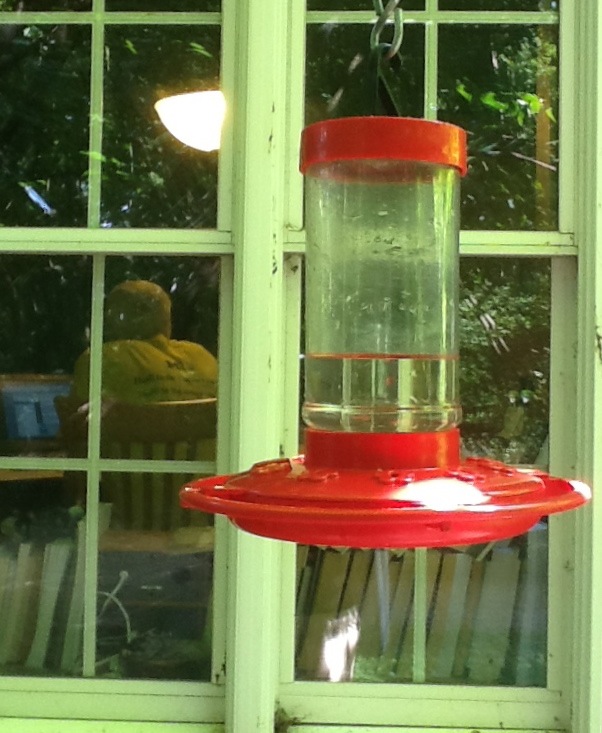
“The hummingbird feeder looks like it’s empty,” he says.

“Yes it does,” I answer from the front porch. A hummingbird is hovering in front of me, inquiring.

I hear activity in the kitchen, then silence. The hummingbird comes around again. Still no nectar?

I go into the house. He is back at his computer on the dining room table, which is his office when he is at home. (When it’s just the two of us we dine everywhere except in the dining room. On the porch or in front of the TV or, in winter, at the little table in front of the woodstove).

In the kitchen, nectar has been mixed in a glass measuring pitcher. The spoon is still in it. On the countertop stands an open bag of sugar. The drawer from which the spoon was taken is also open. The empty feeder is still hanging from the tree outside the dining room.

I look at the unfinished job and think about my choices. I could finish the job or I could remind (nag) him to finish it. This kind of reminder qualifies as nagging because I do it very, very often.

I bring in the empty feeder and put it in the sink. I wonder, is there a third choice–neither nagging nor finishing the job myself?

Yes there is. Waiting.

And so the hummingbirds and I wait. I write the above. I can’t resist recording this slice of married life that reveals the core of one of those little differences that make life with another person . . . interesting.

He has a way of taking projects in stages, projects that I would do in one fell swoop start to finish. He also has a way of always leaving something undone, like the required flaw in the Amish quilt. (Cleaning drain traps after cleaning up the kitchen is one of those things.) He claims, when queried (nagged), that he intended to finish these things later, I just didn’t give him enough time.

In this case I suppose he wants to give the sugar extra time to dissolve whereas I would just stir it vigorously for a little longer. So I give him the benefit of the doubt but I still doubt.

Now he comes outside, ready for the next stage of the job. “What did you do with the hummingbird feeder?” he asks. He hasn’t noticed that I brought it in.

“It’s in the kitchen sink.”

I wait some more. The hummingbird hasn’t queried in the last few minutes so I look around the corner and see that he has indeed refilled and rehung the feeder.

I stroll through the kitchen. The drawer that was open is closed. The bag of sugar is still open on the countertop. He is at his computer. He looks up. “What?”

“Nothing,” I say. “I’m just writing a blog.”

But he has read my mind. He gets up and closes the bag of sugar, puts it away.

Job done in his good time. No nagging.

Orange and yellow guinea fowl

with Jeanne, fellow cloth connector

with Jeanne, fellow cloth connector

I spent last week surrounded by African cloth. It was in an over-air conditioned exhibit hall in Phoenix, where the outside temperatures rose to 118 during the week. One airline worker said when some of our friends arrived, “Welcome to hell.”

Our cloth booth was a heavenly place in what I wouldn’t call hell exactly but it was a sterile, artificial environment. It didn’t help that I was working the booth 11 am to 11 pm with little chance for solitude and no inviting nature nearby. Now that I am home I’m basking on my front porch, even though it is dark and humid and pouring rain. At least it’s natural.

I’m thinking of turning one of those lengths of bright cloth into a tablecloth and napkins for my porch table. It took five days of looking at the hundreds of fabric lengths in our display till I settled on that piece as the one I wanted to take home. Orange and yellow plaid with guinea fowl.cloth

Maybe it was because my eyes got used to all the colors, since I was exposed to them for so long, and so I gradually came to love the brightest one I saw.

Maybe it was because I thought of how my granddaughter would enjoy the strange chickens on the design.

Maybe it was because I thought of how that tablecloth would brighten up my screened-in porch, which is all browns and grays and surrounded by green, green, green.

This is all true but really it was because no one else wanted it. We had two 6-yard lengths of this design and they were among the few pieces that didn’t move at the Mennonite Church USA convention last week. No quilters wanted a yard of it, no shirt makers or skirt makers or pillow coverers were tempted. This design goes with nothing. It is what it is, bold and bright.

This is how Congolese women dress, power to them in their confident beauty. They would consider it a waste to use it on a table. It needs to strut its stuff in the marketplace. But still, it finds its way to my house and that is something.

Our project, the Congo Cloth Connection, is about influencing each other, finding common ground, forming relationships between Mennonites in Congo and the USA. It is secondarily about raising money for projects in Congo. With the donations we’re collecting for this cloth we’re funding scholarships for Congolese Mennonite women studying for the ministry. This is a new thing–the church only recently approved the ordination of women–and it’s the feminist issue among our friends there.

This fall I will carry scholarship money for four women in Kalonda, DR Congo, age 21 to 62, who are fulfilling their dream of becoming pastors. While I dress my table in their cloth, they study the Anabaptist theology of our mutual heritage.

We’re not selling the cloth (hand-carried in suitcases by our traveling friends) online. This is not a long-term, big $ project. It’s just a way of making connections of beauty and joy between a few churches in the Midwest and our growing network of friends in DRC.

Orange and yellow guinea fowl crossing the continents, coming home to roost.

porch


Earth artist

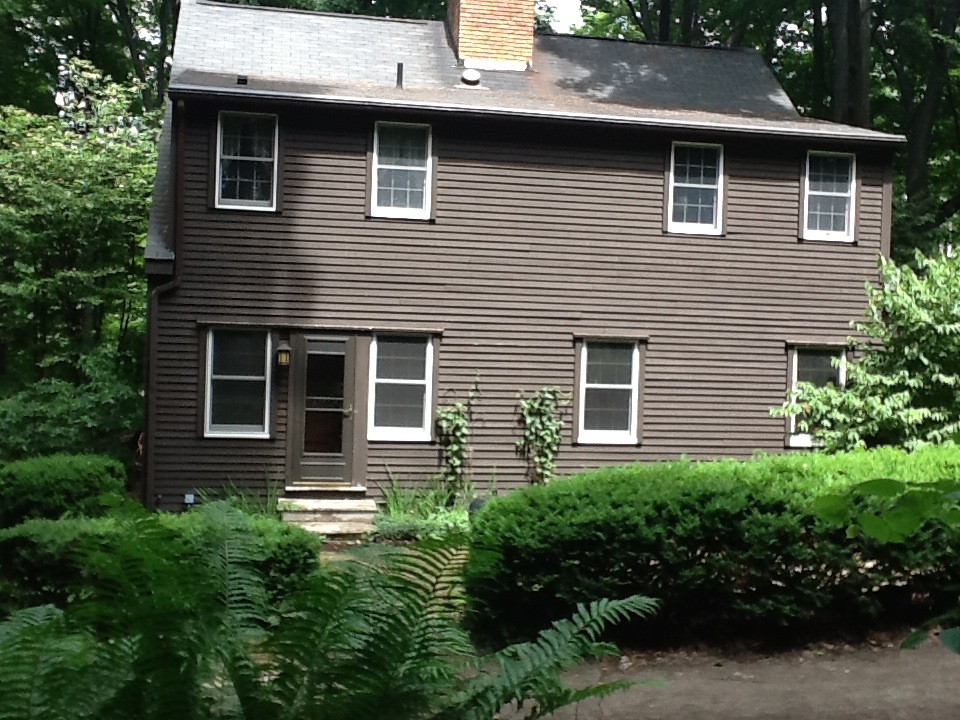
side view

“Wayside Gardens.” “Dianthus Box Pink.” “Witch Hazel. “Fire pit.”

These are the only notes I took on our conversation this morning with Garry Roberson, a local landscaper, because I quickly decided to trust his judgment on just about anything.

Garry is wiry, weathered. He is wearing jeans, a blue shirt with the sleeves cut off, and a straw hat. He talks the fast talk of an enthusiast.

I like everything he says about what he sees and how he works, because it is what my husband and I see, only more, and how we would work on our landscape if we had more time, energy, and skill. He, in turn, is impressed that I know every plant in our five acres of woods and what grows where.

Hiring Garry is like hiring a professional version of ourselves when it comes to enhancing the already beautiful land around our house. We’d like to be that good but we aren’t.

Garry doesn’t start with a design; he starts with what is already there: in our case, a beautiful woods. He talks about trimming away some of what is there to see more of what is there; adding to what is there to show off what is there. He talks about working incrementally, one thing leading to another, suggesting something else. He says he works without making big changes and big messes, always working with nature rather than against it.

He says his goal is to make his work invisible. “You will look at the result and wonder how it could ever have been any different.” He encourages us to take lots of “before” pictures so we’ll see the difference.

Garry worked for our neighbors across the road. Trees screen our view of their house, so I was never aware that landscaping was being done until they put in a lovely pond and waterfall. And Garry’s gradualist approach meant that the transformation wasn’t sudden. We just noticed, after a few years, that their house and surroundings were looking really good. We noticed the “after” without paying attention to the “before.”

A little like my weight loss. Nobody told me I was fat before but some people now say I look good. (I know they are too polite to link “looking good” to weight loss unless I bring it up.)

My goal is not for people to say about our home, “I like what you have done to this place” but, “I like coming here. It’s so beautiful.”

They say that already. As Garry plays with our surroundings they may say it more and more. But we are really doing this for ourselves, in partnership with nature and a nature artist. Garry calls his business Earth Art.

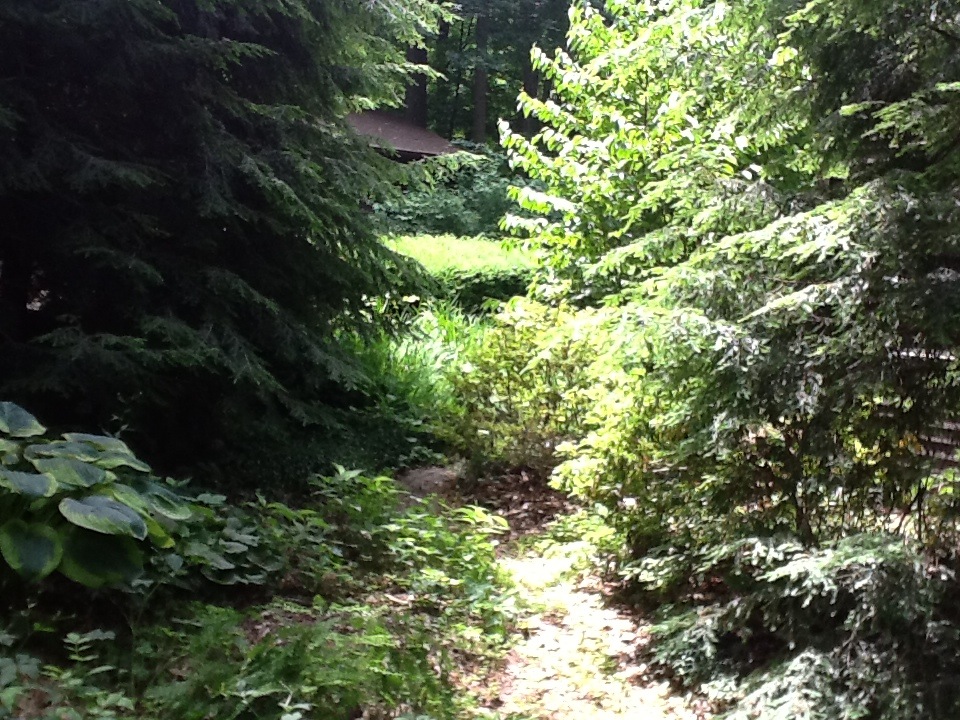
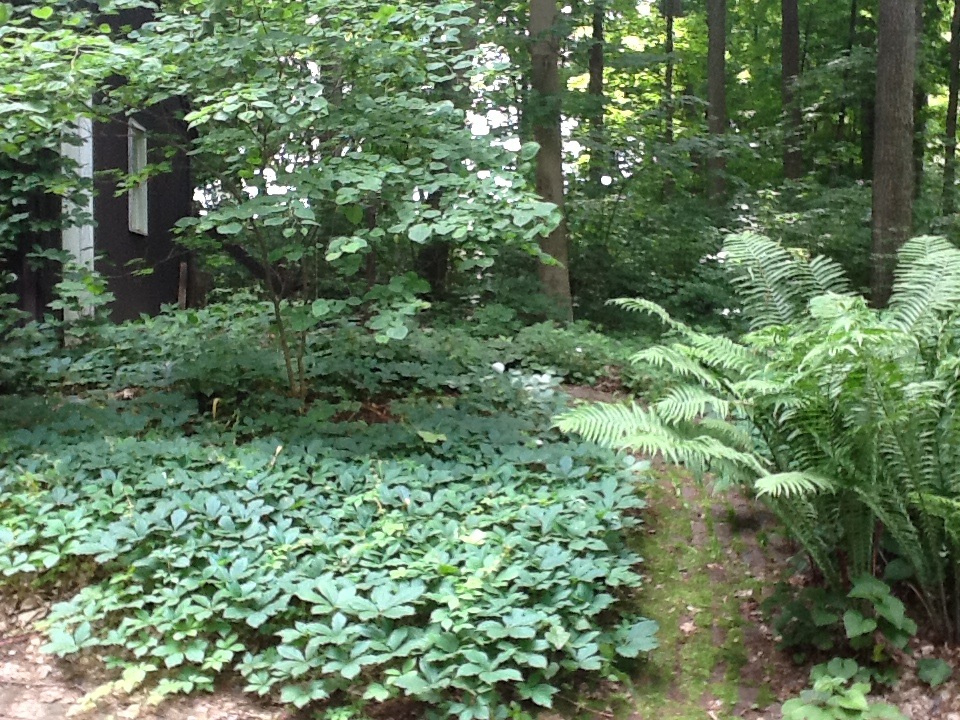
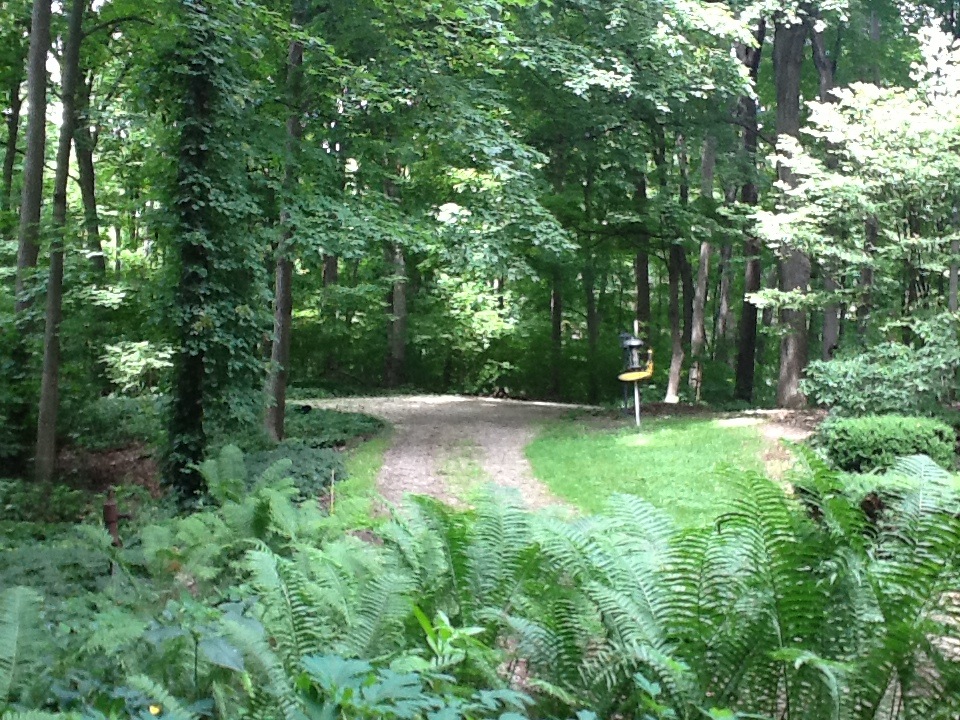
Here are more “before” pictures .

path to rock garden

from woodpile

out the drive

front view

back view


Art. Peace. Heavy metal.

sacred tree

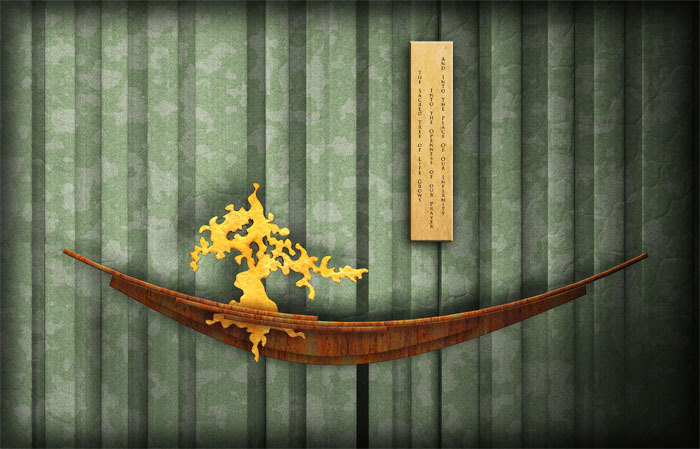
“I’m sitting in the Art Institute of Chicago café – getting around to telling you more about the Sacred Tree Project,” writes my friend, the fabulous sculptor/designer/craftsman David Orth on the site of his kickstarter project. It’s “a multicultural sculpture in steel, carved wood, gold leaf, papyrus, and ink.”

I have never seen a more gorgeous kickstarter project. I’ve pledged and urge you to do so, too. Consider $115 or more because the pendant that comes in at that level and above is to die for. But anything David makes will astonish you with grace and perfection.

I’m going to give the rest of this post over to David because this project is exactly what this blog is about and falls through some of the same cracks (“too religious for many, not religious enough for the rest.”) Here’s what he says, writing from one of my favorite places, too:

I taught design and sculpture here [at the Art Institute] a few times and I hate the reminder that they haven’t called in years. But this is still one of my best ways to spend a couple of hours – bouncing around between the African masks, the Japanese basketmakers, Van Gogh, the stone Buddhas, and that Eames Chaise lounge – thing.  I’m wearing five dollar boots from the local resale, but I feel insanely rich here – caught up in this wealth of diversity and depth.

I’m flashing back to a meeting I attended a year ago. For the strangest two hours this church was packed with Muslims, Christians, and Jews. They were singing their songs and playing their music for each other.  Then we all sang some ditty about love and faith – together.  I’m wearing the same damn boots and having that same uncanny feeling of wealth.

The old mystical Jews had this idea that vessels full of light, in some cosmic tragedy, were shattered into thousands of pieces. They said that our task now is to gather the pieces. In my mind, this gathering includes not just the old familiar traditions of East & West, such as my own Mennonites & Episcopalians – and the Buddhists I like to drop in on – but also the new Pagans (who seek to connect us back to the earth) and the Atheists (who wish we could be more honest and genuine). We need it all.

I’m rambling again. Starting to get sappy. A lot of suffering and rage going on right now, but I’m feeling something good coming on – like a slow train.  The Sacred Tree Project is a piece of it.  This project, dramatized in sculpture, gathers up spiritual threads and practical concerns from all directions, thumbs its nose at none, and invites the public into their own connection with the cosmos – with the divine – whatever you like to call it.  Today I’m calling it the Sacred Tree – a name all traditions have been comfortable with – for a long time.

So Here’s the Thing

I need some help pushing the Sacred Tree Project out the door – for its first walk down to the end of the block. But it’s a chicken-or-egg problem. The Sacred Tree Project is too religious for many – not religious enough for the rest – easily lost in the gap.  Getting one actual Sacred Tree sculpture out into the world, anywhere, feels like the next step. From there, I think we can take a better look at our work and we’ll have exposed the Sacred Tree Project to the public imagination. But I need you visionary folks to push me out the door and walk with me to the end of the block. . . .

Go to the project’s kickstarter site to learn more about the project, see more of David’s work, and pledge. Kickstarter projects accept pledges but you don’t pay up –and they don’t go anywhere–unless they are fully funded within a limited time. This one has only 34 days to go. Take a look.